
#11 – Congenital Cyanotic Heart Diseases


***LISTEN TO THE PODCAST HERE***


Epidemiology

  • Comprise 15% of all CHD and 33% of potentially fatal CHD

Physiology

The cardiovascular system in-utero is a complicated machine that is designed to bypass the lungs and provide oxygenated blood from the placenta.  There are two main structures that help maintain oxygenation when the fetus’ lungs are not used:

  • Ductus arteriosus
    • Connects the pulmonary artery to the descending aorta
    • Prostaglandin E1 and E2 are produced by the placenta and keep this open
    • Absolutely vital to remain patent in several of the cyanotic diseases to provide oxygenated blood
  • Foramen ovale
    • Communication between right and left atrium
    • Once the infant begins spontaneously breathing, increases in pulmonary blood flow and left atrial pressures mechanically seals the foramen ovale
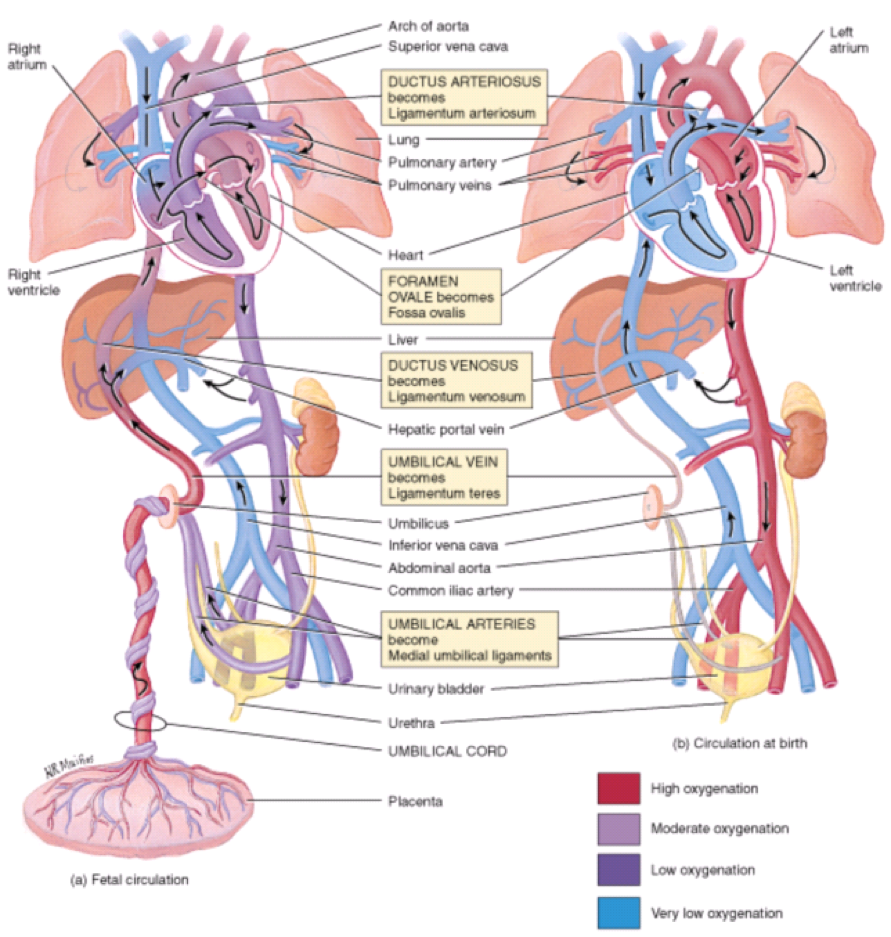
Fetal Circulation

Fetal circulation (a) in-utero and (b) during 1st 7 days of life


Khan Academy Tutorials


Cardiac Causes of Cyanosis

  • 3 Main Physiologic Categories
    • Decreased pulmonary blood flow
      • Tetralogy of Fallot, tricuspid atresia
    • Increased pulmonary blood flow
      • Transposition of great vessels, truncus arteriosis, total anomalous pulmonary venous connection
    • Severe heart failure
      • Hypoplastic left heart, coarctation of the aorta

Timing of Presentation

  • Within 48 hours of birth
    • Transposition of great vessels, tricuspid atresia
  • With 7 days of birth
    • Truncus arteriosus, total anomalous pulmonary venous connection, Tetralogy of Fallot

Screening

  • Hyperoxia Test
    • 100% oxygen via hood for 10 minutes
    • Radial artery (preductal) PaO2 is measured
      • PaO2 > 150 mmHg suggests pulmonary disease
  • Pulse Oximetry Screening
    • Measuring the difference in SpO2 between preductal (right hand) and postductal (either foot) flow
    • A positive test warranting further investigation includes any of the following:
      • SpO2 < 90% in either extremity
      • SpO2 90-94% in both locations on three measurements one hour apart
      • SpO2 difference > 3% on three measurements one hour apart


Work-Up

  • Physical exam findings
    • Murmur
    • Second heart sound (normally split in inspiration)
  • Chest radiograph
    • Differentiates pulmonary from cardiac causes of cyanosis
    • Heart size often increased with some classic shapes
  • Electrocardiogram
    • Normal neonatal EKG has RAD
    • Hypertrophy and enlargement specific to defects
  • All cyanotic defects are diagnosed by echocardiogram and/or cardiac angiography


Tetralogy of Fallot


  • Most common cyanotic congenital heart defect
  • 1st described in 1888 by Etienne-Louis Arthur Fallot
  • 4 key features
    • Pulmonary stenosis
    • Overriding aorta
    • VSD
    • Right ventricular hypertrophy
  • Signs and Symptoms
    • Cyanosis can be seen at birth, but usually presents by 4 months
    • Palpable RV lift
    • Single, aortic S2
    • Systolic murmur at left sternal border in 3rd intercostal space
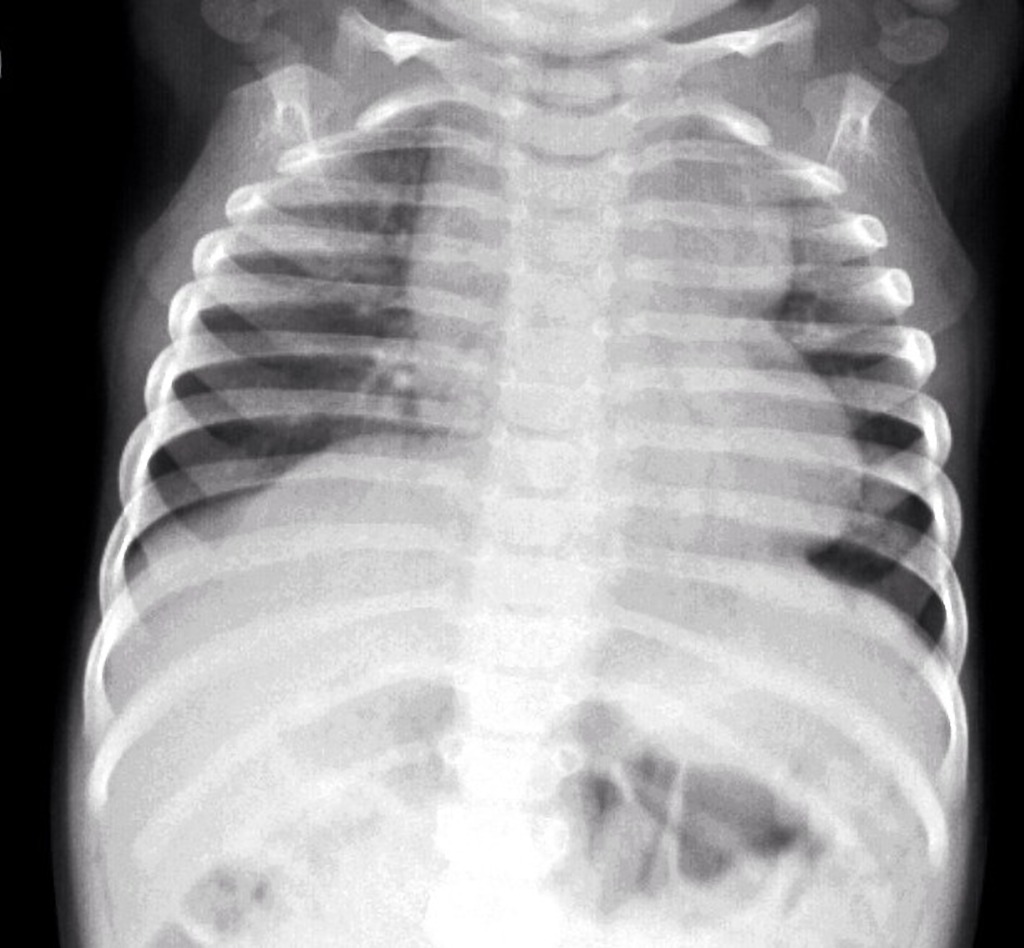
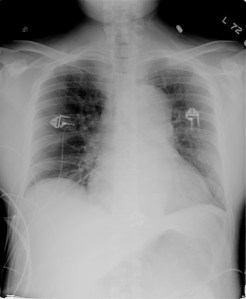
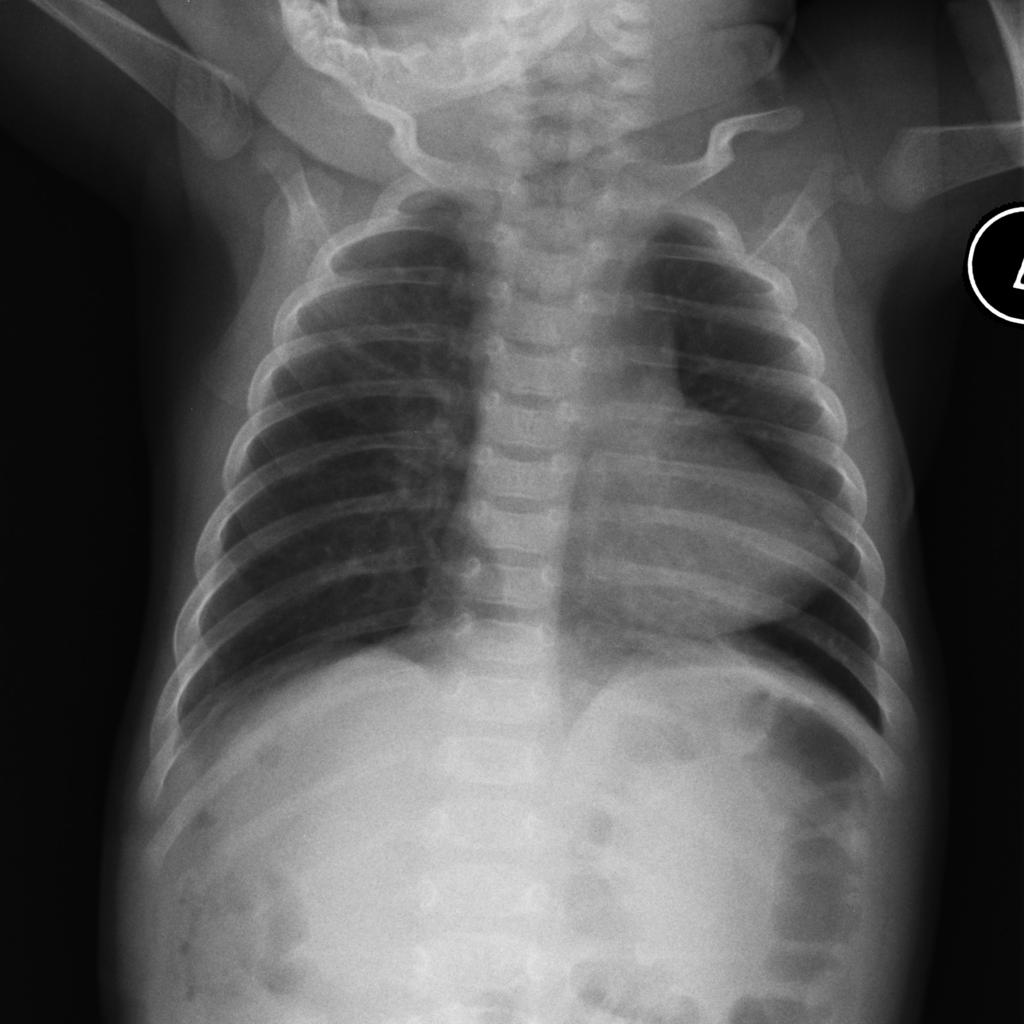
  • Chest radiograph may show “boot shaped heart” and right aortic knob
 

tetralogy-of-fallot-1

“boot shaped heart” Case courtesy of A.Prof Frank Gaillard, Radiopaedia.org. From the case rID: 8049

  • “Tet spells”
    • Near complete right ventricular outflow obstruction resulting in:
      • Sudden onset or worsening of cyanosis
      • Dyspnea
      • Alterations in consciousness or irritability
      • Decrease or disappearance of murmur
    • Causes
      • Agitation in infants
      • Vigorous exercise in older children
        • Often self correct by squatting down and bringing knees to chest in increases pulmonary blood flow
  • Surgical repair is performed anytime from birth to 2 years depending on size of pulmonary arteries

Screen Shot 2016-04-07 at 4.58.32 PM


D-Transposition of Great Vessels


  • 2nd most common cyanotic defect
  • Embryologic ventriculoarterial discordance (2 parallel circuits)
    • Aorta is anterior and comes off right ventricle
    • Pulmonary artery comes off left ventricle
  • VSD are common and ASD/PFO is critical for survival to allow mixing
  • Signs and Symptoms
    • Generally present within 1st month of life
    • Tachypnic, but comfortable without signs of respiratory distress
    • Pansystolic murmur of VSD
  • Chest radiograph may show classic “egg of a string”
"egg on a string sign" Case courtesy of Dr David Clopton, Radiopaedia.org. From the case rID: 35346

“egg on a string sign” Case courtesy of Dr David Clopton, Radiopaedia.org. From the case rID: 35346


  • EKG is non-diagnostic
  • Surgical repair is performed at 7 days
    • Arterial Switch Operation
      • 95% survival

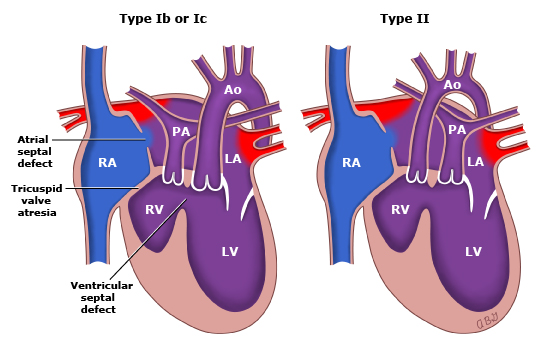
Tricuspid atresia


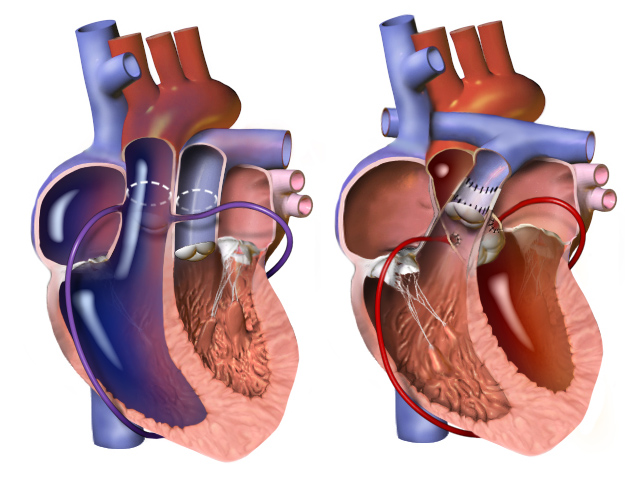
Tricupid_valve_atresia

  • 3rd most common cyanotic defect
  • Complete absence of tricuspid valve and no direct communication between right atrium and ventricle
    • ASD and PFO allow right-to-left flow
    • Right ventricular hypoplasia depending on VSD size
  • 3 types
    • Type I
      • Ia – normal great vessel anatomy with no VSD
        • PDA is sole source of pulmonary blood flow
      • Ib and Ic– normal great vessel anatomy with a VSD
    • Type II
      • Transposition of great vessels with VSD
  • Signs and Symptoms
    • Prenatal
      • Can be diagnosed by fetal ultrasound between 18 and 22 weeks
    • Postnatal
      • Cyanosis usually in first 24 hours, but may be as late as 1 month
      • Single S2 heart sound
      • Holosystolic murmur over left sternal border with diastolic rumble
  • Chest radiograph may show smooth convexity of right heart with cardiomegaly
  • Electrocardiogram may show tall P waves, LAD, LVH, and RAE
  • Surgical repair performed in 3 stages
    • 1st stage performed immediately
    • 2nd stage at 3-6 months
    • 3rd stage at 2-3 years
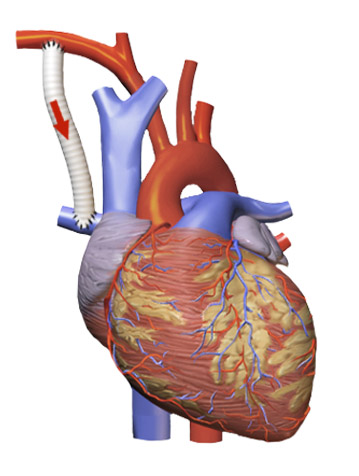
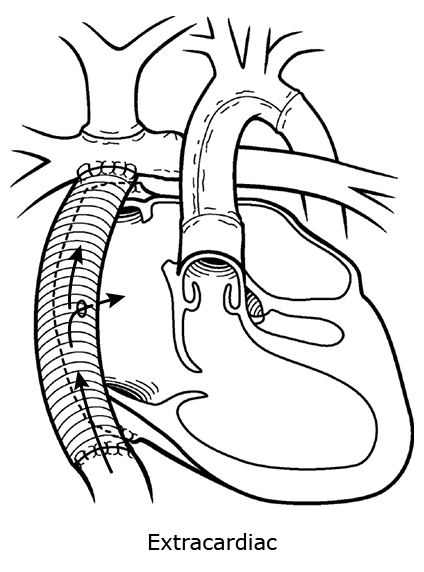
      • Fontan procedure
        • Direct anastomosis of pulmonary arteries to right atrium
2000px-Fontan_procedure.svg

Fontan Procedure for tricuspid atresia https://en.wikipedia.org/wiki/Fontan_procedure


Truncus Arteriosus


  • Embryological failure of the division of the common truncus arteriosus into the aorta and pulmonary artery
    • Single common arterial trunk positioned above the ventricular septum that gives rise to the systemic, pulmonary, and coronary circulation
    • There is a single semilunar valve
    • VSD is always present
  • 2 main classification systems (based on pulmonary circulation anatomy)
    • Collet and Edwards (1st and most simple)
    • Modified Van Praagh (mainly used by pediatric cardiac surgeons)
  • Signs and Symptoms
    • Mild to moderate cyanosis
    • Heart failure is common
    • Hyperactive precordium with systolic thrill at left sternal border
    • Early systolic ejection click
    • Accentuated, single S2
    • Diastolic flow murmur over apex
  • Chest radiography may show cardiomegaly with increased pulmonary markings and right sided aortic arch
  • Electrocardiography is non-diagnostic
  • Surgical repair must be performed in neonatal period due to increased risk of pulmonary vascular disease and progressive, irreversible heart failure
    • 3 main steps
      • Pulmonary arteries are mobilized and reattached via pulmonary artery conduit to the right ventricle
      • Opening and repair of the truncus
      • Closure of VSD

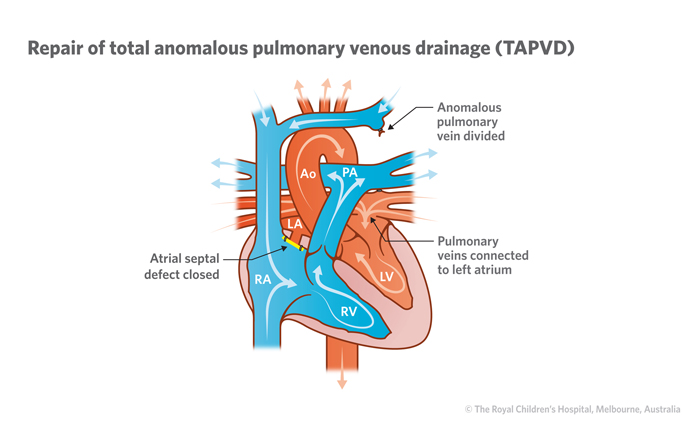
Total Anomalous Pulmonary Venous Connection
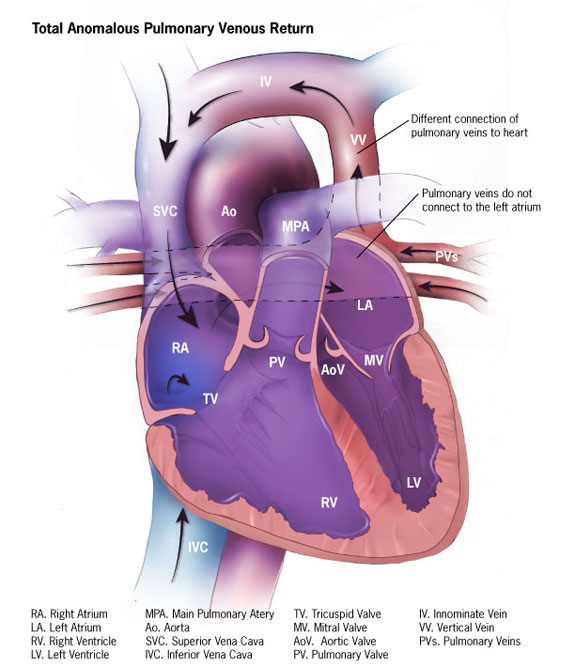
 

  • All four pulmonary veins draining into a confluence behind the left atrium
    • No connection into the left atrium and drains into systemic circulation
  • 4 obstructive types
    • Supracardiac (most common)
      • Drains into the right SVC, left SVC, or innominate vein
    • Intracardiac
      • Drains into coronary sinus
    • Infracardiac
      • Drains into portal venous system
    • Mixed
  • Entire venous drainage (systemic and pulmonary) goes into right atrium
    • Must have a ASD or PFO
  • Signs and Symptoms
    • Unobstructive
      • Mild cyanosis, tachypnea
      • RV heave
      • Fixed split S2
      • Systolic ejection murmur with diastolic rumble
    • Obstructive
      • Severe cyanosis and respiratory distress
      • Striking RV impulse
      • Accentuated, single S2
      • Murmur is often absent
  • Chest radiography
    • Unobstructive – cardiomegaly with increased pulmonary markings, “snowman sign”
    • Obstructive – small heart
total-anomalous-pulmonary-venous-return-tapvr

“snowman sign” Case courtesy of Dr Aditya Shetty, Radiopaedia.org. From the case rID: 27800

  • Electrocardiography may show RAD, RAE, RVH in both types
  • Surgical repair depends on type and timing depends on degree of obstruction
Hypoplastic Left Heart Syndrome
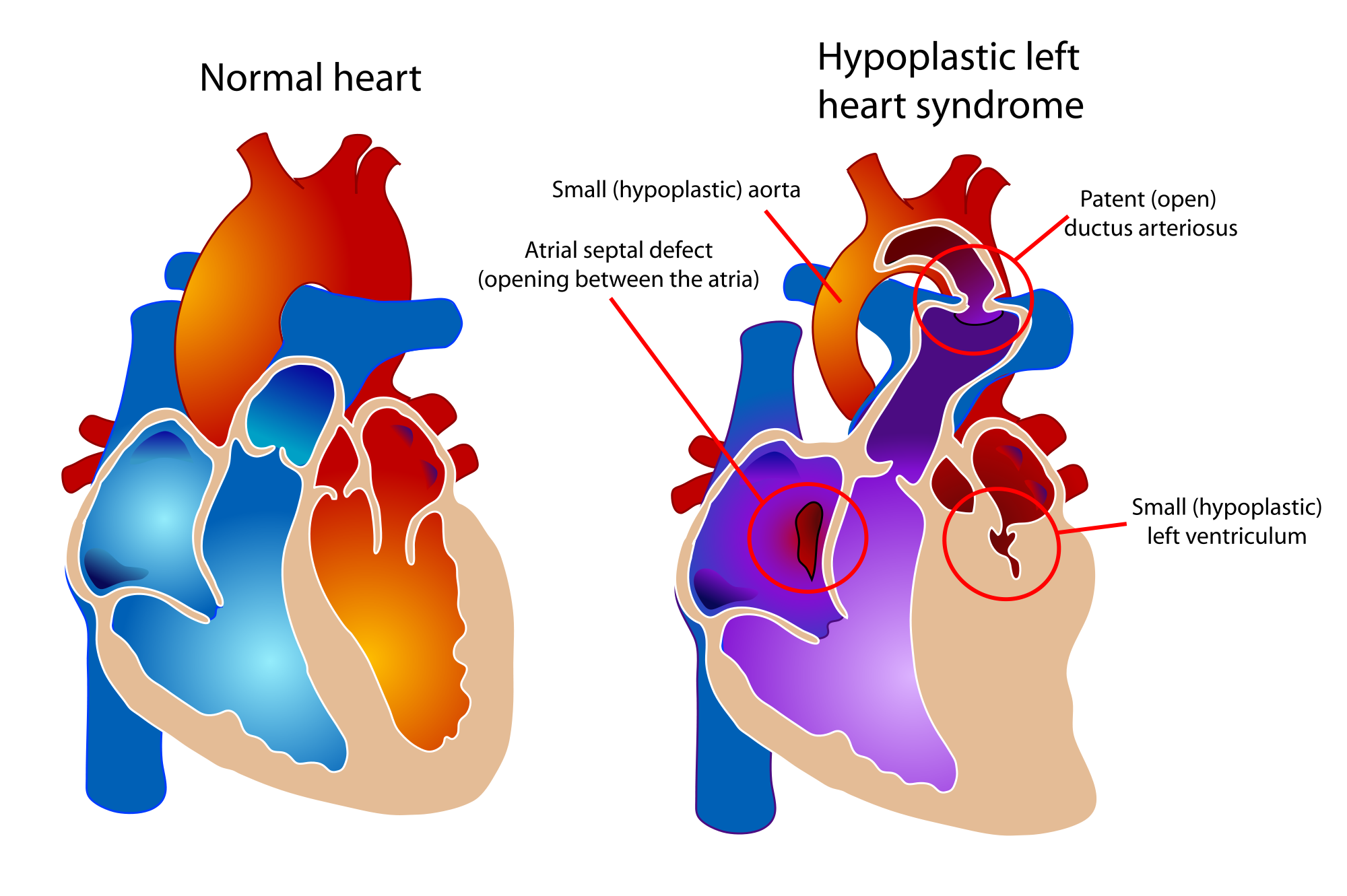
 

  • Spectrum of cardiac malformations characterized by underdevelopment of the left ventricle with atresia, stenosis, or hypoplasia of aortic and/or mitral valve, and hypoplasia of ascending aorta and arch
  • Survival is dependent on PDA and ASD
  • Signs and Symptoms
    • Prenatal
      • Can be diagnosed by fetal ultrasound between 18-24 weeks
    • Postnatal
      • “Honeymoon” period while PDA is open and ASD is unrestricted
        • May be discharged and present after 3-5 days
      • If ASD is restricted –> rapid decompensation as PDA closes
      • Single S2 heart sound
      • No murmur
  • Chest radiograph may show small cardiac silhouette
  • Electrocardiogram shows RAD, RAE, RVH
  • Surgical repair performed in 3 stages
    • 1st stage performed immediately
      • Norwood procedure (3 parts)
        • Creation of neoaorta
        • Blalock-Taussig shunt
        • Resection of atrial septum
Norwood Procedure

Norwood Procedure

  • 2nd stage performed at 3-6 months
    • Bidirectional Glenn procedure
Stage_II_repair_HLHS

Bidirectional Glenn Procedure

  • 3rd stage performed at 2-3 years
    • Fontan procedure

Fontan_stageIII_repair_HLHS

  • Hybrid approach and heart transplant are emerging treatment options

PAINE Pearls to Remember

6 “Ts” of Congenital Cyanotic Heart Defects

Tetralogy of Fallot

Transposition of Great Vessels

Tricuspid Atresia

Truncus Arteriosus

Total Anomalous Pulmonary Venous Connection

“Tiny” (Hypoplastic) Left Heart Syndrome

Numbers of Congenital Cyanotic Heart Defects

1 trunk (truncus arteriosus)

2 great vessels (transposition)

3 “tri” (tricuspid atresia)

4 “tetra” (Tetralogy of Fallot)

5 words (Total Anomalous Pulmonary Venous Connection)

VI – the left “I” is half as big as the right “V” (hypoplastic left heart)


Cottage Physician Reference

Nothing directly related to congenital heart defects, but I did find this quote interesting.  It says:

“ The general rule as to tying the cord , with the exceptions above noticed, is, that it is the safest to delay the tying of it, until it has entirely ceased to pulsate”

The OB realm is still debating delayed cord clamping…It looks like everything in medicine always comes full circle

The OB realm is still debating delayed cord clamping…It looks like everything in medicine always comes full circle


References

  1. Vetter VL, Covington TM, Dugan NP, et al. Cardiovascular deaths in children: general overview from the National Center for the Review and Prevention of Child Deaths. Am Heart J. 2015;169(3):426-437.e23.
  2. Wren C, Reinhardt Z, Khawaja K. Twenty-year trends in diagnosis of life-threatening neonatal cardiovascular malformations. Arch Dis Child Fetal Neonatal Ed. 2008;93(1):F33-5.
  3. Rudolph AM. Congenital cardiovascular malformations and the fetal circulation. Arch Dis Child Fetal Neonatal Ed. 2010;95(2):F132-6.
  4. Kemper AR, Mahle WT, Martin GR, et al. Strategies for implementing screening for critical congenital heart disease. Pediatrics. 2011;128(5):e1259-67.
  5. Marino BS, Bird GL, Wernovsky G. Diagnosis and management of the newborn with suspected congenital heart disease. Clin Perinatol. 2001;28(1):91-136.
  6. Darst JR, Collins KK, Miyamoto SD. Cardiovascular Diseases. In: Hay WW, Jr., Levin MJ, Deterding RR, Abzug MJ. eds. CURRENT Diagnosis & Treatment: Pediatrics, 22e. New York, NY: McGraw-Hill; 2013.
  7. Rao PS. Tricuspid Atresia. Curr Treat Options Cardiovasc Med. 2000;2(6):507-520.
  8. Tongsong T, Sittiwangkul R, Wanapirak C, Chanprapaph P. Prenatal diagnosis of isolated tricuspid valve atresia: report of 4 cases and review of the literature. J Ultrasound Med. 2004;23(7):945-50.
  9. Tchervenkov CI, Jacobs ML, Tahta SA. Congenital Heart Surgery Nomenclature and Database Project: hypoplastic left heart syndrome. Ann Thorac Surg. 2000;69(4 Suppl):S170-9.
  10. Warnes CA. Transposition of the great arteries. Circulation. 2006;114(24):2699-709.
  11. Lalezari S, Bruggemans EF, Blom NA, Hazekamp MG. Thirty-year experience with the arterial switch operation. Ann Thorac Surg. 2011;92(3):973-9.
  12. Seale AN, Uemura H, Webber SA, et al. Total anomalous pulmonary venous connection: morphology and outcome from an international population-based study. Circulation. 2010;122(25):2718-26.
  13. Hoffman JI, Kaplan S. The incidence of congenital heart disease. J Am Coll Cardiol. 2002;39(12):1890-900.
  14. Rodefeld MD, Hanley FL. Neonatal truncus arteriosus repair: surgical techniques and clinical management. Semin Thorac Cardiovasc Surg Pediatr Card Surg Annu. 2002;5:212-7.

Hypertension Review – JNC-8 and SPRINT

One of the more common conditions that is managed in all of medicine is hypertension.  The first Joint National Committee (JNC) recommendations were published in 1976 and have gone through 8 revisions, with the most recent being in 2014.  The interesting thing about the JNC 8 is that it took 11 years to get published (4-6 years for all the other updates).  Even then there is still some controversy surrounding its recommendations.

 Joint National Committee 8

Emphasis on randomized, controlled clinical trials to answer 3 key clinical questions:

  1. Does initiating antihypertensive pharmacologic therapy at specific blood pressure thresholds improve health outcomes?
    1. When to start
  2. Do attempts to reach specified blood pressure goals with antihypertensive pharmacologic therapy lead to improvements in health outcomes?
    1. What to shoot for
  3. Do various antihypertensive drugs or drug classes differ in regard to specific health outcomes?
    1. What to use

9 Graded Recommendations

  1. Adult patients 60 years of age or older, without specific comorbidities, should have antihypertensive medications initiated if SBP > 150 mmHg or DBP > 90 mmHg and treat to a goal SBP < 150 mmHg and DBP < 90 mmHg.
    1. Corollary
      1. If treated SBP < 140 mmHg is well tolerated and without adverse effects on health or quality of life, no adjustment is needed.
  2. Adult patients younger than 60 years of age, without specific comorbidities, should have antihypertensive medications initiation if DBP > 90 mmHg and treat to a goal DBP < 90 mmHg.
  3. Adult patients younger than 60 years of age, without specific comorbidities, should have antihypertensive medications initiation if SBP > 140 mmHg and treat to a goal SBP < 140 mmHg.
  4. Adult patients older than 18 years of age with chronic kidney disease should have antihypertensive medications initiated if SBP > 140 mmHg or DBP > 90 mmHg and goal should be SBP < 140 mmHg and DBP < 90 mmHg.
  5. Adult patients older than 18 years of age with diabetes should have antihypertensive medications initiated if SBP > 140 mmHg or DBP > 90 mmHg and goal should be SBP < 140 mmHg and DBP < 90 mmHg.
  6. Initial drug therapy for nonblack patients (including diabetic patients) should include a thiazide-type diuretic, calcium channel blocker, an ACEI, or ARB.
  7. Initial drug therapy for black patients (including diabetic patients) should include a thiazide-type diuretic or calcium channel blocker.
  8. Adult patients older than 18 years of age with chronic kidney disease, initial or additional therapy should include an ACEI or ARB, regardless of race or diabetic status.
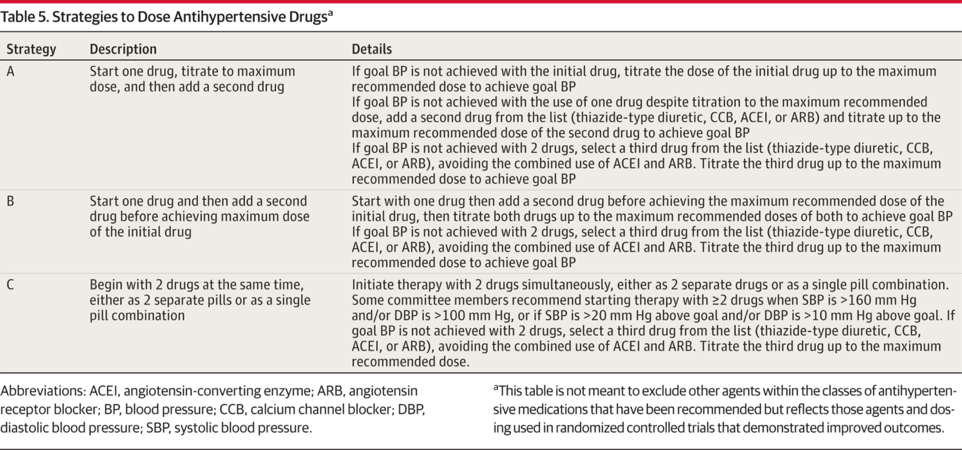
  9. If blood pressure goal is not achieved in one month, either increase dose of initial drug or add a second drug. A third drug should only be added if goal is not achieved with two medications.
    1. ACEI and ARB should not be used together


JNC8

JNC-8.  JAMA. 2014;311(5):507-520


JNC8 - Drugs

JNC-8.  JAMA.  2014;311(5):507-520


JNC8 - STrategy

JNC-8.  JAMA. 2014;311(5):507-520

JNC7 vs JNC8

 Systolic Blood Pressure Intervention Trial (SPRINT)

Published in November 2015 in New England Journal of Medicine

This was a multi-center randomized, controlled, open label clinical trial performed to evaluate a more intensive blood pressure strategy (SBP < 120 mmHg) in patients with high risk cardiovascular risk (excluding diabetes, previous stroke, symptomatic heart failure, proteinuria, or nursing home residents).  They used a primary composite outcome was first occurrence of AMI, other ACS, stroke, heart failure, or death from cardiovascular disease.

Participant criteria:

  • ≥ 50 years of age
  • SBP of 130-180 mmHg
  • Increased cardiovascular risk as defined by at least one of the following:
    • Clinical or subclinical cardiovascular disease other than stroke
    • Chronic kidney disease (excluding PCKD)
      • eGFR 20-60 mL/min
    • 10-year cardiovascular disease risk of ³ 15% using Framingham Score
    • ≥ 75 years of age

Treatment algorithm used all major classes of antihypertensives in no particular rank order. Participants were seen monthly for the first three months and every three months thereafter.  The median follow-up was 3.26 years, but the study was stopped early due to the benefit of treatment group by the data and safety monitoring board of the trial.


Outcomes

562 primary outcome events identified

  • 243 in the intensive group (1.65% per year)
  • 319 in the control group (2.19% per year)

Number needed to treat to prevent a primary outcome – 61

Number needed to treat to prevent death from any cause – 90

Number needed to treat to prevent death from cardiovascular causes – 172


Serious Adverse Events

1793 participants in intensive group (38.3%)

1736 participants in control group (37.1%)

Examples:

  • Hypotension
  • Syncope
  • Electrolyte abnormalities
  • Acute kidney injury
  • Injurious falls
  • Bradycardia


Discussion

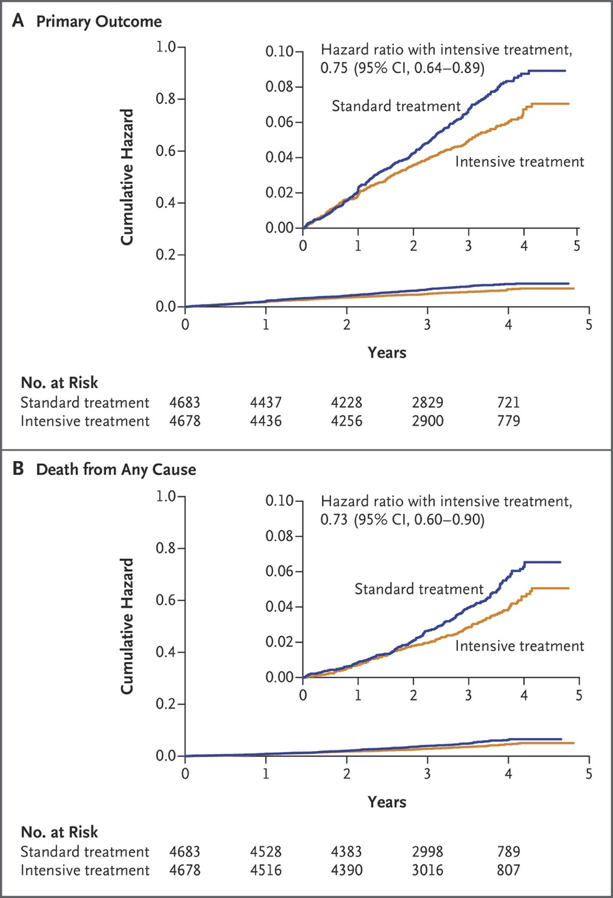
25% lower relative risk of primary outcome in intensive group (5.2% vs 6.8%):

  • 38% lower relative risk of heart failure (1.3% vs 2.1%)
  • 43% lower relative risk of death from cardiovascular causes (0.8% vs 1.4%)
  • 27% lower relative risk of death from any cause (3.3% vs 4.5%)


SPRINT1

SPRINT Research Group. NEJM. 2015;373:2103-2116


SPRINT2

SPRINT Research Group.  NEJM. 2015;373:2103-2116

Should we be more aggressive in the SPRINT patient population?

(great review by Health News Review here)

First of all, this is only ONE study addressing a clinical question that has been extensively researched and we still don’t have good, reliable, reproducible results yet. See 2009 Cochrane Hypertension Review that stated blood pressure < 140/90 mmHg was not beneficial.

Second of all, the researchers seemed to down play the serious adverse events.  The author of the Health News Review put a nice table together and did a few extra EBM calculations (below) to help illustrate:

SPRINT-Table

125: Number needed to treat to prevent one case of heart failure.

167: Number needed to treat to prevent one death by cardiovascular causes

83: Number needed to treat to prevent death by any cause

100: Number needed to harm to cause one case of hypotension

167: Number needed to harm to cause one case of syncope

125: Number needed to harm to cause one case of electrolyte abnormality

56: Number needed to harm to cause one case of acute kidney injury or renal failure

42: Number needed to harm to cause one serious adverse event


So what I take away from the SPRINT study:

  1. This is data from a single study. Need more to change practice.
  2. Composite endpoints should be used with caution…especially since it was stopped early and may overestimate the benefit and underestimate the risk.
  3. Researchers used automated BP measurements which is shown to be lower (5-10 mmHg) than auscultated BP measurement. This alone could cause clinicians to intensify BP control and increase adverse events that weren’t needed.
  4. It doesn’t help us with patients with diabetes, previous stroke, symptomatic heart failure, or nursing home residents…which encompass a lot of patients being managed for hypertension.

References

  1. James PA, Oparil S, Carter BL, et al. 2014 evidence-based guideline for the management of high blood pressure in adults: report from the panel members appointed to the Eighth Joint National Committee (JNC 8). JAMA. 2014;311(5):507-20.
  2. Hernandez-Vila E. A review of the JNC 8 blood pressure guideline.  Tex Heart Inst J.  2015;42(3):226-228.
  3. The SPRINT Research Group. A randomized trial of intensive versus standard blood pressure control. N Engl J Med. 2015;373:2103-2116.

#5 – Aortic Dissections


***Listen to podcast by clicking here***


Cliff Reid - SMACC 2015

Cliff Reid – SMACC 2015

Background

  • 1st described by German anatomist Daniel Sennert in 16th century on autopsy
  • King George II of England died of aortic dissection in 1760 and described by Frank Nichols
  • John Ritter (Actor) died of dissection
  • Relatively uncommon, but can be fatal if missed
  • 3-5 cases/100,000 each year
  • Mortality rates around 25%
  • 22% undiagnosed prior to death

Pathophysiology

  • Tear in aortic intima that leads to false lumen between intima and media
    • majority occur in ascending aorta between the sinotubular junction and left subclavian artery
  • Bimodal age distribution
    • Teens-30yo and > 50yo

Risk Factors

  • Chronic hypertension
  • Connective tissue disorders
    • Marfans, Ehler-Danlos
  • Bicuspid aortic valve
  • Previous aortic instrumentation
  • Family history of dissections

Classification

  • DeBakey (older)
    • Uses site of origin
      • Type I
        • Originates in ascending and includes the arch
      • Type II
        • Originates and confined to ascending aorta
      • Type III
        • Originates in descending and extends proximal/distal
  • Stanford (more widely used)
    • Stanford A
      • Involves the ascending aorta
    • Stanford B
      • Everything else
  • Newer DISSECT classification can be used to help with treatment options
    • Duration
      • Acute = < 2 weeks
      • Subacute = 2 weeks to 3 months
      • Chronic = > 3 months
    • Intimal Tear
      • Primary location
        • Ascending
        • Aortic Arch
        • Descending
        • Abdomen
    • Size of Aorta
      • Maximum trans-aortic diameter within dissected segment
    • Segmental Extent of aortic involvement
      • Broken down in to sections from arch to iliacs
    • Clinical complications associated with dissection
    • Thrombus of aortic false lumen
      • Patent or not

Clinical Presentations

  • History
    • Pain (90%)  – sharp > ripping/tearing
      • Chest in Type A (83%)
      • Back (64%) and abdominal (43%) in Type B
    • Neurologic
      • Syncope, stroke symptoms (more common in Type A)
      • Type B – paraplegia from Artery of Adamkiewicz
      • Horner’s Syndrome from compression on superior cervical ganglion
      • Hoarseness from compression on left recurrent laryngeal nerve
  • Physical Exam
    • Tamponade (most common cause of death) in Type A or Type I
      • Beck’s Triad
        • Hypotension, JVD, muffled heart tones
    • Can be hypertensive or hypotensive
    • Pulse deficits (> 20mmHg variation)
      • Higher mortality if present
      • Depends on the site (up to 30% of Type A vs 10% of Type B)
      • Older patients less likely to have pulse discrepancy
    • Heart murmur (more common in younger patients)
      • Aortic regurgitation (50-66%)
        • Diastolic decrescendo murmur
        • Heard best over right sternal border
          • as opposed to classic primary aortic disease AR which is heard over the left sternal border
  • Pre-test Probability
    • 77% of patients have 2 out of the 3 high-risk variables:
      • Variation in pulse or blood pressure
      • Presence of CXR abnormality
      • Abrupt onset of sharp, chest/abdominal pain

Diagnostic Studies

  • EKG (almost always 1st study done for chest pain)
    • Not very helpful other than to R/O ACS
      • May be normal in 19-31% of dissections
    • May see abnormal changes if dissection involves coronary arteries
  • Chest Radiograph
    • Classic finding is widening of the mediastinum or aortic silhouette
      • Incidence ~ 60%
    • Up to 30% of patients with aortic dissection have no CXR abnormality

  • D-Dimer
    • Extensively studied…but essentially worthless
      • When < 500 ng/mL:
        • Sensitivity – 97%, Negative Predicative Value – 96%
        • Specificity – 56%
        • False negative rate of 18%
  • Computed Tomography Angiography (hemodynamically stable)
    • Test of choice for diagnosis
    • Findings of acute dissection:
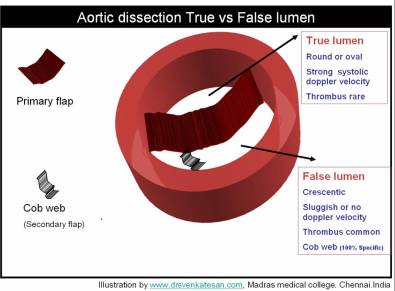
      • Intimal flap
      • True and false lumen
      • Pericardial effusion
  • Echocardiography (hemodynamically unstable)
    • Transesophageal (preferred)
      • Sensitivity/specificity can approach CT numbers
      • Require procedural sedation
    • Transthoracic (acceptable)
      • Quicker, no sedation, inferior sensitivity/specificity to CT

Intimal Flap

Treatment

  • Acute Management
    • Control of heart rate and blood pressure
      • Systolic BP < 120 mmHg
      • Heart rate < 60 bpm
    • Medications
      • IV Beta-blocker (1st line)
        • Esmolol (0.1-0.5 mg/kg over 1 minute followed by 0.025-0.2 mg/kg/hr)
        • Labetalol (20mg bolus followed by 0.5-2 mg/hr)
        • Propanolol (1-10mg load followed by 3 mg/hr)
      • If hypertensive after beta-blockade:
        • Nitroprusside (0.25-0.5 mcg/kg/min)
        • Nicardipine (5mg/hr, increase 2.5 mg/hr q15min to max 15mg/hr)
  • Definitive Management
    • Type A (surgical emergency)
      • Mortality rate 1-2% per hour after symptom onset
      • Open repair on bypass
        • Median sternotomy with graft placement +/- aortic valve replacement
        • May need to re-implant coronary and/or great vessels
      • > 90% 3yr survival after surgery


  • Type B
    • Uncomplicated
      • Medical therapy
        • BP goal = < 120/80 mmHg
        • Oral beta-blocker is 1st line
        • Add ACE inhibitors or calcium channel blocker to BP goal
      • Serial Imaging
        • CT or MRI at 3, 6, and 12 months
        • If no progression, then every 1-2 years
      • Complicated (or progressing)
        • Endovascular graft surgery
          • Indications
            • Involvement of major aortic branch leading to end organ ischemia
            • Persistent HTN or pain
            • Aneurysmal dilation
            • Concomitant connective tissue disorder


References

  1. Sennertus D: Cap. 42, Op Omn Lib. 5:306-315, 1650
  2. Nichols F. Observations concerning the body of his late majesty, October 26, 1760, Phil Trans Lond. 52:265-274, 1761.
  3. Pacini D, Di marco L, Fortuna D, et al. Acute aortic dissection: epidemiology and outcomes. Int J Cardiol. 2013;167(6):2806-12.
  4. Hagan PG, Nienaber CA, Isselbacher EM, et al. The International Registry of Acute Aortic Dissection (IRAD): new insights into an old disease. JAMA. 2000;283(7):897-903.
  5. Olsson  C, Thelin  S, Stahle  E  et al.: Thoracic aortic aneurysm and dissection: increasing prevalence and improved outcomes reported in a nationwide population-based study of more than 14,000 cases from 1987-2002. Circulation 114: 2611, 2006.
  6. E. DeBakey, W.S. Henley, D.A. Cooley, G.C. Morris, E.S. Crawford, A.C. Beall. Surgical management of dissecting aneurysms of the aorta.  J Thorac Cardiovasc Surg. 1965;49:130–149
  7. O. Daily, H.W. Trueblood, E.B. Stinson, R.D. Wuerflein, N.E. Shumway. Management of acute aortic dissections.  Ann Thorac Surg. 1970;10:237–247.
  8. Dake MD, Thompson M, Van sambeek M, Vermassen F, Morales JP. DISSECT: a new mnemonic-based approach to the categorization of aortic dissection. Eur J Vasc Endovasc Surg. 2013;46(2):175-90.
  9. Dake MD, Thompson M, Van sambeek M, Vermassen F, Morales JP. DISSECT: a new mnemonic-based approach to the categorization of aortic dissection. Eur J Vasc Endovasc Surg. 2013;46(2):175-90.
  10. Pape, L. A., Awais, M., Woznicki, E. M., Suzuki, T., Trimarchi, S., Evangelista, A., Myrmel, T., Larsen, M., Harris, K. M., Greason, K., Di Eusanio, M., Bossone, E., Montgomery, D. G., Eagle, K. A., Nienaber, C. A., Isselbacher, E. M., & O’Gara, P. Presentation, Diagnosis, and Outcomes of Acute Aortic Dissection: 17-Year Trends From the International Registry of Acute Aortic Dissection. Journal of the American College of Cardiology. 2015;4:350–358.
  11. Mehta, R. H., O’Gara, P. T., Bossone, E., Nienaber, C. A., Myrmel, T., Cooper, J. V., Smith, D. E., Armstrong, W. F., Isselbacher, E. M., Pape, L. A., Eagle, K. A., Gilon, D. Acute type A aortic dissection in the elderly: clinical characteristics, management, and outcomes in the current era. Journal of the American College of Cardiology. 2002;4:685–692.
  12. Movsowitz, H. D., Levine, R. A., Hilgenberg, A. D., & Isselbacher, E. M. Transesophageal echocardiographic description of the mechanisms of aortic regurgitation in acute type A aortic dissection: implications for aortic valve repair. Journal of the American College of Cardiology. 2000;3:884–890.
  13. Biagini E, Lofiego C, Ferlito M, et al. Frequency, determinants, and clinical relevance of acute coronary syndrome-like electrocardiographic findings in patients with acute aortic syndrome. Am J Cardiol. 2007;100(6):1013-9
  14. Von kodolitsch Y, Schwartz AG, Nienaber CA. Clinical prediction of acute aortic dissection. Arch Intern Med. 2000;160(19):2977-82.
  15. Hogg K, Teece S. Best evidence topic report. The sensitivity of a normal chest radiograph in ruling out aortic dissection. Emerg Med J. 2004;21(2):199-200.
  16. Shimony A, Filion KB, Mottillo S, Dourian T, Eisenberg MJ. Meta-analysis of usefulness of d-dimer to diagnose acute aortic dissection. Am J Cardiol. 2011;107(8):1227-34.
  17. Sueyoshi E, Nagayama H, Hayashida T, Sakamoto I, Uetani M. Comparison of outcome in aortic dissection with single false lumen versus multiple false lumens: CT assessment. Radiology. 2013;267(2):368-75.
  18. Moore AG, Eagle KA, Bruckman D, et al. Choice of computed tomography, transesophageal echocardiography, magnetic resonance imaging, and aortography in acute aortic dissection: International Registry of Acute Aortic Dissection (IRAD). Am J Cardiol. 2002;89(10):1235-8.
  19. Hiratzka LF, Bakris GL, Beckman JA, et al. 2010 ACCF/AHA/AATS/ACR/ASA/SCA/SCAI/SIR/STS/SVM guidelines for the diagnosis and management of patients with Thoracic Aortic Disease: a report of the American College of Cardiology Foundation/American Heart Association Task Force on Practice Guidelines, American Association for Thoracic Surgery, American College of Radiology, American Stroke Association, Society of Cardiovascular Anesthesiologists, Society for Cardiovascular Angiography and Interventions, Society of Interventional Radiology, Society of Thoracic Surgeons, and Society for Vascular Medicine. Circulation. 2010;121(13):e266-369.
  20. Tsai TT, Nienaber CA, Eagle KA. Acute aortic syndromes. Circulation. 2005;112(24):3802-13.
  21. Trimarchi S, Nienaber CA, Rampoldi V, et al. Contemporary results of surgery in acute type A aortic dissection: The International Registry of Acute Aortic Dissection experience. J Thorac Cardiovasc Surg. 2005;129(1):112-22.