Ep-PAINE-nym


Osgood-Schlatter Disease

Other Known Aliases – tibial tubercle apophysitis

Definitiontraction apophysitis of the proximal tibial tubercle at the insertion of the patellar tendon.
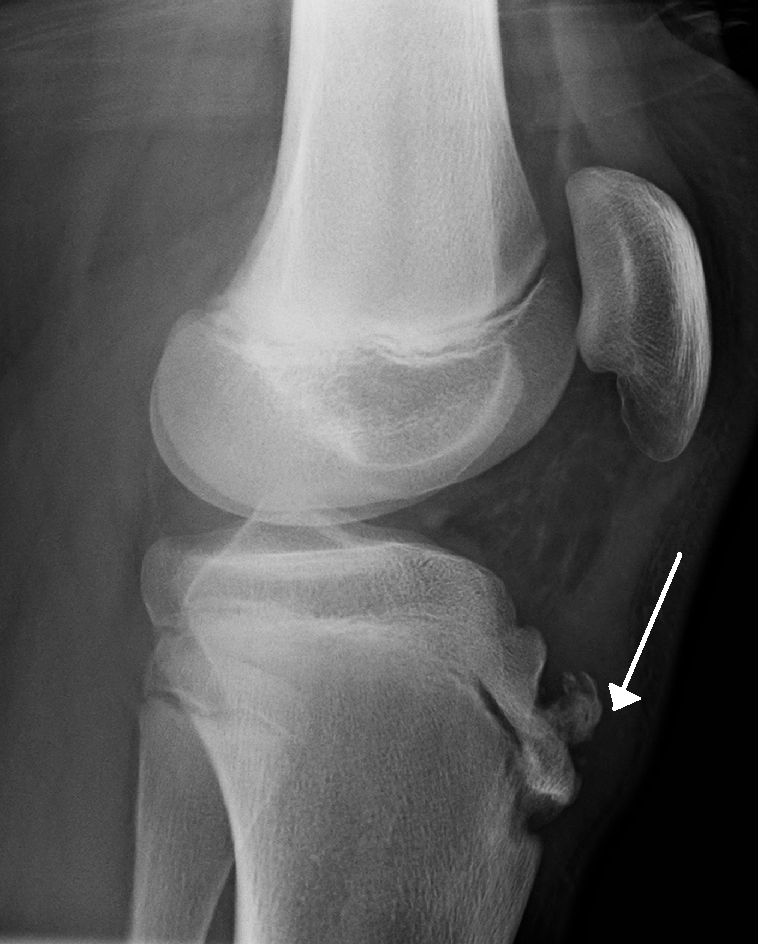
Clinical SignificanceMost commonly occurs in adolescents as a result of overuse stress in athletics requiring explosive running, jumping, or cutting. This places an extreme amount of stress on the tibial tubercle and may lead to a chronic avulsion. As the new healing callous is laid down, a pronounced deformity may develop.

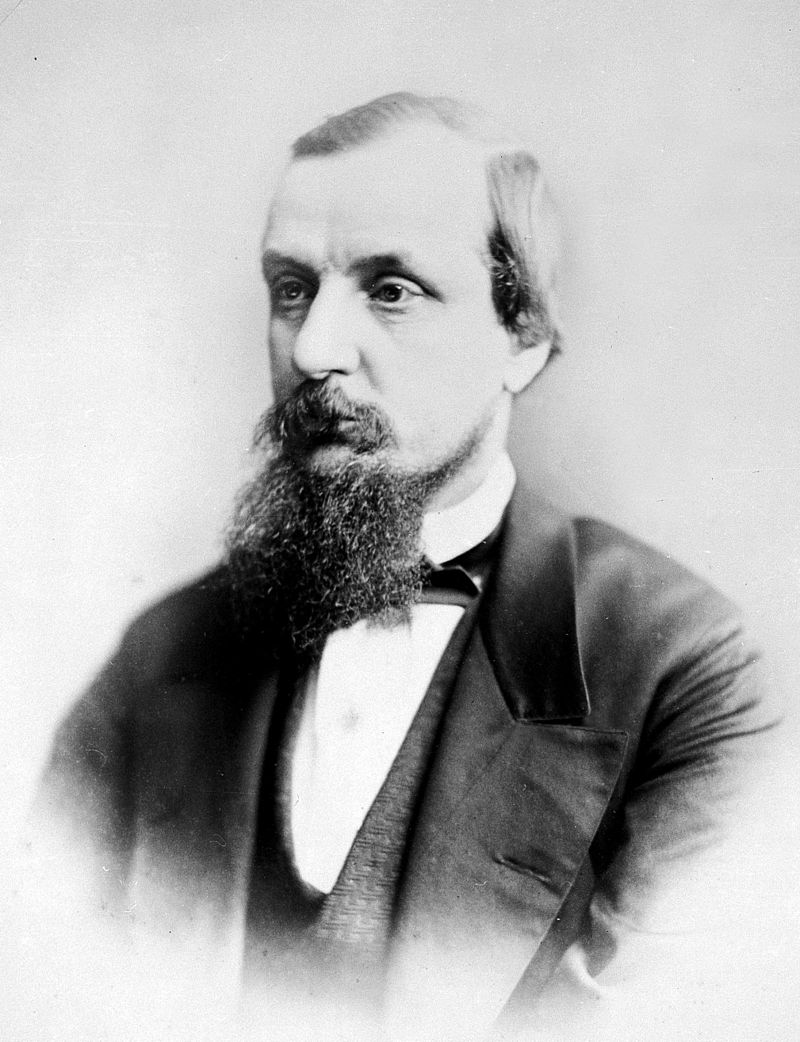
HistoryNamed after two physician who contemporaneously published on this condition in the same year. Robert Bayley Osgood (1873-1956), was an American orthopaedic surgeon, and received his medical doctorate from Harvard University in 1899. Dr. Osgood spent his entire career practicing in Boston at Massachusetts General Hospital and teaching at the Harvard Medical School. Carl Schlatter (1863-1934), was a Swiss physician and surgeon, and received his medical doctorate from the University of Zurich in 1889. Dr. Schlatter was a skilled surgeon and had a primary interest in trauma and causality medicine during World War I. Both physicians were well respected educators and professors of their time and both published their findings of this condition in 1903.


References

  1. Firkin BG and Whitwirth JA.  Dictionary of Medical Eponyms. 2nd ed.  New York, NY; Parthenon Publishing Group. 1996.
  2. Bartolucci S, Forbis P.  Stedman’s Medical Eponyms.  2nd ed.  Baltimore, MD; LWW.  2005.
  3. Yee AJ, Pfiffner P. (2012).  Medical Eponyms (Version 1.4.2) [Mobile Application Software].  Retrieved http://itunes.apple.com.
  4. Whonamedit – dictionary of medical eponyms. http://www.whonamedit.com
  5. Up To Date. www.uptodate.com
  6. Osgood RB. Lesions of the tibia tubercle occurring during adolescence.
    Boston Medical and Surgical Journal. 1903;148: 114-117. [article]
  7. Schlatter CB. Verletzungen des schnabelförmigen Forsatzes der oberen Tibiaepiphyse. Beiträge zur klinischen Chirurgie, 1903;38: 874-887. [article]

Ep-PAINE-nym


Maisonneuve Fracture


Other Known Aliasesnone


Definitionspiral fracture of the proximal third of the fibula caused by pronation with external rotation


Image result for maisonneuve

Clinical SignificanceThis injury is a sequelae of significant ankle trauma with disruption of the distal tibiofibular syndesmosis and can be unstable.  It is also one of the criteria of the Ottawa Rules of the Ankle so you don’t miss these


History – Named after Jules Germain François Maisonneuve (1809-1897), a French surgeon who studied under Guillaume Dupuytren in the mid-1800s.  He first reported this injury pattern in 1840 in the article entitled Recherches sur la fracture du Péroné.  He was also the first surgeon to advocate the use of external fixation in the management of ankle fractures


References

  1. Firkin BG and Whitwirth JA.  Dictionary of Medical Eponyms. 2nd ed.  New York, NY; Parthenon Publishing Group. 1996.
  2. Bartolucci S, Forbis P.  Stedman’s Medical Eponyms.  2nd ed.  Baltimore, MD; LWW.  2005.
  3. Yee AJ, Pfiffner P. (2012).  Medical Eponyms (Version 1.4.2) [Mobile Application Software].  Retrieved http://itunes.apple.com.
  4. Whonamedit – dictionary of medical eponyms. http://www.whonamedit.com
  5. Up To Date. www.uptodate.com
  6. Maisonneuve, J. G. (1840). Recherches sur la fracture du péroné. Paris. France: Loquin & Cie.

PAINE #PANCE Pearl – Musculoskeletal


Question


What rheumatologic disease can be summed up the phrase “can’t see, can’t pee, can’t climb a tree”?


Answer


The triad of ocular symptoms (conjunctivitis, uveitis, episcleritis, keratitis), genitourinary symptoms (dysuria, urethritis, cervicitis) and musculoskeletal symptoms (arthritis, enthesitis, dactylitis) are diagnostic of reactive arthritis.


Image result for cant see cant pee cant climb a tree

Ep-PAINE-nym


Hutchinson Fracture


Other Known AliasesChauffeur fracture, backfire fracture


Definition – intra-articular fracture of the radial styloid


Chauffeur fracture


Clinical SignificanceThis injury most commonly occurs from either direct trauma to the dorsum of the hand or from FOOSH with forced dorsiflexion and abduction


History – Named after Jonathan Hutchinson (1828-1913), who was an English physician and surgeon and received his medical doctorate from St. Bartholomew’s Hospital in London in 1850.  He enjoyed a prolific career practicing in ophthalmology and pathology, while also serving as president for numerous medical societies.  Dr. Hutchinson also produced more than 1200 medical articles and study extensively on infectious diseases.  In 1908, he was knighted by Edward VII for his contributions to medicine.  The colloquial term of chauffeur fracture comes from the fact that when the chauffeur would hand crank the car and the car backfired, the handle would shoot back and impact the palm of the hand.


Jonathan Hutchinson 2.jpg


References

  1. Firkin BG and Whitwirth JA.  Dictionary of Medical Eponyms. 2nd ed.  New York, NY; Parthenon Publishing Group. 1996.
  2. Bartolucci S, Forbis P.  Stedman’s Medical Eponyms.  2nd ed.  Baltimore, MD; LWW.  2005.
  3. Yee AJ, Pfiffner P. (2012).  Medical Eponyms (Version 1.4.2) [Mobile Application Software].  Retrieved http://itunes.apple.com.
  4. Whonamedit – dictionary of medical eponyms. http://www.whonamedit.com
  5. Up To Date. www.uptodate.com
  6. Radiopaedia.  Chauffeur Fracture. https://radiopaedia.org/articles/chauffeur-fracture
  7. WALES AE. Sir Jonathan HUTCHINSON, 1828-1913. The British journal of venereal diseases. 1963; 39:67-86. [pubmed]

Ep-PAINE-nym


Heberden’s Nodes

Other Known Aliasesnone

Definitionosteophytic growths on the distal interphalangeal joints of the fingers and toes

Heberden-Arthrose.JPG

Clinical SignificanceMost commonly seen in osteoarthritis and similar to, but much more common than, Bouchard’s nodes of the proximal interphalangeal joints.  They are much more common in women and seem to have a genetic predisposition.

History – Named after William Heberden (1710-1801), who was an English physician and received his medical doctorate from St. Johns College in Cambridge in 1739, where he made his name a distinguished medical lecturer at the university.  He received fellowship in the Royal College of Physicians in 1746 and then the Royal Society in 1749.  He enjoyed a prolific medical practice in London and Paris for over 30 years.  While semi-retired, he worked on a collection of papers for the Royal College of Physicians to be transcribed into a three volume textbook entitled Medical Transactions.  These were eventually revised and transcribed in English, by his son William Heberden the younger, which included a chapter on arthritis by Heberden the elder describing these findings.

William Heberden b1710.jpg


References

  1. Firkin BG and Whitwirth JA.  Dictionary of Medical Eponyms. 2nd ed.  New York, NY; Parthenon Publishing Group. 1996.
  2. Bartolucci S, Forbis P.  Stedman’s Medical Eponyms.  2nd ed.  Baltimore, MD; LWW.  2005.
  3. Yee AJ, Pfiffner P. (2012).  Medical Eponyms (Version 1.4.2) [Mobile Application Software].  Retrieved http://itunes.apple.com.
  4. Whonamedit – dictionary of medical eponyms. http://www.whonamedit.com
  5. Up To Date. www.uptodate.com
  6. https://archive.org/details/2556044R.nlm.nih.gov

PAINE #PANCE Pearl – Musculoskeletal


Question


Thoracic outlet syndrome is constellation of signs and symptoms due to compression of the neurovascular bundle in the upper thorax.

  1. What are the three main classifications?
  2. What structures can compression the bundle?
  3. What are the three physical examination maneuvers you can do at the bedside to help diagnoses?


Answer


  • The main classifications of thoracic outlet syndrome are:
    • Neurogenic
      1. Most common
      2. Signs and symptoms include pain, paresthesias, numbness, and weakness
    • Venous
      1. 2nd most common
      2. Signs and symptoms include hand swelling, pain, cyanosis with repetitive activity
    • Arterial
      1. Least common
      2. Signs and symptoms include pain, pallor, paresthesias, and poikilothermia not related to activity
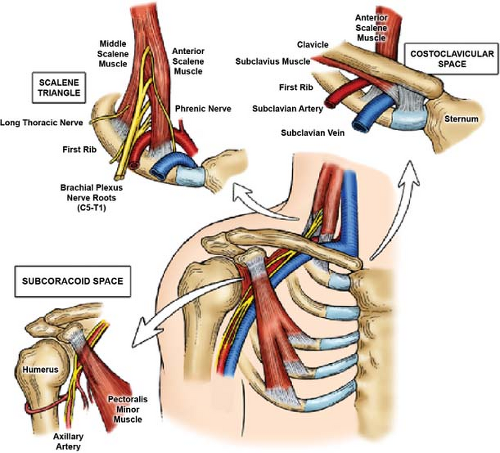
  • There are three anatomic areas that thoracic outlet obstruction can occur in:
    • Scalene Triangle
      1. Most common site of neurogenic
    • Costoclavicular space
      1. Most common site of venous
    • Pectoralis minor space
      1. Most common site for arterial

Image result for thoracic outlet syndrome scalene

Image result for thoracic outlet syndrome scalene


  • There are several bedside maneuvers you can perform to help distinguish between these types


Ep-PAINE-nym


Bouchard’s Nodes


Other Known Aliasesnone


Definitionnodular growths on the proximal interphalangeal joints of the fingers and toes


Clinical SignificanceMost commonly seen in osteoarthritis and similar to Heberden’s nodes of the distal interphalangeal joints, though they are less common.


History – Named after Charles Jacques Bouchard (1837-1915), a French pathologist who received his medical doctorate in 1866 while studying under the famous Dr. Jean Martin Charcot. He practiced at the Bicêtre Hospital where he was appointed chair of general pathology in 1879.  His seminal work was the Traité de Pathologie Générale, which was a compendium of medical pathology and where the description of his eponymous findings were first recorded.


Image result for Traité de Pathologie Générale bouchard


References

  1. Firkin BG and Whitwirth JA.  Dictionary of Medical Eponyms. 2nd ed.  New York, NY; Parthenon Publishing Group. 1996.
  2. Bartolucci S, Forbis P.  Stedman’s Medical Eponyms.  2nd ed.  Baltimore, MD; LWW.  2005.
  3. Yee AJ, Pfiffner P. (2012).  Medical Eponyms (Version 1.4.2) [Mobile Application Software].  Retrieved http://itunes.apple.com.
  4. Whonamedit – dictionary of medical eponyms. http://www.whonamedit.com
  5. Up To Date. www.uptodate.com
  6. Contrepois A. The clinician, germs and infectious diseases: the example of Charles Bouchard in Paris. Medical history. 2002; 46(2):197-220. [pubmed]
  7. https://www.nature.com/articles/140457c0

PAINE #PANCE Pearl – Musculoskeletal


Question


Thoracic outlet syndrome is constellation of signs and symptoms due to compression of the neurovascular bundle in the upper thorax.

  1. What are the three main classifications?
  2. What structures can compression the bundle?
  3. What are the three physical examination maneuvers you can do at the bedside to help diagnoses?

Ep-PAINE-nym


Jones Fracture


Other Known Aliasesnone


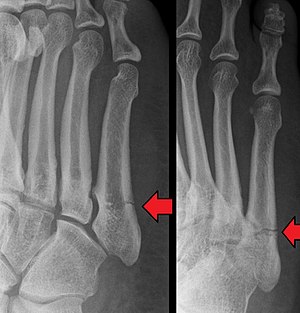
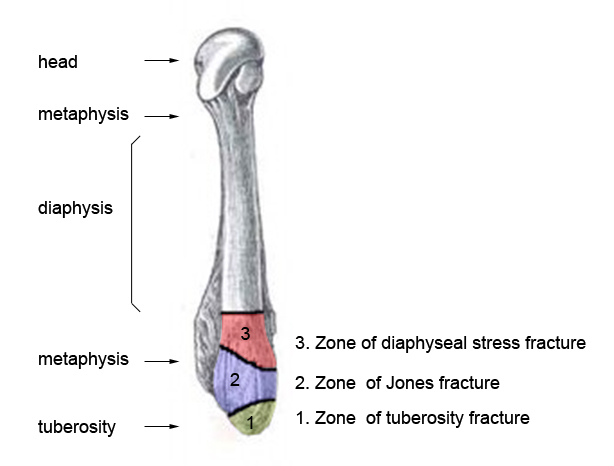
Definition – fracture of the base of the 5th metatarsal at the metaphyseal-diaphyseal junction

Image result for jones fracture

Clinical SignificanceFairly easy radiographical diagnosis to make, but careful examination must distinguish between acute injuries in Zone 1 and 2 and chronic injuries in Zone 3.

Image result for jones fractureImage result for jones fracture zones

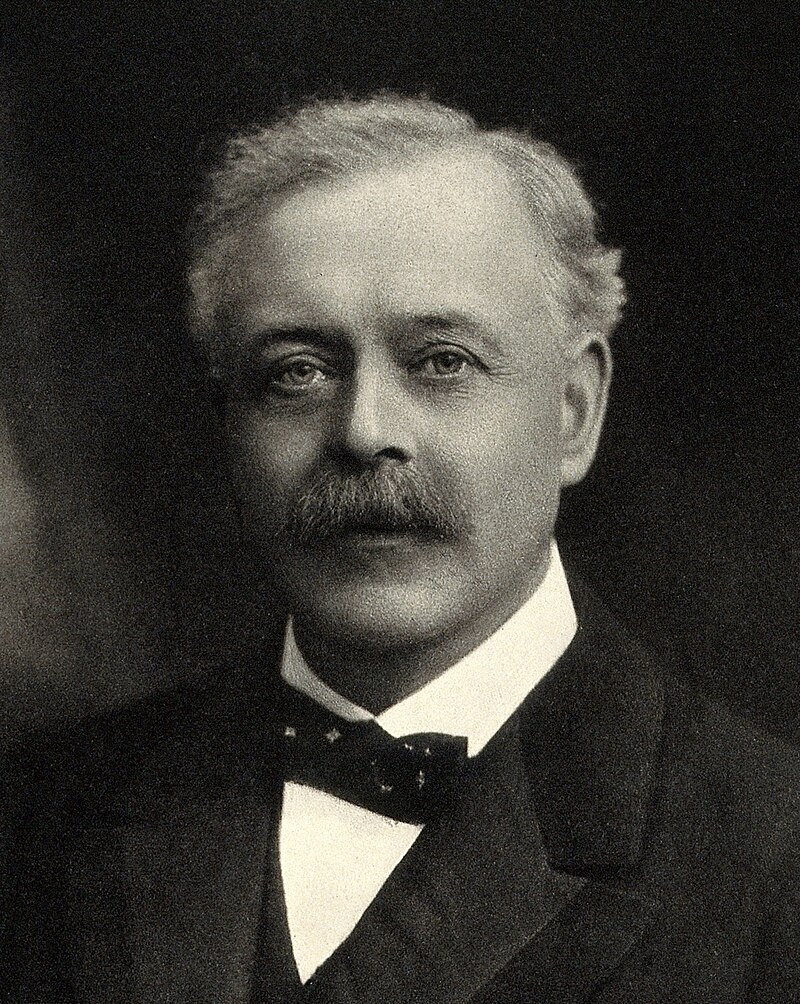
History – Named after Sir Robert Jones (1857-1933), a Welsh orthopaedic surgeon and received his medical doctorate from the Liverpool School of Medicine in 1887 and achieved fellowship in 1889.  Along with his uncle, he was a pioneer in the diagnosis and management of fractures.  He first described the injury that bears his name in 1902 in the Annals of Surgery entitled “Fracture of the Base of the Fifth Metatarsal by Indirect Violence”.  This paper was a six patient case report on the injury pattern and Dr. Jones was patient number one having injured his foot several months prior dancing.  After Wilhem Rontgen published his discovery of x-rays in 1895, Dr. Jones adopted this new modality fully in the practice of orthopaedics and published the first clinical radiograph in 1896 about a 12yo with a bullet lodged in his wrist that could not be found clinically and required a 2hr long exposure.

Robert Jones (surgeon).jpg

scanned image of page 697


References

  1. Firkin BG and Whitwirth JA.  Dictionary of Medical Eponyms. 2nd ed.  New York, NY; Parthenon Publishing Group. 1996.
  2. Bartolucci S, Forbis P.  Stedman’s Medical Eponyms.  2nd ed.  Baltimore, MD; LWW.  2005.
  3. Yee AJ, Pfiffner P. (2012).  Medical Eponyms (Version 1.4.2) [Mobile Application Software].  Retrieved http://itunes.apple.com.
  4. Whonamedit – dictionary of medical eponyms. http://www.whonamedit.com
  5. Up To Date. www.uptodate.com
  6. Jones Fracture.  Wheeless’ Textbook of Orthopaedics. http://www.wheelessonline.com/ortho/jones_fracture
  7. OrthoBullets. https://www.orthobullets.com/foot-and-ankle/7031/5th-metatarsal-base-fracture
  8. Jones R. I. Fracture of the Base of the Fifth Metatarsal Bone by Indirect Violence. Annals of surgery. 1902; 35(6):697-700.2. [pubmed]
  9. Jones R, Lodge O.  The Discovery of a Bullet Lost in the Wrist by Means of the Roentgen Rays.  Lancer. 1896;147(3782):476-477 [article]