Ep-PAINE-nym


Apt-Downey Test


Other Known Aliases – alkali denaturation test

DefinitionLab test where the blood sample is hemolyzed using sterile water and centrifuged to produce a hemoglobin supernatent.  This is then mixed with 1% NaOH.  Fetal hemoglobin will stay pink, while maternal hemoglobin will turn yellow/brown.
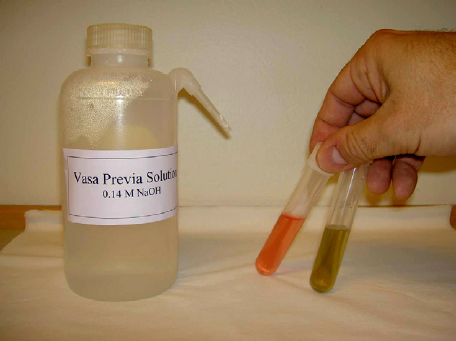
fig-2-the-complete-vasa-previa-testing-setup-shown-a-beaker-of-014-m-naoh-and-two

Clinical SignificanceHelps differentiate maternal from fetal blood in cases of vaginal bleeding or neonatal hematemesis/hematochezia.

History – Given to Dr. Leonard Apt and Dr. William Downey, Jr., who were physicians at Harvard Medical School and Children’s Medical Center in Boston, MA in the mid-1900’s.


References

  1. Firkin BG and Whitwirth JA.  Dictionary of Medical Eponyms. 2nd ed.  New York, NY; Parthenon Publishing Group. 1996.
  2. Yee AJ, Pfiffner P. (2012).  Medical Eponyms (Version 1.4.2) [Mobile Application Software].  Retrieved http://itunes.apple.com
  3. Apt L, Downey WS. Melena neonatorum: the swallowed blood syndrome; a simple test for the differentiation of adult and fetal hemoglobin in bloody stools. The Journal of Pediatrics. 47(1):6-12. 1955. [pubmed]

PAINE #PANCE Pearl – OB/GYN


  1. Women should be screened for gestational diabetes at 24-28 gestation.
  2. There are 2 different recommended testing strategies:
    1. Two-Step (most common)
      1. 50g glucose challenge
        1. Given regardless of when last meal was.
        2. Serum glucose measured at 1-hour
          1. ≥130-140 mg/dL is positive test
            1. The lower the threshold the higher sensitivity, but increased false positives
            2. The higher the threshold the higher the specificity, but with decreased sensitivity
      2. If 1st step positive, a 100g glucose challenge given
        1. Overnight fast and measured at:
          1. Fasting –> (+) if ≥ 95 mg/dL
          2. 1 hour –> (+) if ≥ 180 mg/dL
          3. 2 hour –> (+) if ≥ 155 mg/dL
          4. 3 hour –> (+) if ≥ 140 mg/dL
    2. One-Step
      1. 75 glucose challenge
        1. Given after overnight fast and measured at:
          1. Fasting –> (+) if ≥ 92 mg/dL
          2. 1 hour –> (+) if ≥ 180 mg/dL
          3. 2 hour –> (+) if ≥ 153 mg/dL

References

  1. Practice Bulletin No. 137: Gestational diabetes mellitus. Obstetrics and Gynecology. 2013;122(2 Pt 1):406-16. [pubmed]
  2. Hod M, Kapur A, Sacks DA. The International Federation of Gynecology and Obstetrics (FIGO) Initiative on gestational diabetes mellitus: A pragmatic guide for diagnosis, management, and care. International journal of gynaecology and obstetrics. 2015;131 Suppl 3:S173-211. [pubmed]
  3. Moyer VA, . Screening for gestational diabetes mellitus: U.S. Preventive Services Task Force recommendation statement. Annals of internal medicine. 204;160(6):414-20. [pubmed]

Ep-PAINE-nym


Ferguson’s Reflex


Other Known AliasesFetus Ejection Reflex

DefinitionStimulation of the cervix leading to contraction of the uterus through oxytocin release.

Clinical SignificanceDemonstrates positive feedback during labor and delivery to increase uterine contractions as cervical dilation progresses. Long standing belief that epidural anesthesia before cervical dilation increased risk of cesarean section (this was debunked in 2005).

History – Given to Dr. James Ferguson, a Canadian obstetrician, in 1940 after he showed this physiologic effect in rabbits and postulated it to be true in humans.


References

  1. Firkin BG and Whitwirth JA.  Dictionary of Medical Eponyms. 2nd ed.  New York, NY; Parthenon Publishing Group. 1996.
  2. Wong CA, Scavone BM, Peaceman AM. The risk of cesarean delivery with neuraxial analgesia given early versus late in labor. The New England journal of medicine. 2005;352(7):655-65. [pubmed]
  3. Newton N.  The fetus ejection reflex revisited.  Birth.  1987;14(2):106-108.

#27 – Abnormal Uterine Bleeding – Definitions and Classifications


***LISTEN TO THE PODCAST HERE***


History of FIGO

Because of confusing terminology and difficulty in translating to other languages, the International Federation of Obstetrics and Gynecology (FIGO) created a special task force in 2005 charged with clarifying the terminology and classifying the different causes.  This way clinicians, patients, and researchers throughout the world could be talking the same language.  Dysfunctional uterine bleeding (DUB) was replaced by abnormal uterine bleeding (AUB).. They also introduced a classification system to help sub-divide the causes of AUB.


But in order to define something as “abnormal”, they needed to define normality, which can obviously be very difficult when incorporating the world’s population. The consensus definitions were then agreed upon in 2015 to include the 5th to 95th percentiles form the available data.


The FIGO definition of AUB is any symptomatic variation from normal menstruation, with regards to frequency, regularity, duration, or volume.

screen-shot-2017-02-02-at-4-21-49-pm


Classifications of Abnormal Uterine Bleeding

In 2011, FIGO created a classification system for the main causes of AUB.  It is broken down into 2 main categories based on whether or not the pathology can be seen on imaging or histopathology.  This also allows for subclassifications due to multiple etiologies.
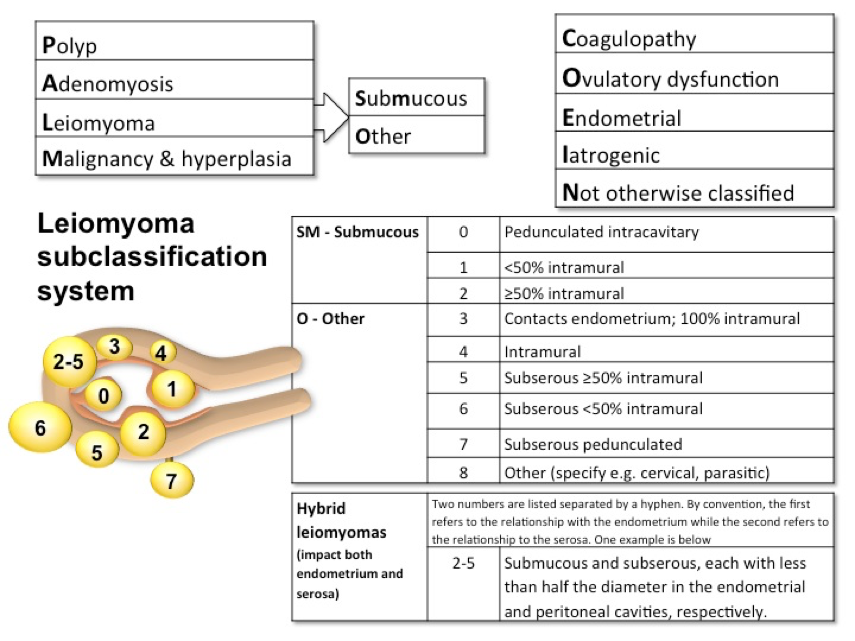
  • Structural (PALM)
    • Polyps (AUB-P)
    • Adenomyosis (AUB-A)
    • Leiomyomas (AUB-L)
      • Hierarchy of classification
        • Primary
          • Presence or absence
        • Secondary
          • Submucosal
            • Abuts the endometrium or distorts the endometrial cavity
          • Other
            • Subserosal
          • Tertiary
            • 0-8 numbering system based on endometrial or serosal involvement
            • Hybrid (2-5)
              • Submucosal and subserosal
    • Malignancy and hyperplasia (AUB-M)
  • Non-structural (COEIN)
    • Coagulopathy (AUB-C)
      • Most commonly is von Willebrand disease
    • Ovulatory dysfunction (AUB-O)
      • At least one cycle that varies by more than 7 days in 12 months
    • Endometrial (AUB-E)
      • Category of exclusion
    • Iatrogenic (AUB-I)
      • Medications
        • Anticoagulants
        • Hormone therapies
      • IUDs
    • Not otherwise classified (AUB-N)

picture1


Documentation

Very similar to the documentation for an OB patient (TPAL score), the documentation uses the PALM-COEIN scoring system for “simplicity”.  Example:

  • Patient with adenomyosis would be:
    • P0A1L0M0-C0O0E0I0N0
  • Patient with endometrial hyperplasia and a subserosal leiomyoma < 50% intramural would be:
    • P0A0L6M1-C0O0E1I0N0

References

  1. Fraser IS, Critchley HO, Munro MG, Broder M, . A process designed to lead to international agreement on terminologies and definitions used to describe abnormalities of menstrual bleeding. Fertility and Sterility. 2007; 87(3):466-76. [pubmed]
  2. Woolcock JG, Critchley HO, Munro MG, Broder MS, Fraser IS. Review of the confusion in current and historical terminology and definitions for disturbances of menstrual bleeding. Fertility and Sterility. 2008;90(6):2269-80. [pubmed]
  3. Fraser IS, Critchley HO, Munro MG, Broder M. Can we achieve international agreement on terminologies and definitions used to describe abnormalities of menstrual bleeding? Human reproduction (Oxford, England). 2007;22(3):635-43. [pubmed]
  4. Harlow SD, Lin X, Ho MJ. Analysis of menstrual diary data across the reproductive life span applicability of the bipartite model approach and the importance of within-woman variance. Journal of clinical epidemiology. 2000;53(7):722-33. [pubmed]
  5. Fraser IS, Critchley HO, Broder M, Munro MG. The FIGO recommendations on terminologies and definitions for normal and abnormal uterine bleeding. Seminars in reproductive medicine. 2011;29(5):383-90. [pubmed]
  6. Munro MG, Critchley HO, Broder MS, Fraser IS, . FIGO classification system (PALM-COEIN) for causes of abnormal uterine bleeding in nongravid women of reproductive age. International journal of gynaecology and obstetrics: the official organ of the International Federation of Gynaecology and Obstetrics. 2011;113(1):3-13. [pubmed]

Ep-PAINE-nym


Chadwick Sign


DefinitionBlue discoloration of the cervix and vaginal mucosa seen in early pregnancy.

Clinical SignificanceDue to increased blood flow to support a newly implanted embryo and can be seen 6-8 weeks after conception.

History – Given to James R. Chadwick, an American gynecologist of the late 19th century, after he read a paper before the American Gynecologic Society in 1886, but 1st described by Etienne Jacquemin in 1836.  Dr. Chadwick did give appropriate recognition to Dr. Jacquemin during this presentation.


References

  1. Firkin BG and Whitwirth JA.  Dictionary of Medical Eponyms. 2nd ed.  New York, NY; Parthenon Publishing Group. 1996.
  2. Gleichert JE. Etienne Joseph Jacquemin, discoverer of ‘Chadwick’s sign’. Journal of the history of medicine and allied sciences. 1971;26(1):75-80. [pubmed]

Answer to OB/GYN Case #2

Answers

Next best step: Reflex HPV cotesting

Follow-up Recommendations: 3 years

Discussion

Atypical squamous cells of undetermined significance (ASC-US) is a common “abnormal” pap result.  The 2012 American Society of Clinical Pathologist (ASCP) recommend that women ages 21-29 should have routine cytology alone performed every 3 years as long as the results are normal.  If ASC-US results, then reflex HPV contesting is recommended.  If HPV (-), then return to routine cytology in 3 years.  If HPV (+), then proceed to colposcopy.  Another acceptable option is to have the patient return to clinic in 1 year for repeat pap.  If ASC-US (+) again, then proceed to colposcopy.  The logic is that most women in this age group clear any HPV infection without the need for colposcopy.  This is the safer choice if the patient is wanting to have more children to limit any complications of cervical incompetence.
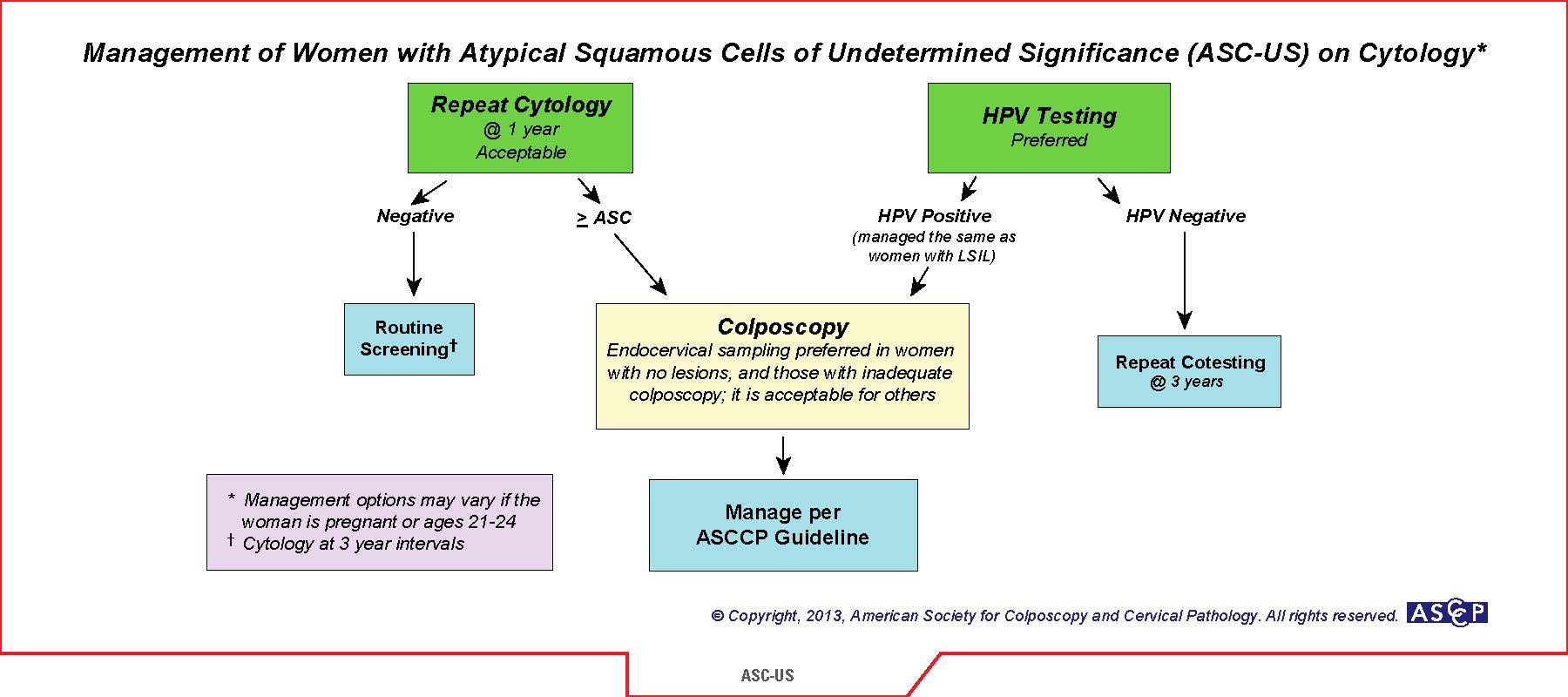
ASCCP Management Guidelines_August 2014_Page_07

References

1)  American Society of Clinical Pathologists. Screening Guidelines. Available at: http://www.asccp.org/guidelines/screening-guidelines.


#8 – Gestational Hypertension


****Listen to the podcast by clicking here****


Definition of Gestation/Pregnancy-Induced Hypertension

  1. Any new onset (not previously diagnosed) of hypertension (SBP > 140mmHg and/or DBP > 90mmHg) at > 20 weeks gestation in the absence of proteinuria or new signs of end-organ damage
    1. Severe = SBP > 160mmHg and/or DBP > 110mmHg
  2. Documented on at least 2 occasions at least 4 hours apart

Epidemiology

  • 5-10% of all pregnancies
    • 6-17% of healthy nulliparous women
    • 2-4% of healthy multiparous women
  • 16% of all maternal deaths are related to hypertensive disorders

Pathophysiology

This is still unknown but several theories exist and include:

  • Maladaption to the normal physiologic changes of pregnancy
    • Increased blood volume
    • Elevated angiotensinogen from increased estrogen production
  • Abnormal trophoblast invasion of uterine blood vessels
    • Causes spiral arterioles to narrow
  • Immunologic intolerance between fetoplacental and maternal tissues

Risk Factors

  • Previous history of preeclampsia
  • Multifetal gestation
  • Overweight/obese
  • African-American

Fetal Well-being

  • Non-stress test and ultrasound should be performed upon diagnosis to assess fetal growth, fetal measurements, and amniotic fluid estimation and serially depending on severity.

Laboratory Evaluation

  • 24-hour urine collection for protein
    • > 300mg of protein = proteinuria
  • Platelet count
    • < 100,000 = thrombocytopenia
  • Liver Function Test
    • 2x transaminases = impaired liver function
  • Serum creatinine
    • > 1.1mg/dL = impaired renal function

Preeclampsia

  • Gestational hypertension with proteinuria and/or end-organ damage
    • Pulmonary edema, cerebral or visual disturbance, or any of the above laboratory abnormalities
  • 10-50% of women with gestation hypertension go on to develop preeclampsia within 5 weeks of diagnosis
  • Risk factors
    • Gestational hypertension diagnosed < 34 weeks gestation
    • Mean SBP > 135mmHg on 24-hour monitoring
    • Abnormal uterine artery Doppler
    • Elevated serum uric acid level (> 5.2mg/dL)

Management

Revolves around 3 main factors:

  1. Fetal growth and maturation
  2. Maternal and fetal benefits from early intervention
  3. Maternal and fetal risk from expectant management
HYPITAT

Broekhuijsen K, et al. Lancet. 2015;385(9986):2492-501.

HYPITAT-II Trial (HYPertension and Preeclampsia Intervention At Term)

  • 897 women diagnosed with non-severe gestational hypertension between 34-37 weeks gestation
  • Study group – delivery within 24-hours of diagnosis (induction or cesarean)
  • Control group – management until 37 weeks gestation
  • Results
    • 3% of control group vs 0% of study group developed at least one of the following:
      • Thromboembolic complications
      • HELLP syndrome
      • Eclampsia
      • Placental abruption
    • 3% of of study group developed neonatal respiratory distress syndrome vs 1.1% of control group

Non-severe (<160/110mmHg) and no preeclampsia

  • Screening
    • BP monitoring one or twice weekly with weekly assessment of proteinuria, platelet count, and liver enzymes
    • Weekly NST with sonographic estimation of amniotic fluid index
  • No evidence for starting antihypertensive therapy, unless patient has pre-existing end-organ dysfunction that could be worsened with hypertension (renal, cardiac, etc.)
  • Plan for delivery between 37-38 weeks

Severe (>160/110mmHg) and no preeclampsia

  • Same screening recommendations
  • Should be treated with antihypertensive therapy

Meds

  • Goals
    • No evidence of end-organ damage = < 160/110mmHg
    • Evidence of end-organ damage = < 140/90mmHg
  • Corticosteroids
    • Antenatal corticosteroids (23-34 weeks gestation) significantly reduces the risk of respiratory distress syndrome, intraventricular hemorrhage, and neonatal death
    • Promotes fetal lung maturity
      • Increases lecithin:sphingomyelin ratio
      • Accelerates development of type 1 and type II pneumocytes
        • Increases surfactant levels
      • Dosing
        • Betamethasone 12mg x 2 IM given 24 hours apart
        • Dexamethasone 6mg x 4 IM given 12 hours apart
      • Plan for delivery
        • Delivery between 34-36 weeks, unless preeclampsia develops

Preeclampsia

  • Severe preeclampsia is gestation hypertension with proteinuria AND one of the following:
    • Symptoms of CNS dysfunction
      • Photopsia, scotomata, cortical blindness, retinal vasospasm
      • Severe headache
      • AMS
    • Hepatic abnormality
      • RUQ pain or transaminases > 2x normal
    • SBP > 160mmHg or DBP > 110mmHg
    • Thrombocytopenia (<100k)
    • Renal abnormality (creatinine > 1.1mg/dL)
    • Pulmonary edema
  • Complications
complication

Hauth JC, et al. Obstet Gynecol. 200;95(1):24-8.

  • Management of severe disease
    • If > 34 weeks, immediate delivery
    • If > 24 weeks but < 34 weeks, hospitalize until delivery and consult high-risk maternal/fetal specialist for management and delivery decision based on risk/benefit
      • BP checks every 4 hours
      • Daily NST, twice weekly ultrasound for measurements, weekly umbilical artery doppler
      • Strict I&Os
      • CBC, creatinine, LFT twice weekly
      • Corticosteroids (if not already given)
    • If < 24 weeks, consider termination of pregnancy
      • < 20% fetal survival
  • Management of non-severe disease
    • Inpatient vs outpatient = no difference in outcomes
    • Bedrest
    • Office follow-up every 1-3 days
    • Weekly platelet count, creatinine, and LFTs
    • Delivery at 34-36 weeks
  • Intrapartum management
    • BP control
    • Seizure prophylaxis
      • Magnesium sulfate
        • 6g IV over 20min, followed by 2g/hr as infusion
        • Continued for 24 hours post-partum

Long-term Prognosis

  • 15% of women with gestational hypertension have persistent hypertension after 12 weeks post-partum
  • 22% of women will develop gestation hypertension again with subsequent pregnancies
  • Increased risk of cardiovascular disease, hyperlipidemia, kidney disease, and diabetes


References

1) ACOG Task Force on Hypertension in Pregnancy.  Obstetrics & Gynecology.  2013;122(5).

2) Hauth JC, Ewell MG, Levine RJ, et al. Pregnancy outcomes in healthy nulliparas who developed hypertension. Calcium for Preeclampsia Prevention Study Group. Obstet Gynecol. 2000;95(1):24-8.

3) Yoder SR, Thornburg LL, Bisognano JD. Hypertension in pregnancy and women of childbearing age. Am J Med. 2009;122(10):890-5.

4) Gaillard R, Steegers EA, Hofman A, Jaddoe VW. Associations of maternal obesity with blood pressure and the risks of gestational hypertensive disorders. The Generation R Study. J Hypertens. 2011;29(5):937-44.

5) Sibai BM. Diagnosis and management of gestational hypertension and preeclampsia. Obstet Gynecol. 2003;102(1):181-92.

6) Khan KS, Wojdyla D, Say L, Gülmezoglu AM, Van look PF. WHO analysis of causes of maternal death: a systematic review. Lancet. 2006;367(9516):1066-74.

7) Saudan P, Brown MA, Buddle ML, Jones M. Does gestational hypertension become pre-eclampsia?. Br J Obstet Gynaecol. 1998;105(11):1177-84.

8) Melamed N, Ray JG, Hladunewich M, Cox B, Kingdom JC. Gestational hypertension and preeclampsia: are they the same disease?. J Obstet Gynaecol Can. 2014;36(7):642-7.

9) Wu Y, Xiong X, Fraser WD, Luo ZC. Association of uric acid with progression to preeclampsia and development of adverse conditions in gestational hypertensive pregnancies. Am J Hypertens. 2012;25(6):711-7.

10) Broekhuijsen K, Van baaren GJ, Van pampus MG, et al. Immediate delivery versus expectant monitoring for hypertensive disorders of pregnancy between 34 and 37 weeks of gestation (HYPITAT-II): an open-label, randomised controlled trial. Lancet. 2015;385(9986):2492-501.

11) Spong CY, Mercer BM, D’alton M, Kilpatrick S, Blackwell S, Saade G. Timing of indicated late-preterm and early-term birth. Obstet Gynecol. 2011;118(2 Pt 1):323-33.

12) Roberts D, Dalziel S. Antenatal corticosteroids for accelerating fetal lung maturation for women at risk of preterm birth. Cochrane Database Syst Rev. 2006;(3):CD004454.

13) Carlo WA, Mcdonald SA, Fanaroff AA, et al. Association of antenatal corticosteroids with mortality and neurodevelopmental outcomes among infants born at 22 to 25 weeks’ gestation. JAMA. 2011;306(21):2348-58.

14) Bombrys AE, Barton JR, Nowacki EA, et al. Expectant management of severe preeclampsia at less than 27 weeks’ gestation: maternal and perinatal outcomes according to gestational age by weeks at onset of expectant management. Am J Obstet Gynecol. 2008;199(3):247.e1-6.

15) Sibai BM. Magnesium sulfate prophylaxis in preeclampsia: Lessons learned from recent trials. Am J Obstet Gynecol. 2004;190(6):1520-6.

16) Reiter L, Brown MA, Whitworth JA. Hypertension in pregnancy: the incidence of underlying renal disease and essential hypertension. Am J Kidney Dis. 1994;24(6):883-7.

17) Van oostwaard MF, Langenveld J, Schuit E, et al. Recurrence of hypertensive disorders of pregnancy: an individual patient data metaanalysis. Am J Obstet Gynecol. 2015;212(5):624.e1-17.

18) Hauth JC, Ewell MG, Levine RJ, et al. Pregnancy outcomes in healthy nulliparas who developed hypertension. Calcium for Preeclampsia Prevention Study Group. Obstet Gynecol. 2000;95(1):24-8.