32yo man, who is otherwise healthy with no PMH, presents to your clinic with a 2-month history of polyuria, nocturia, and polydipsia. Both of his parents have DMII and told him he needed “to get his sugar checked”. He denies any weight changes or vision disturbances. Vitals in clinic are BP-112/72 mmHg, HR-108, RR-12, O2-100%, and temp-98.9o. Initial screening labs are below.
What is the most likely diagnosis?
What additional labs should be ordered?
Answer
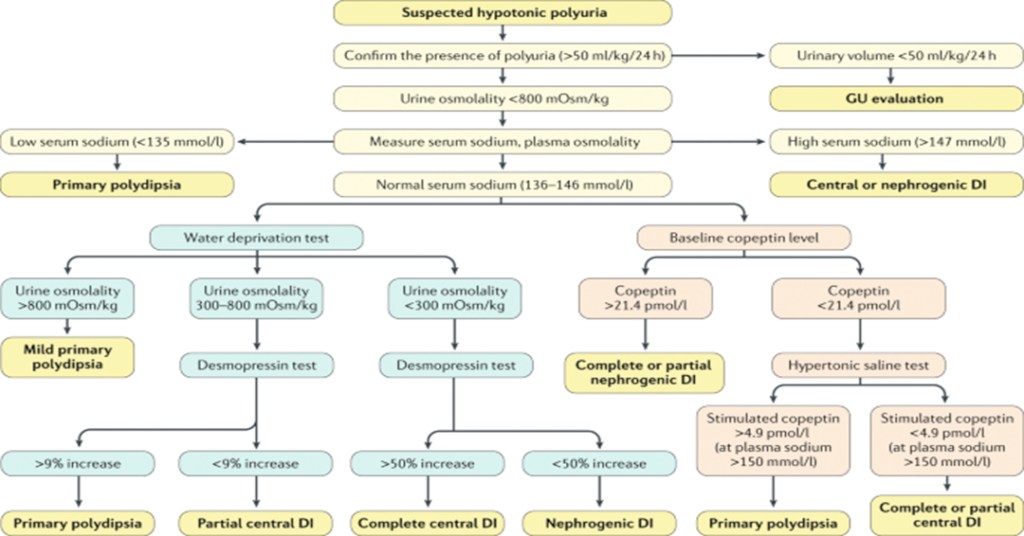
This patient likely has diabetes insipidus given the normal glucose/HbA1c and hypernatremia with polyuria. Next step in the diagnostic evaluation would be to check a urine osmolarity and plasma copeptin.
Definition – retraction of the upper eyelid in Grave’s disease causing abnormal wideness of the palpebral fissure
Clinical Significance – a classic examination of the ophthalmopathy of thyrotoxicosis in which you will see the white of the sclera clearly visible at the upper margin of the cornea with direct outward gaze.
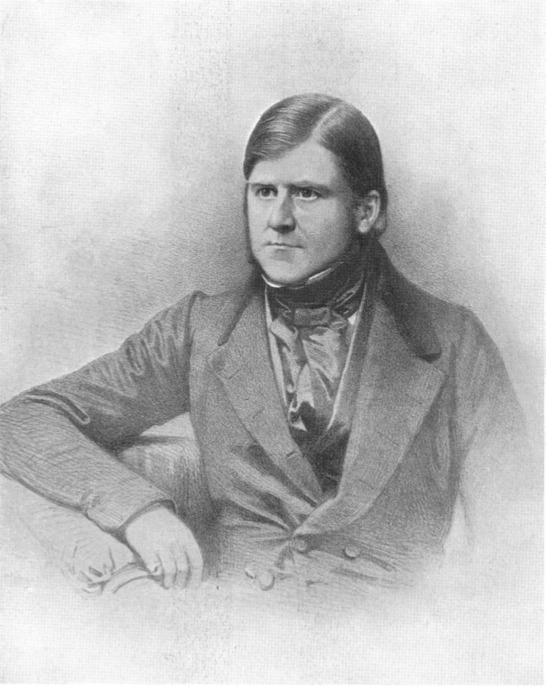
History – Named after John Dalrymple (1803-1852), an English ophthalmologist who received his medical doctorate from the University of Edinburgh in 1827. He would spend his entire, albeit short due to ill health, career as an eye surgeon at the Royal Ophthalmic Hospital in London. He was also a skilled histologist and microscopist and was the first to publish on the findings of the Bence Jones protein of multiple myeloma. His eponymonic examination finding was published, shortly before his untimely death at 47, in his magnum opus “Pathology of the Human Eye” in 1852.
References
Firkin BG and Whitwirth JA. Dictionary of Medical Eponyms. 2nd ed. New York, NY; Parthenon Publishing Group. 1996.
Bartolucci S, Forbis P. Stedman’s Medical Eponyms. 2nd ed. Baltimore, MD; LWW. 2005.
Yee AJ, Pfiffner P. (2012). Medical Eponyms (Version 1.4.2) [Mobile Application Software]. Retrieved http://itunes.apple.com.
32yo man, who is otherwise healthy with no PMH, presents to your clinic with a 2-month history of polyuria, nocturia, and polydipsia. Both of his parents have DMII and told him he needed “to get his sugar checked”. He denies any weight changes or vision disturbances. Vitals in clinic are BP-112/72 mmHg, HR-108, RR-12, O2-100%, and temp-98.9o. Initial screening labs are below.
Definition – scale of physical development in children, adolescents, and adults based on primary and secondary sex characteristics
Clinical Significance – every patient will progress through each of the five stages during development, but due to innate individual variability, the rate and timing of each of the stages is highly variable. There are both a male and female scale and evaluates breast and testicular size, genitals, and pubic hair distribution.
History – Named after James Mourilyan Tanner (1920-2010), a British pediatric endocrinologist who received his medical doctorate from the University of Pennsylvania in 1944, as well as a fellowship in endocrinology from Johns Hopkins as a result of a Rockefeller exchange grant program. A supurb hurdler and athlete prior to WWII, he likely would have competed in the in 1940 Olympics. Following his training stateside, he would return to England to oversee a national study on the effects of malnutrition on children. While documenting and analyzing the data, he noticed a trend of secondary physical characteristics as children and adolescents developing into adulthood. This led to a 20-year longitudinal study on human development and the publication of his eponymous staging system in 1962 in his classic textbook “Growth at Adolescence”.
References
Firkin BG and Whitwirth JA. Dictionary of Medical Eponyms. 2nd ed. New York, NY; Parthenon Publishing Group. 1996.
Bartolucci S, Forbis P. Stedman’s Medical Eponyms. 2nd ed. Baltimore, MD; LWW. 2005.
Yee AJ, Pfiffner P. (2012). Medical Eponyms (Version 1.4.2) [Mobile Application Software]. Retrieved http://itunes.apple.com.
Inker LA, Astor BC, Fox CH, et al. KDOQI US commentary on the 2012 KDIGO clinical practice guideline for the evaluation and management of CKD. Am J Kidney Dis. 2014; 63(5):713-35. [pubmed]
Stevens PE, Levin A. Evaluation and management of chronic kidney disease: synopsis of the kidney disease: improving global outcomes 2012 clinical practice guideline. Ann Intern Med. 2013; 158(11):825-30. [pubmed]
Andrassy KM. Comments on ‘KDIGO 2012 Clinical Practice Guideline for the Evaluation and Management of Chronic Kidney Disease’. Kidney Int. 2013; 84(3):622-3. [pubmed]
This one is a quick one this week. When evaluating a patient with testicular pain (either acute or chronic), what are the specific physical examination techniques you can perform and what conditions do they help rule in/out?
Answer
Position of the Testicle
Side-lying (long axis transverse) position suggests testicular torsion
also called the “Bell Clapper” deformity
Cremesteric Reflex
Pinching the skin of the upper thigh causes elevation of testes
If absent, suggests testicular torsion
Blue Dot Sign
Tender nodule with blue discoloration on the upper pole of the testes
If present, suggests appendix testes torsion
Prehn Sign
Manual elevation of testes relieves the pain
If positive, suggests epididymitis
Transillumination
In evaluating scrotal swelling, ability to transilluminate the scrotum suggests hydrocele.
If unable to transilluminate, suggests varicocele or mass
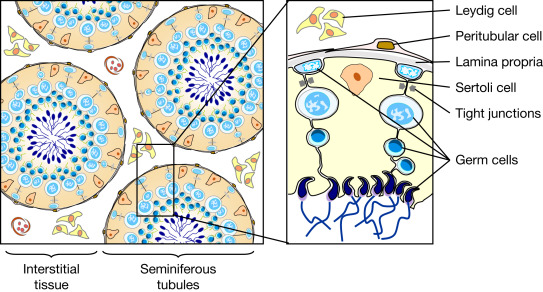
Definition – sustentacular cell of the convoluted seminiferous tubule of the testes
Clinical Significance – these cells are activated by FSH to produce and mature sperm during spermatogenesis
History – Named after Enrico Sertoli (1842-1910), who was an Italian physiologist and histologist and received his medical doctorate from the University of Pavia in 1865. His love and passion for histology was groomed while training under Eusebio Oehl, who was an early pioneer in microscopic anatomy and histopathology. He would go on to become professor of anatomy and physiology at the Royal School of veterinary medicine in Milan and it was here that he founded the laboratory of experimental physiology. In 1865, during his tenure in Milan, he published the paper describing his eponymous cell.
References
Firkin BG and Whitwirth JA. Dictionary of Medical Eponyms. 2nd ed. New York, NY; Parthenon Publishing Group. 1996.
Bartolucci S, Forbis P. Stedman’s Medical Eponyms. 2nd ed. Baltimore, MD; LWW. 2005.
Yee AJ, Pfiffner P. (2012). Medical Eponyms (Version 1.4.2) [Mobile Application Software]. Retrieved http://itunes.apple.com.
This one is a quick one this week. When evaluating a patient with testicular pain (either acute or chronic), what are the specific physical examination techniques you can perform and what conditions do they help rule in/out?
Definition – necrotizing fasciitis of the external genitalia and/or perineum
Clinical Significance – this infection commonly affects older men and is associated with diabetes mellitus or a compromised immune system. Other risk factors include trauma or surgery to the perineal area, alcoholism, and childbirth. Pain, erythema, crepitus, and fever are common findings and treatment is aggressive surgical debridement and antibiotics to cover anaerobic and facultative pathogens.
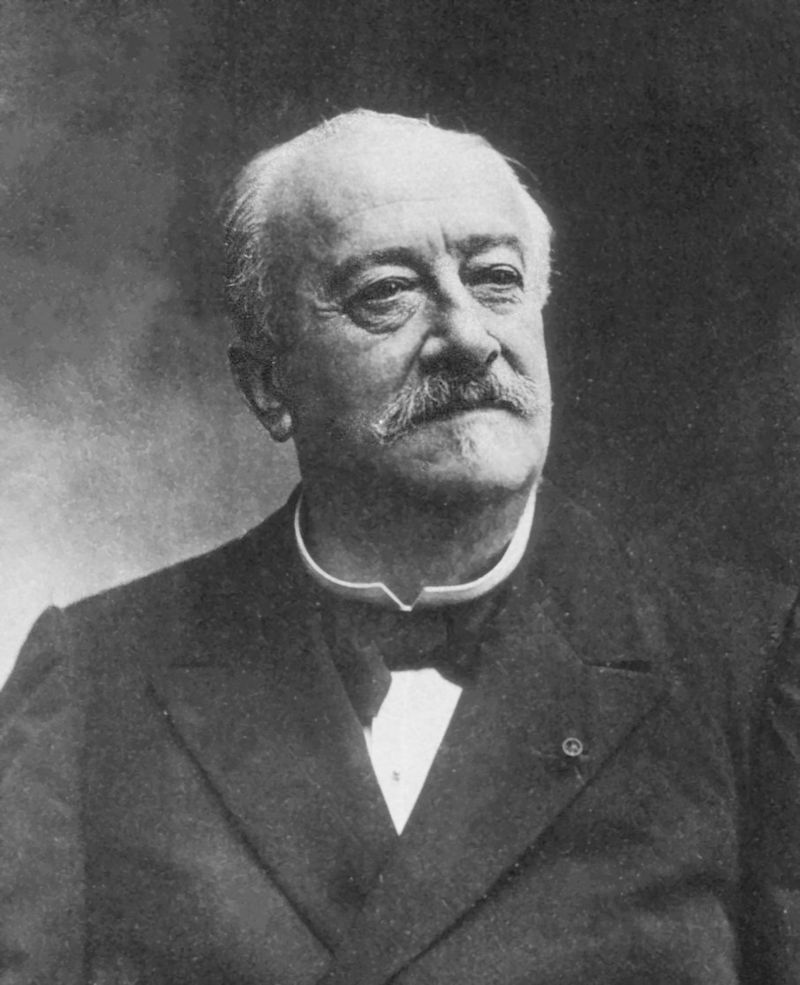
History – Named after Jean Alfred Fournier (1832-1914), who was a French dermatologist and venereologist, and received his medical doctorate in 1860 while studying in Paris. He would begin his career as an understudy of Philippe Ricord at the Hôpital du Midi and would later become médecine des hôpitaux at the famed Hôtel-Dieu de Paris. It was in 1883 when he presented a case series of patients with gangrene of perineum and for which this eponym is attributed, although it was first described and published in 1764 by Baurienne. He is best known for his work with congenital syphilis (for which he has two additional eponyms) and advancing the study of venereal diseases and their connection to degenerative diseases.
References
Firkin BG and Whitwirth JA. Dictionary of Medical Eponyms. 2nd ed. New York, NY; Parthenon Publishing Group. 1996.
Bartolucci S, Forbis P. Stedman’s Medical Eponyms. 2nd ed. Baltimore, MD; LWW. 2005.
Yee AJ, Pfiffner P. (2012). Medical Eponyms (Version 1.4.2) [Mobile Application Software]. Retrieved http://itunes.apple.com.

















 PAINE Podcast and Medical Blog