PAINE #PANCE Pearl – Gastrointestinal


Question

47yo man presents to the emergency department after an episode of hematemesis at the end of a 2 day alcoholic binge. He reports drinking 1-3 handles of vodka over the weekend after his 14 consecutive day, third shift schedule every month at the local manufacturing plant. He reports moderate central chest pain, but denies shortness of breath. Vitals are BP-110/82 mmHg, HR-112, RR-14, O2-98%, and temp-99.2o. Physical exam is unremarkable, hemoccult is negative, and labs are below.

  1. What are the three (3) main differentials you need to consider?
  2. What is the most likely diagnosis based on exam and labs?


Answer

  1. Given the history and risk factors, the top three differentials you need to consider are variceal bleed, Mallory-Weiss tear, and Boerhaave’s syndrome.
  2. The most likely of these is Mallory-Weiss tear. The unremarkable physical exam points away from Boerhaave’s as patients most commonly present with mediastinitis and, in some instances, sepsis. Other physical examination findings of Boerhaave’s include subcutaneous emphysema of the neck with crepitus and Hamman’s sign of medisatinal crunch on auscultation. Varices can self-tamponade after an acute bleed, but given the patient’s hemodynamic status being stable with a normal H/H and negative hemoccult also move this down the differential list.

Ep-PAINE-nym


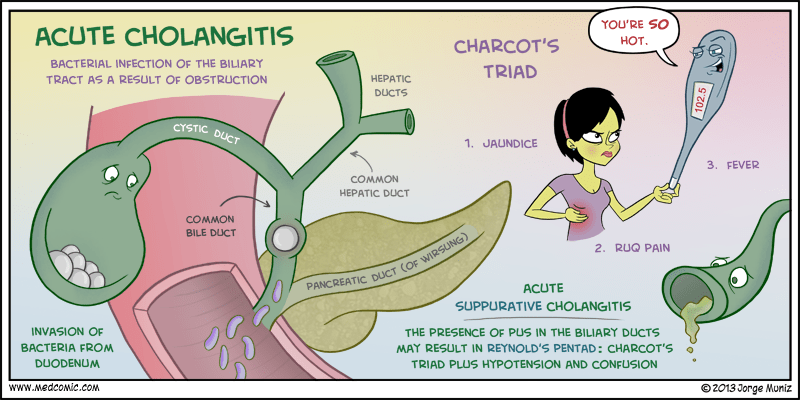
Charcot’s Triad

Other Known Aliases – none

Definitiontriad of physical examination findings seen with ascending cholangitis and includes jaundice, fever, and right upper quadrant pain.

Clinical Significance this is a classic triad to memorize for your surgery rotation to help differentiate cholecystitis, cholelithiasis, and cholangitis.

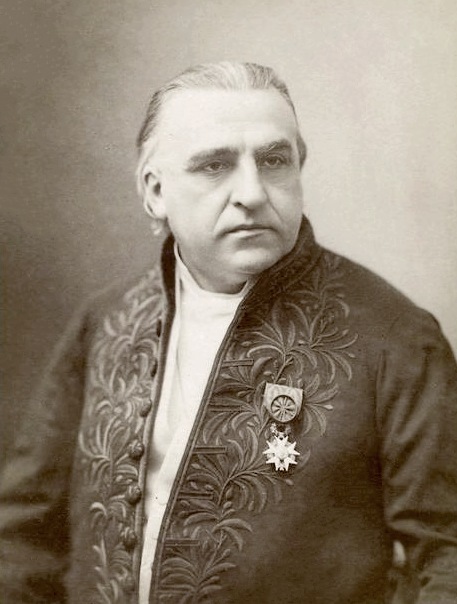
HistoryNamed after Jean-Martin Charcot (1825-1893), a French neurologist and professor of anatomic pathology who recieved his medical doctorate from the University of Paris in 1853. He would start his career at the famous Hôpital de Salpêtrière and stay there for over 30 years establishing the reputation of this hospital as the premier training center in Europe. He would also create the first neurology clinic in all of Europe at the Salpêtrière where his reputation would be solidified as the “father of modern neurology”. His career is too prestigious to give it justice in a quick eponym review, as evidenced by at least 15 current eponyms bearing his name.


References

  1. Firkin BG and Whitwirth JA.  Dictionary of Medical Eponyms. 2nd ed.  New York, NY; Parthenon Publishing Group. 1996.
  2. Bartolucci S, Forbis P.  Stedman’s Medical Eponyms.  2nd ed.  Baltimore, MD; LWW.  2005.
  3. Yee AJ, Pfiffner P. (2012).  Medical Eponyms (Version 1.4.2) [Mobile Application Software].  Retrieved http://itunes.apple.com.
  4. Whonamedit – dictionary of medical eponyms. http://www.whonamedit.com
  5. Up To Date. www.uptodate.com

PAINE #PANCE Pearl – Gastrointestinal


Question

47yo man presents to the emergency department after an episode of hematemesis at the end of a 2 day alcoholic binge. He reports drinking 1-3 handles of vodka over the weekend after his 14 consecutive day, third shift schedule every month at the local manufacturing plant. He reports moderate central chest pain, but denies shortness of breath. Vitals are BP-110/82 mmHg, HR-112, RR-14, O2-98%, and temp-99.2o. Physical exam is unremarkable, hemoccult is negative, and labs are below.

  1. What are the three (3) main differentials you need to consider?
  2. What is the most likely diagnosis based on exam and labs?

PAINE #PANCE Pearl – Endocrine


Question

32yo man, who is otherwise healthy with no PMH, presents to your clinic with a 2-month history of polyuria, nocturia, and polydipsia. Both of his parents have DMII and told him he needed “to get his sugar checked”. He denies any weight changes or vision disturbances. Vitals in clinic are BP-112/72 mmHg, HR-108, RR-12, O2-100%, and temp-98.9o. Initial screening labs are below.

  1. What is the most likely diagnosis?
  2. What additional labs should be ordered?


Answer

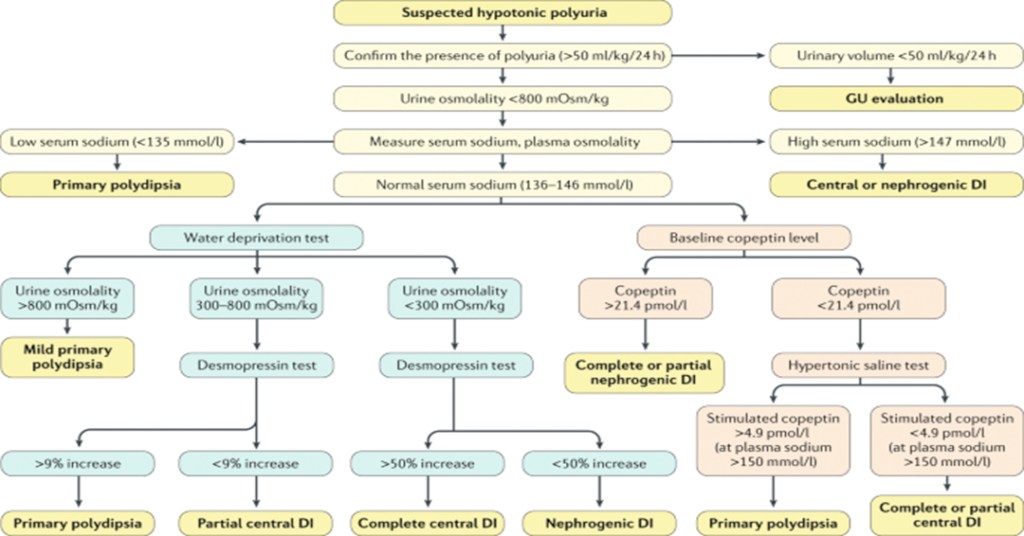
This patient likely has diabetes insipidus given the normal glucose/HbA1c and hypernatremia with polyuria. Next step in the diagnostic evaluation would be to check a urine osmolarity and plasma copeptin.

Ep-PAINE-nym


Dalrymple Sign

Other Known Aliases – none

Definitionretraction of the upper eyelid in Grave’s disease causing abnormal wideness of the palpebral fissure

Clinical Significance a classic examination of the ophthalmopathy of thyrotoxicosis in which you will see the white of the sclera clearly visible at the upper margin of the cornea with direct outward gaze.

HistoryNamed after John Dalrymple (1803-1852), an English ophthalmologist who received his medical doctorate from the University of Edinburgh in 1827. He would spend his entire, albeit short due to ill health, career as an eye surgeon at the Royal Ophthalmic Hospital in London. He was also a skilled histologist and microscopist and was the first to publish on the findings of the Bence Jones protein of multiple myeloma. His eponymonic examination finding was published, shortly before his untimely death at 47, in his magnum opus “Pathology of the Human Eye” in 1852.


References

  1. Firkin BG and Whitwirth JA.  Dictionary of Medical Eponyms. 2nd ed.  New York, NY; Parthenon Publishing Group. 1996.
  2. Bartolucci S, Forbis P.  Stedman’s Medical Eponyms.  2nd ed.  Baltimore, MD; LWW.  2005.
  3. Yee AJ, Pfiffner P. (2012).  Medical Eponyms (Version 1.4.2) [Mobile Application Software].  Retrieved http://itunes.apple.com.
  4. Whonamedit – dictionary of medical eponyms. http://www.whonamedit.com
  5. Up To Date. www.uptodate.com

PAINE #PANCE Pearl – Endocrine


Question

32yo man, who is otherwise healthy with no PMH, presents to your clinic with a 2-month history of polyuria, nocturia, and polydipsia. Both of his parents have DMII and told him he needed “to get his sugar checked”. He denies any weight changes or vision disturbances. Vitals in clinic are BP-112/72 mmHg, HR-108, RR-12, O2-100%, and temp-98.9o. Initial screening labs are below.

  1. What is the most likely diagnosis?
  2. What additional labs should be ordered?

Ep-PAINE-nym


Tanner Stages

Other Known Aliases – sexual maturity rating

Definitionscale of physical development in children, adolescents, and adults based on primary and secondary sex characteristics

Clinical Significance every patient will progress through each of the five stages during development, but due to innate individual variability, the rate and timing of each of the stages is highly variable. There are both a male and female scale and evaluates breast and testicular size, genitals, and pubic hair distribution.

HistoryNamed after James Mourilyan Tanner (1920-2010), a British pediatric endocrinologist who received his medical doctorate from the University of Pennsylvania in 1944, as well as a fellowship in endocrinology from Johns Hopkins as a result of a Rockefeller exchange grant program. A supurb hurdler and athlete prior to WWII, he likely would have competed in the in 1940 Olympics. Following his training stateside, he would return to England to oversee a national study on the effects of malnutrition on children. While documenting and analyzing the data, he noticed a trend of secondary physical characteristics as children and adolescents developing into adulthood. This led to a 20-year longitudinal study on human development and the publication of his eponymous staging system in 1962 in his classic textbook “Growth at Adolescence”.


References

  1. Firkin BG and Whitwirth JA.  Dictionary of Medical Eponyms. 2nd ed.  New York, NY; Parthenon Publishing Group. 1996.
  2. Bartolucci S, Forbis P.  Stedman’s Medical Eponyms.  2nd ed.  Baltimore, MD; LWW.  2005.
  3. Yee AJ, Pfiffner P. (2012).  Medical Eponyms (Version 1.4.2) [Mobile Application Software].  Retrieved http://itunes.apple.com.
  4. Whonamedit – dictionary of medical eponyms. http://www.whonamedit.com
  5. Up To Date. www.uptodate.com
  6. James Mourilyan Tanner. Royal College of Physicians. https://history.rcplondon.ac.uk/inspiring-physicians/james-mourilyan-tanner
  7. Growth at Adolescence, 2nd ed. (1962) Oxford: Blackwell Scientific.

#64 – KDIGO Guidelines


***LISTEN TO THE PODCAST HERE***


What are KDIGO and KDOQI???

  • The 2 Organizations
    • Kidney Disease Outcomes Quality Initiative (KDOQI)
      • US Based
      • Developed in 1997 by National Kidney Foundation
    • Kidney Disease: Improving Global Outcomes (KDIGO)
      • Global organization developing and implementing evidence based clinical practice guidelines in kidney diseases
      • Developed in 2003 by NKF
    • Essentially individual entities, but both comment various aspects of kidney diseases
  • 2012 Guidelines
    • Published by KDIGO and commented by KDOQI
    • 5 chapters


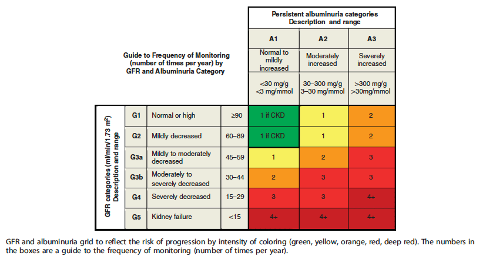
Chapter 1: Definition and Classification of CKD

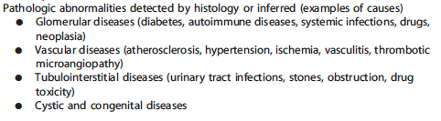
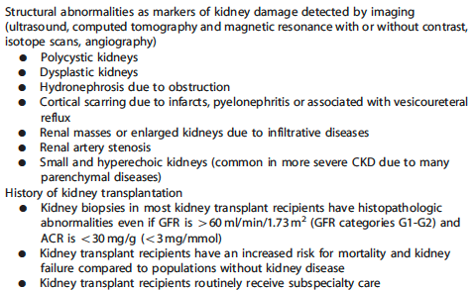
  • Definition
    • Abnormalities in kidney structure or function, present for > 3 months, with implications on health
  • Staging
    • Based on causes, GFR category, and albuminuria category
  • Predicting Prognosis of CKD
  • Evaluation of GFR
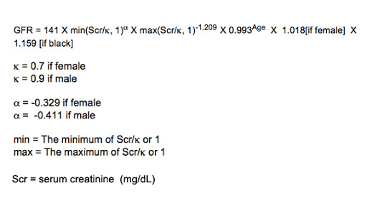
    • Recommend using serum creatinine and GFR estimating equation for initial assessment
    • Recommend only using cystatin C in adult patients with decreased GFR but without markers of kidney damage if diagnosis of CKD is required
  • Evaluation of Albuminuria
    • Initial testing for proteinuria should be an early morning urine sample(in descending order of preference):
      • Urine albumin-to-creatinine ratio (ACR)
      • Urine protein-to-creatinine ratio (PCR)
      • Reagent strip urinalysis for total protein with automated reading
      • Reagent strip urinalysis for total protein with manual reading
    • Microalbuminuria should no longer be used by laboratories
    • If ACR > 30mg/g, then proceed to confirm with a random untimed urine sample

Chapter 2: Definition, Identification, and Predication of CKD Progression

  • Assess albuminuria at least annually
  • CKD progression is based on the one of the following:
    • Decline in GFR category
    • Drop in eGFR by ≥ 25% of baseline
    • Sustained decline in eGFR by > 5mL/min/year
  • Identify known risk factors associated with CKD progression
    • Cause of CKD
    • Age
    • Gender
    • Hypertension
    • Hyperglycemia
    • Dyslipidemia
    • Smoking
    • Obesity
    • History of CVD
    • Ongoing exposure to nephrotoxic agents

Chapter 3: Management of Progression and Complication of CKD

  • Hypertension
    • BP ≤ 140/90 if urine albumin excretion < 30mg/d
    • BP ≤ 130/80 if urine albumin excretion > 30mg/d
    • Recommend ACEI or ARB
  • Protein Intake
    • Recommend protein intake 0.8g/kg/d
  • Glycemic Control
    • Recommend HbA1C AROUND 7.0%
    • ***newer ACE guidelines recommend < 6.5% with SGLT2i**
  • Recommend < 2g/day
    • Lifestyle
      • Recommend 30 min/day five times per week, smoking cessation, and healthy weight (BMI 20-25)
  • Complications Associated with CKD
    • Anemia
      • Diagnosed at < 13g/dL in men and < 12 g/dL in women
      • Screening in patients with CKD:
        • Stage G1-2 – when clinically indicated
        • Stage 3a-3b – at least annually
        • Stage 4-5 – at least twice per year
    • Metabolic Bone Disease
      • Obtained baseline calcium, phosphate, PTH, and ALP at least once in patients with GFR < 45 mL/min
      • Not recommended to screen with bone mineral density testing
      • Not recommended to supplement vitamin D of bisphophonates with deficiency or strong clinical rationale
    • Acidosis
      • Supplement oral bicarbonate in patients with serum bicarbonate < 22 mmol/L

Chapter 4: Other Complications of CKD

  • CVD
    • All CKD patients are at increased risk for CVD
    • Recommend same testing and treating as non-CKD patients
    • Use caution when interpreting NT-proBNP and troponins
  • PVD
    • Recommend regular podiatric assessment
  • Medication Management
    • Recommend using GFR for dosing adjustments
      • Example – Metformin
        • Stage G1-3a – continue
        • Stage G3b – monitored
        • Stage G4-5 – discontinued
  • Imaging studies and radiocontrast
    • Avoid if possible, but do not hold if needed
    • Following KDIGO Clinical Practice Guidelines for AKI
      • Avoid high osmolar agents
      • Use lowest contrast dose possible
      • Stop nephrotoxic agents before and after
      • Maintain adequate hydration
      • Measure GFR 48-96 hours after

Chapter 5: Referral to Specialist and Models of Care


Cottage Physician (1893)


References

  1. KDIGO. Clinical Practice Guideline for the Evaluation and Management of CKD. 2012.
  2. Inker LA, Astor BC, Fox CH, et al. KDOQI US commentary on the 2012 KDIGO clinical practice guideline for the evaluation and management of CKD. Am J Kidney Dis. 2014; 63(5):713-35. [pubmed]
  3. Stevens PE, Levin A. Evaluation and management of chronic kidney disease: synopsis of the kidney disease: improving global outcomes 2012 clinical practice guideline. Ann Intern Med. 2013; 158(11):825-30. [pubmed]
  4. Andrassy KM. Comments on ‘KDIGO 2012 Clinical Practice Guideline for the Evaluation and Management of Chronic Kidney Disease’. Kidney Int. 2013; 84(3):622-3. [pubmed]

PAINE #PANCE Pearl – Genitourinary


Question

This one is a quick one this week. When evaluating a patient with testicular pain (either acute or chronic), what are the specific physical examination techniques you can perform and what conditions do they help rule in/out?


Answer

  1. Position of the Testicle
    • Side-lying (long axis transverse) position suggests testicular torsion
      • also called the “Bell Clapper” deformity
  2. Cremesteric Reflex
    • Pinching the skin of the upper thigh causes elevation of testes
      • If absent, suggests testicular torsion
  3. Blue Dot Sign
    • Tender nodule with blue discoloration on the upper pole of the testes
      • If present, suggests appendix testes torsion
  4. Prehn Sign
    • Manual elevation of testes relieves the pain
      • If positive, suggests epididymitis
  5. Transillumination
    • In evaluating scrotal swelling, ability to transilluminate the scrotum suggests hydrocele.
    • If unable to transilluminate, suggests varicocele or mass

Ep-PAINE-nym


Sertoli Cells

Other Known Aliases – none

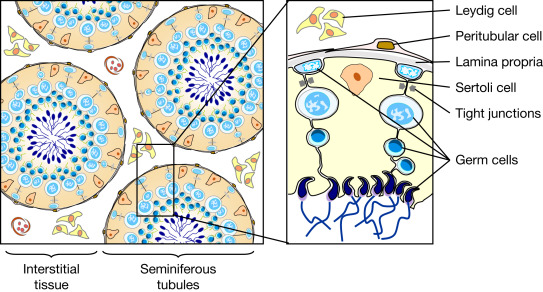
Definitionsustentacular cell of the convoluted seminiferous tubule of the testes

Clinical Significance these cells are activated by FSH to produce and mature sperm during spermatogenesis

HistoryNamed after Enrico Sertoli (1842-1910), who was an Italian physiologist and histologist and received his medical doctorate from the University of Pavia in 1865. His love and passion for histology was groomed while training under Eusebio Oehl, who was an early pioneer in microscopic anatomy and histopathology. He would go on to become professor of anatomy and physiology at the Royal School of veterinary medicine in Milan and it was here that he founded the laboratory of experimental physiology. In 1865, during his tenure in Milan, he published the paper describing his eponymous cell.


References

  1. Firkin BG and Whitwirth JA.  Dictionary of Medical Eponyms. 2nd ed.  New York, NY; Parthenon Publishing Group. 1996.
  2. Bartolucci S, Forbis P.  Stedman’s Medical Eponyms.  2nd ed.  Baltimore, MD; LWW.  2005.
  3. Yee AJ, Pfiffner P. (2012).  Medical Eponyms (Version 1.4.2) [Mobile Application Software].  Retrieved http://itunes.apple.com.
  4. Whonamedit – dictionary of medical eponyms. http://www.whonamedit.com
  5. Up To Date. www.uptodate.com
  6. Sertoli E. Dell’esistenza di particolari cellule ramificate nei canalicoli seminiferi del testicolo umano. Morgagni, 1865; 7: 31-40