Ep-PAINE-nym


Tetralogy of Fallot


Other Known AliasesFallot’s tetrad, Fallot’s syndrome, Steno-Fallot tetralogy

DefinitionCongenital cyanotic heart disease due to ventriculo-septal defect, pulmonary stenosis, right ventricular hypertrophy, and overiding aorta.

Clinical Significance This is one of the six congenital cyanotic heart defects and is also the most common.  Read/listen to an amazing review of “Congenital Cyanotic Heart Diseases” here.

History – The classic description of the tetrad was actually first described in 1672 by the Danish physician and anatomist, Neils Stenson (1638-1686).  The namesake of this condition is Etienne-Louis Arthur Fallot (1850-1911), who was a French physician.  He described the tetrad in 1888 using previous observations and building from the work of Stenson, but garned little contemporary appraise.  It wasn’t until 1931 when Fallot’s work was rekindled and translated by Dr. Paul Dudley White.


References

  1. Firkin BG and Whitwirth JA.  Dictionary of Medical Eponyms. 2nd ed.  New York, NY; Parthenon Publishing Group. 1996.
  2. Bartolucci S, Forbis P.  Stedman’s Medical Eponyms.  2nd ed.  Baltimore, MD; LWW.  2005.
  3. Yee AJ, Pfiffner P. (2012).  Medical Eponyms (Version 1.4.2) [Mobile Application Software].  Retrieved http://itunes.apple.com.
  4. Whonamedit – dictionary of medical eponyms. http://www.whonamedit.com/. Accessed March 7, 2017.
  5. E. L. A. Fallot. Contribution à l’anatomie pathologique de la maladie bleue (cyanose cardiaque). Marseille médical, 1888;25: 77-93.

PAINE #PANCE Pearl – Pediatric Edition


Question


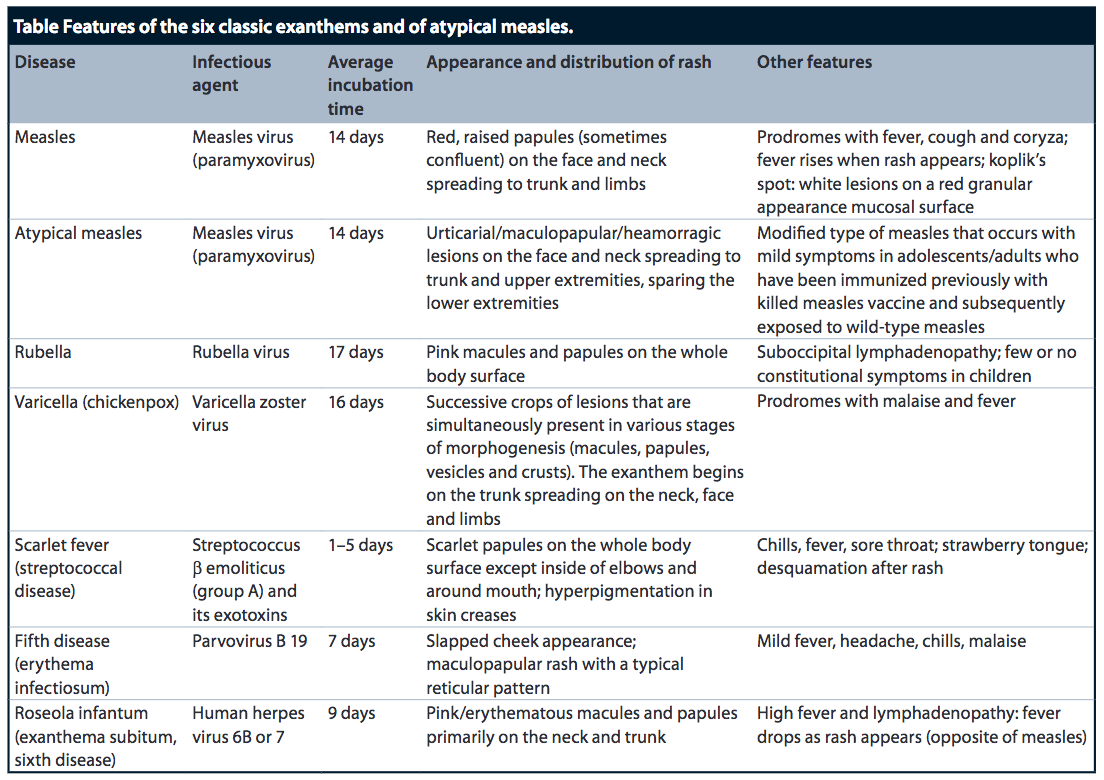
What are the six (6) classic infectious exanthems of childhood and what organism causes each?


Answer


The chart below lists the classic exanthems of childhood, the organism that causes, and the “number” disease that were given to them in 1905.


It should be noted that Duke’s Disease (fourth disease) is not widely accepted as a true infectious exathem.


References

  1. Bialecki C, Feder HM, Grant-Kels JM. The six classic childhood exanthems: a review and update.. Journal of the American Academy of Dermatology. 1989; 21(5 Pt 1):891-903. [pubmed]
  2. Drago F, Ciccarese G, Gasparini G. Contemporary infectious exanthems: an update.. Future Microbiology. 2017; 12:171-193. [pubmed]

Ep-PAINE-nym


Reye’s Syndrome


Other Known AliasesReye’s sequence, Reye-Morgan-Baral syndrome, Reye-Johnson syndrome

Definition – Rare disease of acquired encephalopathy and fatty liver filtration in children under 15 years of age

Clinical Significance Classically, this condition follows a viral upper respiratory illness (influenza B, varicella) in children who were given aspirin for fever therapy.  Symptoms include vomiting, confusion, AMS, seizures, and LOC. Children under 5 years of age frequently have hyperglycemia as well.  Mortality is as high as 40% and many that survive are left with significant brain damage.

History – First described in 1929 by Dr. W.R. Brain, D. Hunter, and H.M. Turnbull, but not established as clinical diagnosis until published in The Lancet in 1963 by Dr. Ralph Douglass K. Reye, Dr. Graeme Morgan, and Dr. James Baral,.  Later that same year (1963), an outbreak of this condition occurred in North Carolina and was published by Dr. George Johnson.


References

  1. Firkin BG and Whitwirth JA.  Dictionary of Medical Eponyms. 2nd ed.  New York, NY; Parthenon Publishing Group. 1996.
  2. Bartolucci S, Forbis P.  Stedman’s Medical Eponyms.  2nd ed.  Baltimore, MD; LWW.  2005.
  3. Yee AJ, Pfiffner P. (2012).  Medical Eponyms (Version 1.4.2) [Mobile Application Software].  Retrieved http://itunes.apple.com.
  4. Whonamedit – dictionary of medical eponyms. http://www.whonamedit.com/. Accessed March 7, 2017.
  5. Brain, WR, Hunter, D, Turnbull, HM. Acute meningoencephalomyelitis of childhood: report of six cases. Lancet. 1929;1:221–227 [article]
  6. Reye RDK, Morgan G, Baral J. Encephalopathy and fatty degeneration of the viscera: A disease entity of childhood. Lancet. 1963; 2(7311):749-52. [pubmed]
  7. Johnson GM, Scurletis TD, Carroll NB. A study of sixteen fatal cases of encephalitis-like disease in North Carolina children. North Carolina medical journal. 1963; 24:464-73. [pubmed]

#30 – Acute Otitis Media in Children


***LISTEN TO THE PODCAST HERE***


Epidemiology

Acute otitis media (AOM) is the most frequent diagnosis in ill children and the most common reason for antibiotic prescriptions (which is debatable).  Children < 2 years-old are at the highest risk, with nearly 80% of children in the US having at least one documented episode of AOM annually.  Incidence has been declining in the US since 2009 with the widespread use of the 13-valent pneumococcal vaccine.


Risk Factors

  • Age
    • < 2yrs with peak range from 6-18 months
  • Family History
  • Day Care
  • Lack of Breastfeeding
  • Tobacco smoke
  • Pacifier use
  • Season

Pathogenesis

The development of AOM follows a predictable series of events:

  1. Antecedent event
    1. URI
  2. Inflammatory edema of mucous membranes of URT
    1. Obstructs the narrowest portion of the Eustachian tube (isthmus)
      1. Results in negative middle ear pressure
        1. Causes fluid accumulation and effusion
  3. Pathogens now have a medium to grow and cause suppuration and bulging of TM
  4. Effusion may persists for weeks to months after sterilization with antibiotics


Microbiology

  • Bacteria
    • 3 bugs account for most cases of bacterial AOM
      • pneumoniae – 50%
      • influenza
      • catarrhalis
    • Viruses
      • RSV
      • Human metapneumovirus
      • Influenza
  • It is worth noting that up to 2/3rd have combined bacterial and viral isolates

Signs and Symptoms

  • Otalgia (most common and best predictor)
  • Fever
  • Irritability
  • Poor feeding
  • Vomiting

Physical Exam

The diagnosis of AOM requires:

  • Any of the above signs or symptoms; and
  • Bulging of the TM, presence of middle ear effusion with inflammation, or TM hypomobility on pneumatic otoscopy


Acute Management

Analgesia

  • Systemic
    • Ibuprofen – 10mg/kg every 4-6hr (max 40mg/kg/day)
    • Acetaminophen – 10-15mg/kg every 4-6hr (max 75mg/kg/day)
  • Topical
    • Lidocaine

Antibiotics vs Observation

Antimicrobial Therapy

  • No recent beta-lactam use, no history of recurrent AOM, no concomitant conjunctivitis
    • Amoxicillin 90mg/kg/day divided into 2 doses/day x 5-7 days
  • Recent beta-lactam use, history of recurrent AOM, concomitant conjunctivitis
    • Amoxicillin-clavulanate 90mg/kg/day divided into 2 doses/day x 10 days
  • Pencillin allergy
    • Non-type I hypersensitivity reaction
      • Cefdinir 14mg/kg/day 1-2 doses/day x 10 days
      • Ceftriaxone 50mg/kg IM daily x 1-3 days
    • Type-1 hypersensitivity reaction
      • Azithromycin 10mg/kg on day 1 and 5mg/kg on days 2-5
      • Clarithromycin 15mg/kg divided into 2 days/day


Oral therapy is preferred if perforation is present.


If a child has acute onset of otorrhea with known tympanostomy tubes in place:

  • Uncomplicated
    • Ciprofloxacin-dexamethasone 4gtts twice daily x 7 days
    • Ofloxacin 5gtts twice daily x 10 days
  • Complicated or ill-appearing
    • Amoxicillin 90mg/kg/day divided into 2 doses x 10 days
    • Amoxicillin-clavulanate 90mg/kg/day divided into 2 doses x 10 days

Treatment Failure

This is defined as lack of improvement by 72 hours in patients treated with antibiotics.

  • If initial therapy was amoxicillin, then change to amoxicillin-clavulanate
  • If initial therapy was amoxicillin-clavulanate, then change to cephalosporin
  • If patient has type-1 hypersensitivity to PCN, then options include:
    • Tympanocentesis for culture and sensitivity and pain relief
    • Levofloxacin 10mg/kg every 12 hours (6m-5yr) or daily x 10 days (≥ 5yr)

Recurrent AOM

This defined as development of AOM after successful treatment and treatment depends on the timeframe:

  • ≤ 15 days
    • Ceftriaxone 50mg/kg daily for 3 days
    • Levofloxacin 10mg/kg every 12 hours (6m-5yr) or daily x 10 days (≥ 5yr)
  • > 15 days
    • Amoxicillin-clavulanate 90mg/kg/day divided into 2 doses/day x 10 days
  • Prophylaxis
    • Amoxicillin 40mg/kg/day during fall, winter, and early spring
    • No longer than 6 months

Tympanostomy Tube Placement Indications

  • ≥ 3 distinct and documented episodes within 6 months; or
  • ≥ 4 distinct and documented episodes within 12 months;
  • Other factors include:
    • Multiple drug allergies in recurrent AOM
    • Breakthrough episodes on prophylaxis therapy

References

  1. Lieberthal AS, Carroll AE, Chonmaitree T. The diagnosis and management of acute otitis media. Pediatrics. 2013; 131(3):e964-99. [pubmed]
  2. Todberg T, Koch A, Andersson M, Olsen SF, Lous J, Homøe P. Incidence of otitis media in a contemporary Danish National Birth Cohort. PloS one. 2014; 9(12):e111732. [pubmed]
  3. Marom T, Tan A, Wilkinson GS, Pierson KS, Freeman JL, Chonmaitree T. Trends in otitis media-related health care use in the United States, 2001-2011. JAMA pediatrics. 2014; 168(1):68-75. [pubmed]
  4. Uhari M, Mäntysaari K, Niemelä M. A meta-analytic review of the risk factors for acute otitis media. Clinical Infectious Diseases. 1996; 22(6):1079-83. [pubmed]
  5. Rovers MM, Schilder AG, Zielhuis GA, Rosenfeld RM. Otitis media. Lancet. 2004; 363(9407):465-73. [pubmed]
  6. Coker TR, Chan LS, Newberry SJ. Diagnosis, microbial epidemiology, and antibiotic treatment of acute otitis media in children: a systematic review. JAMA. 2010; 304(19):2161-9. [pubmed]
  7. Chonmaitree T. Acute otitis media is not a pure bacterial disease. Clinical infectious diseases. 2006; 43(11):1423-5. [pubmed]
  8. Casey JR, Adlowitz DG, Pichichero ME. New patterns in the otopathogens causing acute otitis media six to eight years after introduction of pneumococcal conjugate vaccine. The Pediatric Infectious Disease Journal. 2010; 29(4):304-9. [pubmed]
  9. Kontiokari T, Koivunen P, Niemelä M, Pokka T, Uhari M. Symptoms of acute otitis media.. The Pediatric infectious disease journal. 1998; 17(8):676-9. [pubmed]
  10. Niemela M, Uhari M, Jounio-Ervasti K, Luotonen J, Alho OP, Vierimaa E. Lack of specific symptomatology in children with acute otitis media.. The Pediatric infectious disease journal. 1994; 13(9):765-8. [pubmed]
  11. Rosa-Olivares J, Porro A, Rodriguez-Varela M, Riefkohl G, Niroomand-Rad I. Otitis Media: To Treat, To Refer, To Do Nothing: A Review for the Practitioner.. Pediatrics in review. 2015; 36(11):480-6; quiz 487-8. [pubmed]
  12. Lieberthal AS, Carroll AE, Chonmaitree T. The diagnosis and management of acute otitis media.. Pediatrics. 2013; 131(3):e964-99. [pubmed]
  13. Arguedas A, Dagan R, Pichichero M. An open-label, double tympanocentesis study of levofloxacin therapy in children with, or at high risk for, recurrent or persistent acute otitis media.. The Pediatric infectious disease journal. 2006; 25(12):1102-9. [pubmed]

Ep-PAINE-nym


Hatchcock’s Sign


DefinitionUpward pressure applied to the angle of mandible produces pain with parotitis, but not with adenitis

Clinical Significance – This particular sign could be positive before any significant parotid gland swelling occurred and would aid in the early detection and diagnosis of mumps. 

History – First described by a Lieutenant Hatchcock in 1918.  Honestly, I can’t find much on this Lieutenant Hatchcock……


References

  1. Firkin BG and Whitwirth JA.  Dictionary of Medical Eponyms. 2nd ed.  New York, NY; Parthenon Publishing Group. 1996.
  2. Bartolucci S, Forbis P.  Stedman’s Medical Eponyms.  2nd ed.  Baltimore, MD; LWW.  2005.
  3. Yee AJ, Pfiffner P. (2012).  Medical Eponyms (Version 1.4.2) [Mobile Application Software].  Retrieved http://itunes.apple.com.
  4. Lincoln Evening Journal.  Lincoln, NE. 1918. https://www.newspapers.com/newspage/40559204/
  5. Practical Medicine Series.  General Medicine. Volume I.  1919. http://tinyurl.com/n3c4yqa

PAINE #PANCE Pearl – Pediatrics


Question


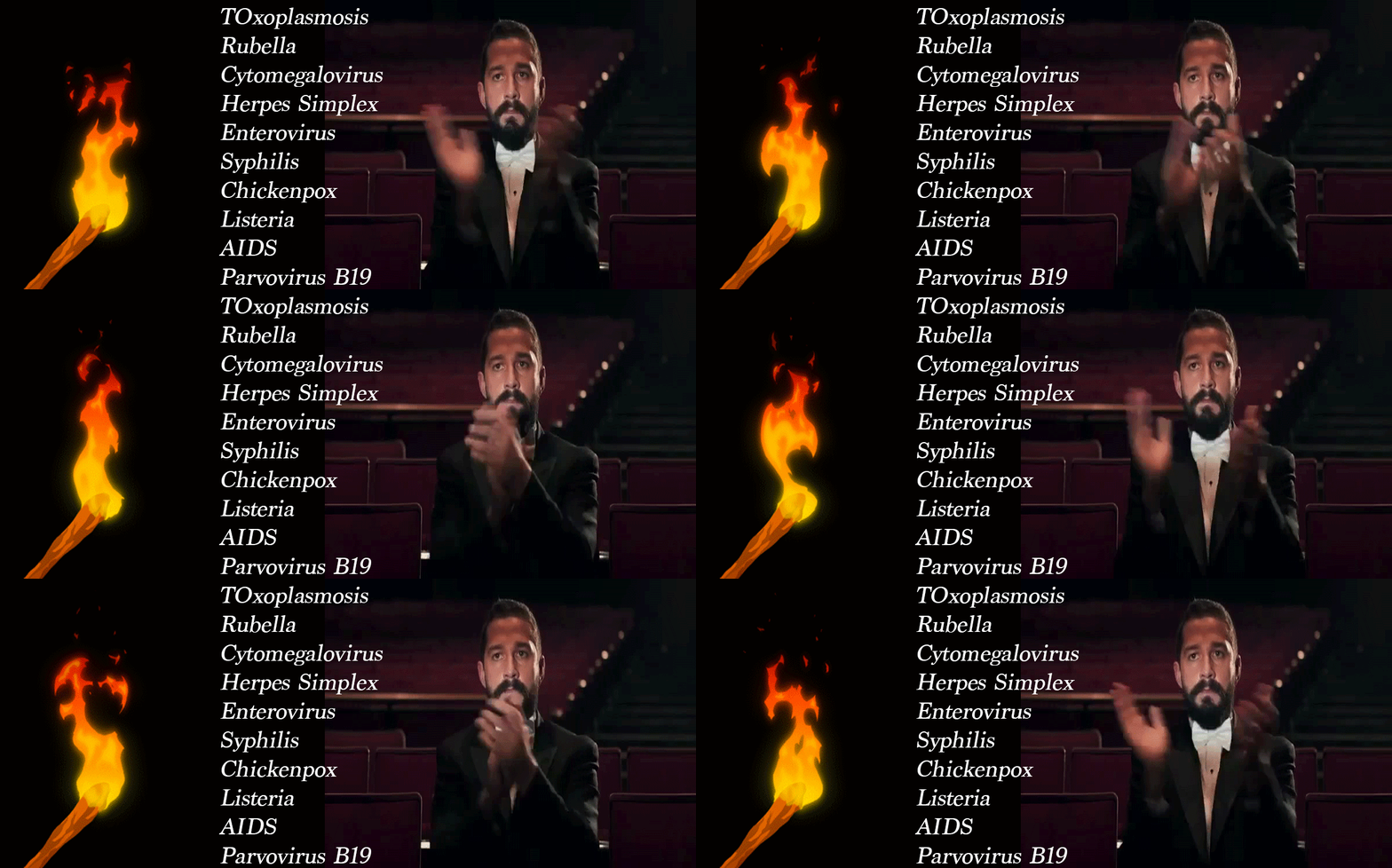
What are the organisms that you must think of in a sick neonate that can be transmitted in utero from mother to fetus?


Answer


There are 10 organisms that are most commonly transmitted in utero from mother to fetus and are remembered by the mnemonic: TORCHESCLAP


References

  1. Tagg A. Passing the TORCH. Don’t Forget The Bubbles Blog. http://dontforgetthebubbles.com/passing-the-torch/

Ep-PAINE-nym


Aicardi Syndrome

DefinitionCongenital syndrome with three main features:

  1. Agenesis or dysgenesis of the corpus callosum
  2. Infantile spasms and/or epilepsy
  3. Chorioretinal lacunae

Clinical Significance Occurs almost exclusively in females and clinical findings can include:

  • Asymmetry of cerebrum
  • Ventricular cysts
  • Microcephaly
  • Severe developmental delay and disability
  • Ocular abnormalities (microphthalmia, colobomo)
  • Short philtrum with flat nose and upturned ears
  • Sparse eyebrows
  • Small hands
  • Spinal abnormalities

History – Named after Dr. Jean Fraçois Marie Aicardi, who is a French pediatrician, and first published and described this disorder in two girls in 1965.


References

  1. Firkin BG and Whitwirth JA.  Dictionary of Medical Eponyms. 2nd ed.  New York, NY; Parthenon Publishing Group. 1996.
  2. Bartolucci S, Forbis P.  Stedman’s Medical Eponyms.  2nd ed.  Baltimore, MD; LWW.  2005.
  3. Yee AJ, Pfiffner P. (2012).  Medical Eponyms (Version 1.4.2) [Mobile Application Software].  Retrieved http://itunes.apple.com.
  4. Whonamedit – dictionary of medical eponyms. http://www.whonamedit.com/
  5. J. Aicardi, J. Lefebvre, A. Lerique-Koechlin. A new syndrome: Spasm in flexion, callosal agenesis, ocular abnormalities. Electroencephalography and Clinical Neurophysiology. 1965;19:609-610.

#29 – Review of Transfusion Medicine with Michelle Brown


***LISTEN TO THE PODCAST HERE***


Guest

Michelle Brown, PhD, MS, MLS(ASCP)SBB

Assistant Professor and Director, Healthcare Simulation Graduate Program

University of Alabama at Birmingham


Transfusion Statistics

According to the American Red Cross:

  • Someone in the US needs blood every 2 seconds
  • 36,000 units PRBC, 10,000 units of FFP, and 7,000 units of platelets are transfused every day in the US
  • Over 21 million blood components are transfused each year in the US, but only 13.6 million are collected

Process of Separation

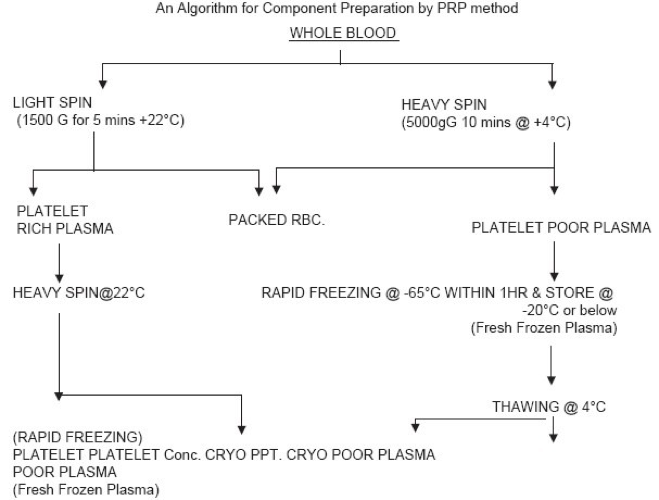
When a person donates blood, 1 pint of whole blood is removed and then needs to be separated into its components for longer shelf life and targeted treatments.  There are 2 processes on how this occurs:

  • Platelet-Rich Process (PRP)
    • Easier, cheaper, but plasma/platelet yield is lower
    • BC Method
      • Complicated, but higher yield of plasma/platelet
  • Once the separation occurs, then the components can be treated with additives to help with viability and longevity. In the case of FFP and cryo, it is frozen to maintain potency of coagulation factors.


Packed Red Blood Cells

  • Facts
    • One unit of PRBC = 300cc
    • Hematocrit = 55-80%
    • One of PRBC should raise hemoglobin by 1g/dL and hematocrit by 3%
  • Storage Considerations
    • Can be stored for up to 42 days
    • Treated with citrate to prevent clotting
  • Indications for Transfusion
    • Recommendations from 2016 AABB Guidelines
      • ***To pair with patient symptoms***
      • Hemodynamically-stable, restrictive threshold = Hgb < 7g/dL
      • Orthopaedic surgery, cardiac surgery, or patients with CV = Hgb < 8g/dL
  • Complications
    • Hypocalcemia
    • Transfusion reactions
    • Alloimmunization

Fresh Frozen Plasma

  • Facts
    • 1 unit of FFP = 250cc
    • Contains all coagulation factors
    • Has an INR ~ 1.6
  • Storage Considerations
    • Frozen to -18-30oC within 8 hours of collection
      • Takes 10-30 minutes to thaw
    • Properly stored for up to 1 year
    • Must be used within 5 days after thawing
  • Indications for Transfusion
    • Vitamin K factor deficiency
      • Supratherapeutic vitamin K antagonist therapy
      • Liver disease
      • Massive transfusion protocol
    • DIC
    • TTP
  • Not indicated for hypovolemia and low BP
  • Complications
    • Male only plasma à decreases in TRALI

Cyoprecipitate

  • Facts
    • Precipitant that forms after FFP is frozen and thawed at 4oC
    • 1 unit of cryoprecipitate = 10-20cc
    • Contains fibrinogen, factor VIII, XIII, and vWF
  • Storage
    • Re-frozen at -18oC
      • Takes 10-30 minutes to thaw
    • Stored for up to 1 year
    • Only good for 4 hours once thawed and pooled, so order only when you need to transfuse
  • Indications for Transfusion
    • Low fibrinogen due to:
      • DIC
      • Liver disease
      • Uremia
      • Inherited disorders of fibrinogen
  • Complications
    • Same as other blood products

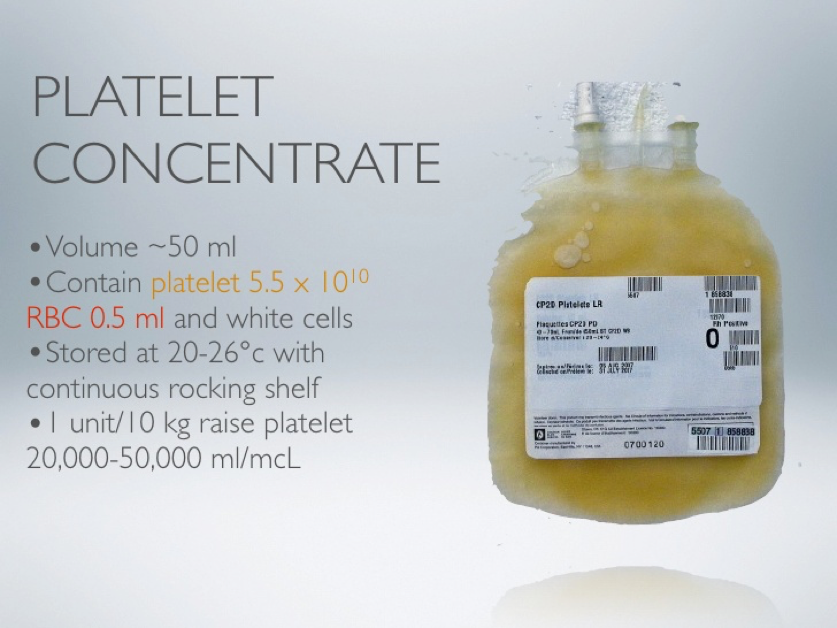
Platelets

  • Facts
    • 2 collection types
      • Pooled
        • Centrifuged down from whole blood
        • Combined with other donors
      • Apheresis (single donor)
        • Platelets collected from donor and RBC and plasma returned
        • Allows matching
      • Volume ~300cc
      • Six-pack of pooled or one unit of apheresed platelet should raise platelet count by 30-60,000/uL
  • Storage
    • Stored at room temperature because cold induces clustering of vWF receptor
    • Only a 5-day shelf life
  • Indications for Transfusion
    • Actively bleeding patients with thrombocytopenia
    • Prevention of spontaneous bleeding
      • Varies depending on clinical condition
      • < 10,000/uL
      • No longer recommended to transfuse prophylactically when patient is on bypass – only is patient exhibits bleeding w/ thrombocytopenia or plt dysfunction
    • Preparation for invasive procedures:
      • Neurosurgery or ocular surgery – 100,000/uL
      • Most major surgery – 50,000/uL
      • Central line placement – 20,000/uL
      • Lumbar puncture – 50,000/uL
      • Epidural anesthesia – 80,000/uL
  • Complications
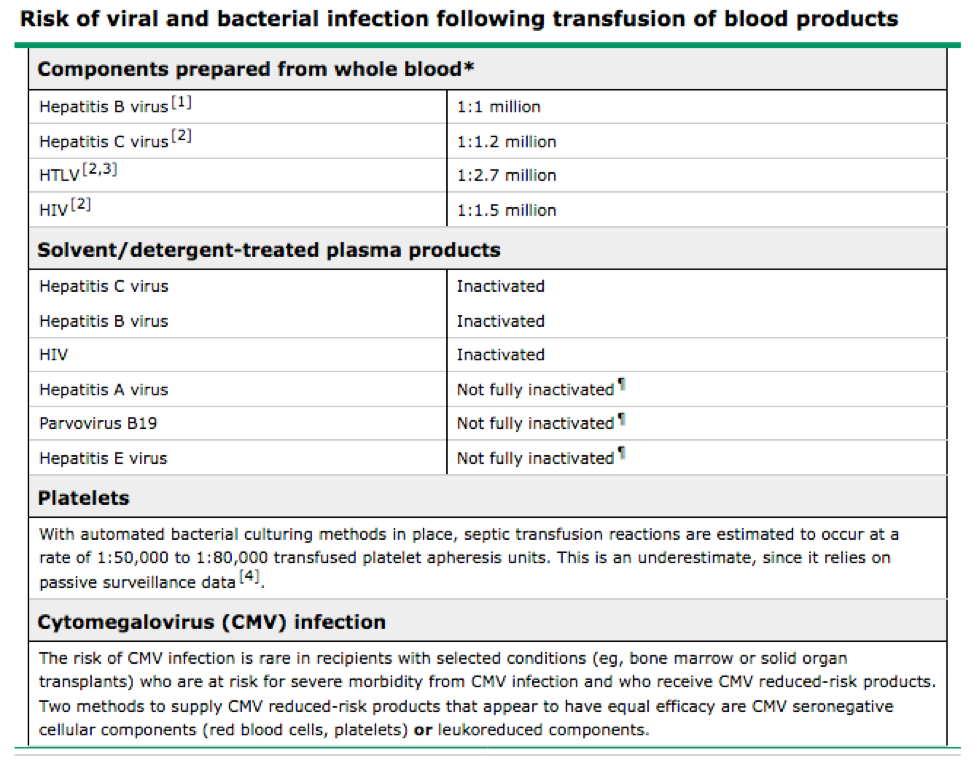
    • Increased infection risk


Component Modification Techniques

Leukoreduction

  • Indicated for:
    • Chronically transfused patients
    • Solid organ or bone marrow transplant patients
    • Previous febrile non-hemolytic reaction

Irradiated

  • Irradiation inactivates lymphocytes
  • Decreased risk of Graft-versus-host disease in immunocompromised patients
  • Reduces shelf life to 28 days

Washed

  • Rinsing serum proteins away prior to transfusions
  • Indicated for severe or recurrent allergic reactions and IgA deficiency
  • Indicated if a patient (especially neonate) is hyperkalemic

CMV-Negative

  • Indicated for immunocompromised patients

Transfusion Related Complications


References

  1. American Red Cross. Blood Facts and Statistics.  http://www.redcrossblood.org/learn-about-blood/blood-facts-and-statistics.  Accessed 03/23/2017.
  2. Brown MR, Jennings PR. Avoiding overtransfusion: an update on risks and latest indications. JAAPA. 2012;25(8):42-5. [pubmed]
  3. Basu D, Kulkarni R. Overview of blood components and their preparation.  Indian J Anaesth.  2014;58(5):529-537. [pubmed]
  4. Carson JL, Guyatt G, Heddle NM. Clinical Practice Guidelines From the AABB: Red Blood Cell Transfusion Thresholds and Storage. JAMA. 2016;316(19):2025-2035. [pubmed]
  5. Life In The Fastlane. Fresh Frozen Plasma.  https://lifeinthefastlane.com/ccc/fresh-frozen-plasma-ffp/.  Accessed 03/23/2017.
  6. Roback JD, Caldwell S, Carson J. Evidence-based practice guidelines for plasma transfusion. Transfusion. 2010;50(6):1227-39. [pubmed]
  7. Kaufman RM, Djulbegovic B, Gernsheimer T. Platelet transfusion: a clinical practice guideline from the AABB. Annals of internal medicine. 2015;162(3):205-13. [pubmed]
  8. Sharma S, Sharma P, Tyler LN. Transfusion of blood and blood products: indications and complications. American family physician. 2011;83(6):719-24. [pubmed]
  9. Takpradit K. Rational use of Blood Components.    https://www.slideshare.net/tarlabgab/rational-use-of-blood-component/16.  Accessed 03/23/2017.