Ep-PAINE-nym


Ishihara Test


Other Known AliasesPseudo-isochromatic plates

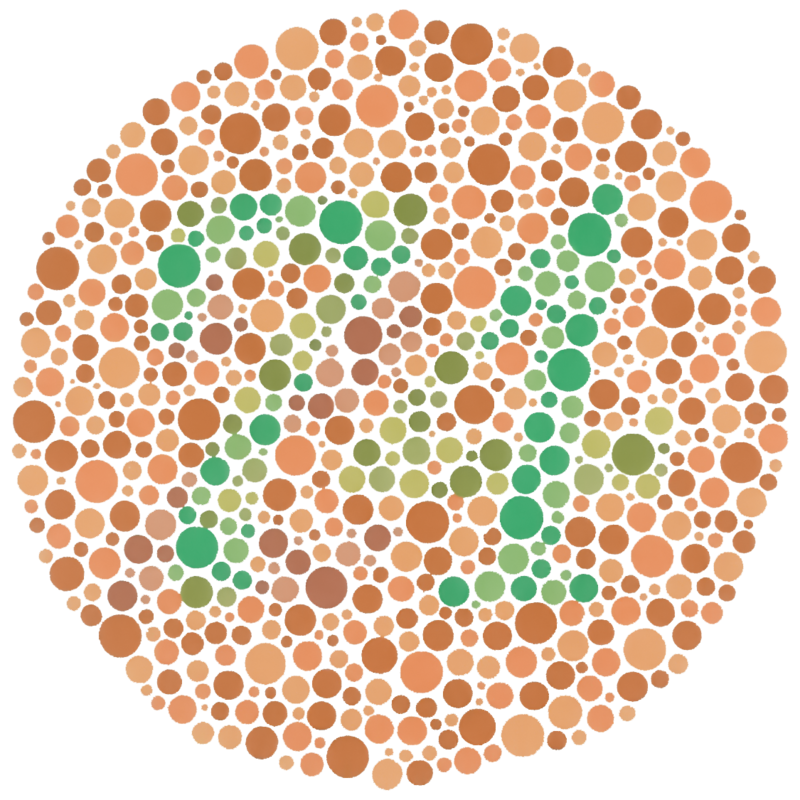
DefinitionTest for detecting color blindness using different color dots to outline numbers
Ishihara 9.png

Clinical SignificanceAllows for quick assessment of color blindness using different styles plates (a full test is 38 plates) and even differentiate between different types of color blindness.  Research has proven that a score of 12 out of 14 red/green plates indicates normal color vision with a sensitivity of 97% and a specificity of 100%.

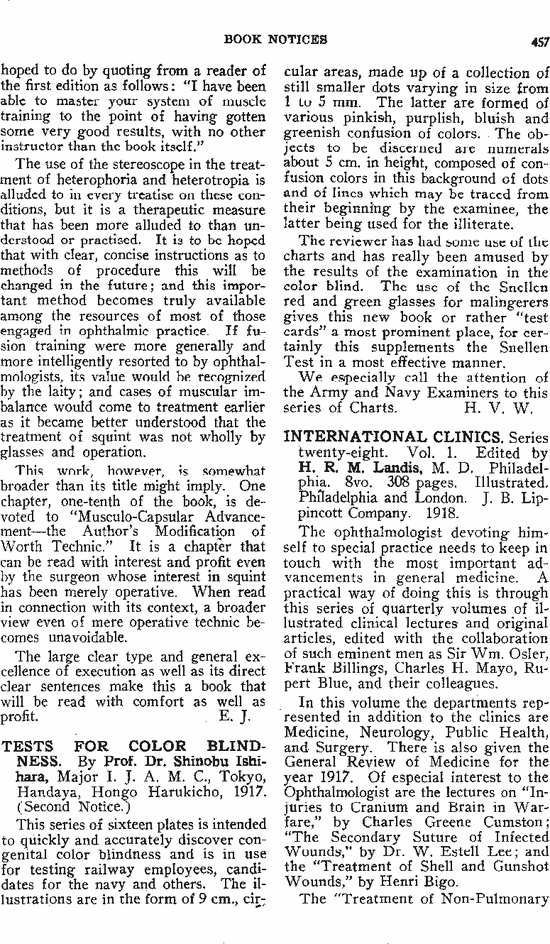
History – Named after Shinobu Ishihara (1879-1963), who developed these while working as a military surgeon for the Japanese army during World War I as a better way of assessing color blindness in troops.  He first published these findings in 1917 in Japan and it was first translated and reviewed in the American Journal of Ophthalmology in June 1918 extolling its usefulness.



References

  1. Firkin BG and Whitwirth JA.  Dictionary of Medical Eponyms. 2nd ed.  New York, NY; Parthenon Publishing Group. 1996.
  2. Bartolucci S, Forbis P.  Stedman’s Medical Eponyms.  2nd ed.  Baltimore, MD; LWW.  2005.
  3. Yee AJ, Pfiffner P. (2012).  Medical Eponyms (Version 1.4.2) [Mobile Application Software].  Retrieved http://itunes.apple.com.
  4. Whonamedit – dictionary of medical eponyms. http://www.whonamedit.com
  5. Ishihara S.  Tests for Color Blindness.  AJO. 1918;1(6):457 [article]
  6. Ishihara S.  Tests for Color Blindness.  1972 [book]
  7. http://www.eyemagazine.com/feature/article/ishihara

Ep-PAINE-nym


Epstein’s Pearls


Other Known Aliasesnone

DefinitionSmall, fluid filled cysts on the hard palate of newborns that are most commonly found along the median palatal raphae.

Image result for epstein's pearls


Clinical SignificanceNone.  These are completely normal and occur in 65-80% of newborns.  The are formed by epithelium that becomes trapped during palatal development.

Image result for epstein's pearls


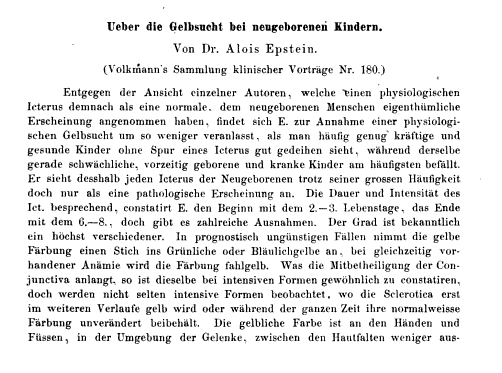
History – Named after Alois Epstein (1849-1918), who was a Czechoslovakian pediatrician, graduating from the University of Prague in 1873.  His career was highlighted by becoming the first physician-in-chief for the University of Prague hospital in 1873 and being appointed to professor at the University of Prague in 1884.  He first described these findings in 1880.


References

  1. Firkin BG and Whitwirth JA.  Dictionary of Medical Eponyms. 2nd ed.  New York, NY; Parthenon Publishing Group. 1996.
  2. Bartolucci S, Forbis P.  Stedman’s Medical Eponyms.  2nd ed.  Baltimore, MD; LWW.  2005.
  3. Yee AJ, Pfiffner P. (2012).  Medical Eponyms (Version 1.4.2) [Mobile Application Software].  Retrieved http://itunes.apple.com.
  4. Whonamedit – dictionary of medical eponyms. http://www.whonamedit.com
  5. Lewis DM. Bohn’s nodules, Epstein’s pearls, and gingival cysts of the newborn: a new etiology and classification. Journal – Oklahoma Dental Association. ; 101(3):32-3. [pubmed]
  6. Singh RK, Kumar R, Pandey RK, Singh K. Dental lamina cysts in a newborn infant. BMJ case reports. 2012; 2012:. [pubmed]
  7. Epstein A. Ueber die Gelbsucht bei Neugeborenen Kindern. Leipsic. 1880. [book]

Ep-PAINE-nym


Hesselbach’s Triangle


Other Known Aliases – Inguinal triangle, medial inguinal fossa

DefinitionAnatomical region of the abdominal wall outlined by the boundaries of the lateral margin of the rectus sheath, the inferior epigastric vessels, and the inguinal ligament.

Inguinal triangle.png

Clinical Significance – The area is where direct hernias protrude through the abdominal wall.

Image result for direct hernia

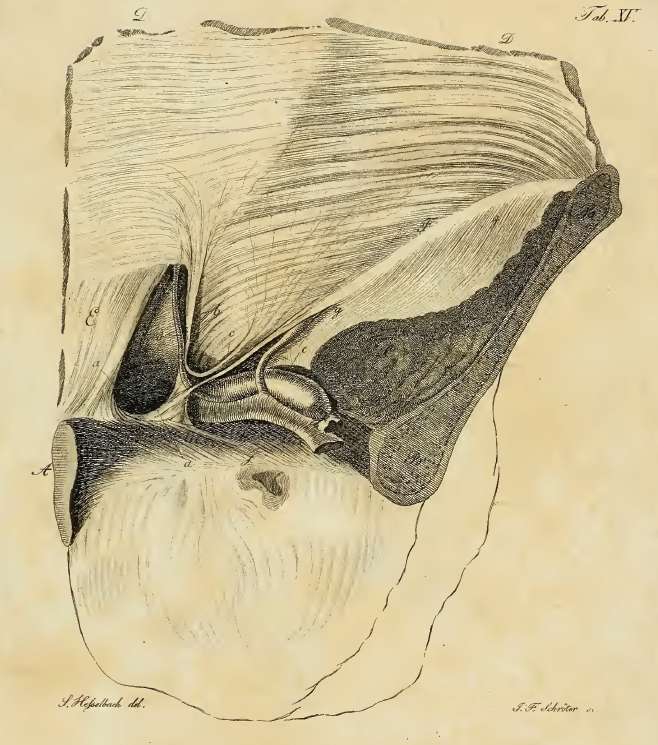
History – Named after Franz Kasper Hesselbach (1759-1816), who was a German physician, surgeon, and anatomist in Hammelburg, Germany.  He had a prolific career surgical assistant and prosector under Karl Kasper von Siebold at The Juliusspital in Würberg, before obtaining his doctor of medicine there.  He is best known for his contributions to the surgery of hernias and has several other eponyms as well: Hesselbach’s fascia (cribriform fascia) and Hesselbach’s ligament (interfoveolar ligament.

Image result for franz kaspar hesselbach

From his 1806 manuscript


References

  1. Firkin BG and Whitwirth JA.  Dictionary of Medical Eponyms. 2nd ed.  New York, NY; Parthenon Publishing Group. 1996.
  2. Bartolucci S, Forbis P.  Stedman’s Medical Eponyms.  2nd ed.  Baltimore, MD; LWW.  2005.
  3. Yee AJ, Pfiffner P. (2012).  Medical Eponyms (Version 1.4.2) [Mobile Application Software].  Retrieved http://itunes.apple.com.
  4. Whonamedit – dictionary of medical eponyms. http://www.whonamedit.com
  5. Tubbs RS, Gribben WB, Loukas M, Shoja MM, Tubbs KO, Oakes WJ. Franz Kaspar Hesselbach (1759–1816): anatomist and surgeon. World journal of surgery. 2008; 32(11):2527-9. [pubmed]
  6. Hesselbach HK. Anatomisch-chirurgische Abhandlung über den Urspurng der Leistenbrüche. Würzburg, Baumgärtner. 1806.
  7. Hesselbach HK. Neueste anatomisch-pathologische Untersuchungen über den Ursprung und das Fortschreiten der Keisten- und Schenkelbrüche. Würzburg, Stahel. 1814

Ep-PAINE-nym


Murphy’s Sign


Other Known AliasesMoynihan’s Method (using just the thumb with patient supine)

DefinitionInspiratory arrest with deep palpation in the right upper quadrant 

Clinical SignificanceAs the patient exhales, the abdominal organs move cephalad and under the diaphragm.  After full exhalation and during inspration, the organs move caudal back into the abdominal cavity.  When there is inflammation of the gallbladder, the patient will stop inhaling as the inflammed gallbladder touches the practitioner’s fingers during deep palpation of the right upper quadrant.

History – Named after John Benjamin Murphy (1857-1916), who was an American surgeon and early pioneer for many different surgical operations and techniques.  In fact, William James Mayo (co-founder of The Mayo Clinic) called him “the surgical genius of our generation”. 

In 1889, he advocated for and popularized early appendectomy in all suspected appendicitis cases and had over 200 successful cases to begin convincing his colleagues of the benefits of early surgery.  Dr. Murphy also pioneered treatment of tuberculosis with iatrogenic pneumothoraces and was the first surgeon to re-anastomose a transected femoral artery from a gunshot wound.  He was also a distinguished teacher and developed “wet clinics” at Mercy Hospital, where he operated and lectured to an audience of learners in a traditional operative theater.

https://upload.wikimedia.org/wikipedia/commons/7/7e/John_B._Murphy_clinic.jpg

Dr. Murphy also attended to Theodore Roosevelt after an assassination attempt and was one of the founding members of the American College of Surgeons.  He is also the author of one of the more famous quotes pertaining to patient-centered care.


References

  1. Firkin BG and Whitwirth JA.  Dictionary of Medical Eponyms. 2nd ed.  New York, NY; Parthenon Publishing Group. 1996.
  2. Bartolucci S, Forbis P.  Stedman’s Medical Eponyms.  2nd ed.  Baltimore, MD; LWW.  2005.
  3. Yee AJ, Pfiffner P. (2012).  Medical Eponyms (Version 1.4.2) [Mobile Application Software].  Retrieved http://itunes.apple.com.
  4. Whonamedit – dictionary of medical eponyms. http://www.whonamedit.com

Ep-PAINE-nym


Littre’s Hernia


Other Known Aliasesnone

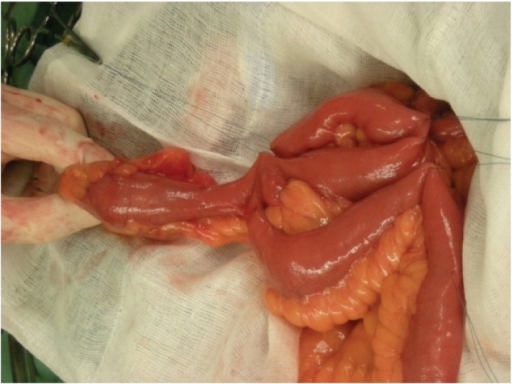
DefinitionHernia involving a Meckel’s diverticulum 

Clinical SignificanceNo real clinical significance other than it is an extremely rare type of hernia, but is always included in the typical pimping barrage of surgery students.  It should also be included in the “zebras” of differential diagnoses of RLQ pain.

Image result for littre's herniaImage result for littre's hernia

History – Named after Alexis Littrè (1654-1726), who was a distinguished physician and prolific surgeon at the historic Salpêtriére Teaching Hospital in Paris.  He was inducted into the famed Académie des Sciences in part to his ridiculous dissection of over 200 cadavers in 1684.  He first described an femoral hernia involving an intestinal diverticulum in 1700 in one of his cadaver dissections.


References

  1. Firkin BG and Whitwirth JA.  Dictionary of Medical Eponyms. 2nd ed.  New York, NY; Parthenon Publishing Group. 1996.
  2. Bartolucci S, Forbis P.  Stedman’s Medical Eponyms.  2nd ed.  Baltimore, MD; LWW.  2005.
  3. Yee AJ, Pfiffner P. (2012).  Medical Eponyms (Version 1.4.2) [Mobile Application Software].  Retrieved http://itunes.apple.com.
  4. Whonamedit – dictionary of medical eponyms. http://www.whonamedit.com
  5. Skandalakis PN, Zoras O, Skandalakis JE, Mirilas P. Littre hernia: surgical anatomy, embryology, and technique of repair. The American surgeon. 2006; 72(3):238-43. [pubmed]
  6. Sturdy DJ.  Science and Social Status: The Members of the Academie Des Sciences 1666-1750. 1995.  Boydell Press
  7. Malling B, Karlsen AA, Hern J.  Littre Hernia: A rare case of incacerated Meckel’s diverticulum.  Ultrasound Int Open.  2017;3(2):E91-92.

Ep-PAINE-nym


Meckel’s Diverticulum


Other Known Aliasesnone

DefinitionVestigial remnant of the omphalomesenteric duct 

Clinical SignificanceIt is the most common malformation in the GI tract and is mainly asymptomatic.  When symptoms do occur, it commonly presents as painless, rectal bleeding in children.  The “Rule of 2s” will help you remember the facts of this pathology:

  • Effects 2% of the population
  • 2% of these will be symptomatic by age 2
  • 2 types of heterotopic tissue
  • Boy-to-girl ratio is 2:1
  • Usually 2″ in length
  • 2′ from the ileocecal valve

Image result for meckel's diverticulumImage result for meckel's diverticulum

History – Named after Johann Friedrich Meckel, the Younger (1781-1833), who was born into a prestigious medical family, with his father and grandfather already prolific physicians and professors of medicine in Halle, Prussia.  He made tremendous advancements in the area of anatomy and embryonic development with special attention to birth defects and abnormalities, where he pioneered the early study of teratology.  He first described the abnormality which bears his name in 1809.

Johann Friedrich Meckel.jpg


References

  1. Firkin BG and Whitwirth JA.  Dictionary of Medical Eponyms. 2nd ed.  New York, NY; Parthenon Publishing Group. 1996.
  2. Bartolucci S, Forbis P.  Stedman’s Medical Eponyms.  2nd ed.  Baltimore, MD; LWW.  2005.
  3. Yee AJ, Pfiffner P. (2012).  Medical Eponyms (Version 1.4.2) [Mobile Application Software].  Retrieved http://itunes.apple.com.
  4. Whonamedit – dictionary of medical eponyms. http://www.whonamedit.com
  5. Stallion A, Shuck JM.  Meckel’s Diverticulum.  Surgical Treatment: Evidence-Based and Problem-Oriented.  2001 [pubmed]
  6. Blackbourne LH.  Surgical Recall.  6th ed. 2012
  7. J. F. Meckel. Über die Divertikel am Darmkanal. Archiv für die Physiologie, Halle, 1809, 9: 421–453
  8. Klunker R, Göbbel L, Musil A, Tönnies H, Schultka R. Johann Friedrich Meckel the Younger (1781-1833) and modern teratology. Annals of Anatomy. 2002; 184(6):535-40. [pubmed]

Ep-PAINE-nym


Grave’s Disease


Other Known AliasesAutoimmune hyperthyroidism

Definition – Hyperthyrodism caused by antibodies that stimulate T3/T4 secretion.  The most common antibodies are thyroid-secreting hormone (TSH) and thyrotropin receptor antibody (TRAb). 

Clinical SignificanceClassic clinical manifestations of hyperthyroidism include thyromegaly, ophthalmaopathy, resting tremor, palpitations, weight loss, heat intolerance.  For more in depth analysis of hyperthyroidism, see my 2017 talk at ASPA here.

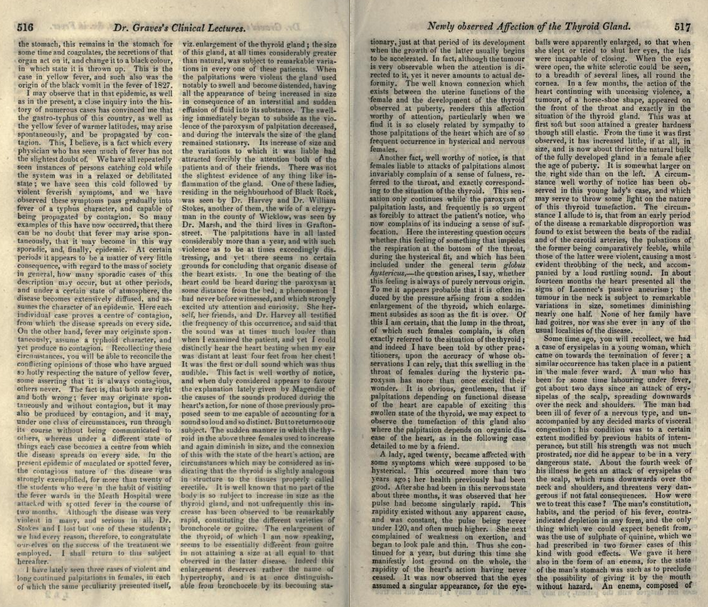
History – Named after Robert James Graves (1796-1853), who was an prolific Irish physician, surgeon, and educator.  He was named Regius professor of the Institute of Medicine in Trinity College, founded the Dublin Journal of Medical and Chemical Sciences, and was a an early adopter of clinical bedside rounding and teaching with medical students. Dr. Graves wrote a routine clinical lecture series in the London Medical and Surgical Journal and first described a young female patient with ophthalmopathy and goiter in 1835.  Dr. Armand Trousseau then published the collection of these articles in 1864 entitled “Clinical Lectures on the Practice of Medicine” and gave him this eponym.  Another contribution of Dr. Graves was the creation of the second hand on watches to time pulses and the practice of providing food and water with patients with a fever, instead of the common practice of withholding nourishment.

Image result for robert james graves


References

  1. Firkin BG and Whitwirth JA.  Dictionary of Medical Eponyms. 2nd ed.  New York, NY; Parthenon Publishing Group. 1996.
  2. Bartolucci S, Forbis P.  Stedman’s Medical Eponyms.  2nd ed.  Baltimore, MD; LWW.  2005.
  3. Yee AJ, Pfiffner P. (2012).  Medical Eponyms (Version 1.4.2) [Mobile Application Software].  Retrieved http://itunes.apple.com.
  4. Whonamedit – dictionary of medical eponyms. http://www.whonamedit.com
  5. Graves RJ.  Newly Observed Affection of the Thyroid Gland. London Medical and Surgical Journal.  1835. Vol.7. Part 2. 512
  6. Graves RJ, Trousseau A.  Clinical Lectures on the Practice of Medicine.  1864.  Dublin.
  7. Smith TJ, Hegedüs L. Graves’ Disease. The New England journal of medicine. 2016; 375(16):1552-1565. [pubmed]

Ep-PAINE-nym


Bowman’s Capsule


Other Known AliasesCapsula glomeruli, glomerular capsule

DefinitionDouble walled, cup-like capsule surrounding the glomerulus

Image result for bowman's capsule

Clinical SignificanceIt is made up of two poles: a vascular pole (afferent and efferent arterioles) and a urinary pole (proximal convoluted tubule). Within the capsule, there is a parietal layer and visceral layer with a space in between.  This is where ultrafiltration takes place and urine is filtered from the blood.

History – Named after Sir William Bowman (1816-1892), who was an English ophthalmologist, histologist, and anatomist, and first identified this structure in 1841.  He published his findings at the age of 25 and was awarded The Royal Medal by the Royal Society of  London.

He was well known for his extensive use microscopes in visualizing structures of the human body and publishing two works with his mentor, Robert Bentley Todd, entitled “Physiological Anatomy and Physiology of Man” and “Cyclopaedia of Anatomy and Physiology”.

William Bowman.jpg

The Cyclopaedia Of Anatomy And Physiology


References

  1. Firkin BG and Whitwirth JA.  Dictionary of Medical Eponyms. 2nd ed.  New York, NY; Parthenon Publishing Group. 1996.
  2. Bartolucci S, Forbis P.  Stedman’s Medical Eponyms.  2nd ed.  Baltimore, MD; LWW.  2005.
  3. Yee AJ, Pfiffner P. (2012).  Medical Eponyms (Version 1.4.2) [Mobile Application Software].  Retrieved http://itunes.apple.com.
  4. Whonamedit – dictionary of medical eponyms. http://www.whonamedit.com
  5. Bowman W.  On the Structure and Use of the Malpighian Bodies of the Kidney.  Phil Trans R Soc Lond.  1842;132:57-80
  6. Eknoyan G. Sir William Bowman: his contributions to physiology and nephrology. Kidney international. 1996; 50(6):2120-8. [pubmed]
  7. Galst JM. Sir William Bowman (1816-1892). Archives of ophthalmology (Chicago, Ill. : 1960). 2007; 125(4):459. [pubmed]

Ep-PAINE-nym


Gerota’s Fascia


Other Known AliasesRenal fascia

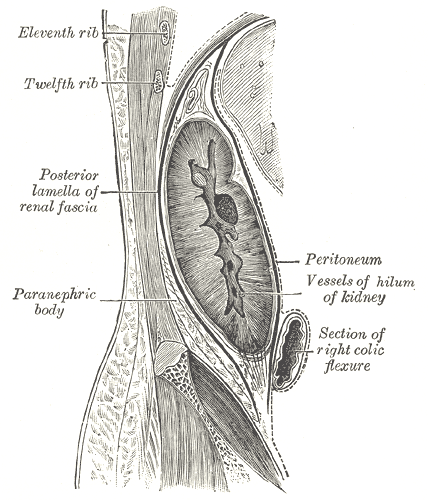
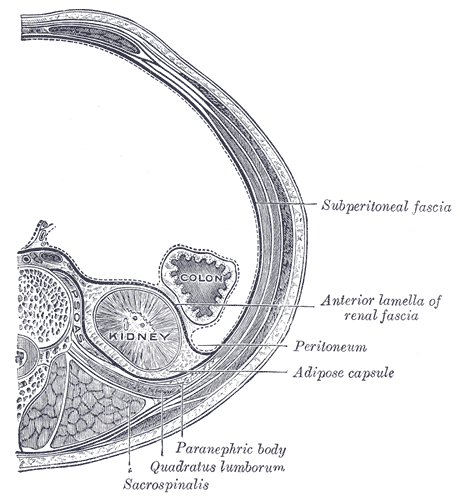
DefinitionConnective tissue layers covering the kidneys and adrenal glands

Clinical Significance This connective tissue encapsulates these organs and must be excised to perform nephrectomies and adrenalectomies.  It has 4 attachments:

  • Anterior attachment – Connects the anterior layer of the renal fascia of the opposite kidney.
  • Posterior attachment – Connects the psoas fascia and the body of the vertebrae.
  • Superior attachment – The anterior and posterior layers fuse at the upper pole of the kidney and then split to enclose the adrenal gland. At the upper part of the adrenal gland they again fuse to form the suspensory ligament of the adrenal gland and fuse with the diaphragmatic fascia.
  • Inferior attachment – The posterior layer descends downwards and fuses with the iliac fascia. The anterior layer blends with the connective tissue of the iliac fossa.

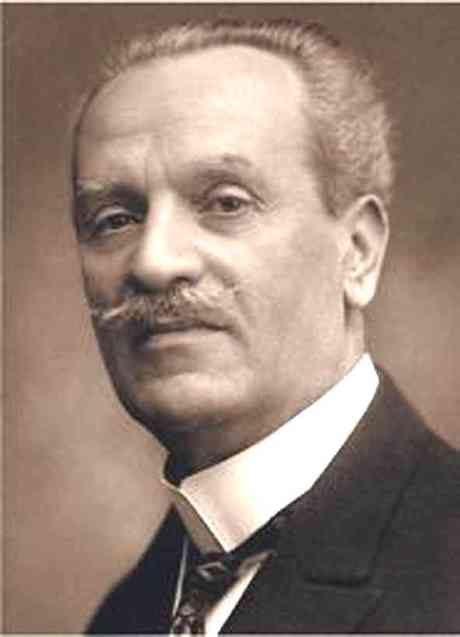
History – Named after Dimitrie D. Gerota (1867-1939), who was a Romanian physician and professor of surgical anatomy and experimental surgery at the University of Bucharest.  He was also the first radiologist in Romania and developed a method for injecting lymphatic vessels known as “The Gerota Method”

13-foto1


References

  1. Firkin BG and Whitwirth JA.  Dictionary of Medical Eponyms. 2nd ed.  New York, NY; Parthenon Publishing Group. 1996.
  2. Bartolucci S, Forbis P.  Stedman’s Medical Eponyms.  2nd ed.  Baltimore, MD; LWW.  2005.
  3. Yee AJ, Pfiffner P. (2012).  Medical Eponyms (Version 1.4.2) [Mobile Application Software].  Retrieved http://itunes.apple.com.
  4. Whonamedit – dictionary of medical eponyms. http://www.whonamedit.com

Ep-PAINE-nym


Systemic Lupus Erythematosus


Other Known AliasesLupus

DefinitionAutoimmune disease that can effect the entire system…most commonly skin, joints, and constitutional.

Clinical Significance For this eponym, there is no clinical significance.  Just a cool fact I wanted to bring up….

History – You may have been wondering (or maybe not) where the “lupus” part of this disease comes from.  Having studied Latin in high school all four years, this perplexed me in PA school because “lupus” is Greek for wolf.  So why did early physicians decide on throwing “wolf” into the disease title?

Well (since you asked), it has been attributed to the 13th century Rogerius (who practiced with his friend, Stevius) who thought the characteristic erosive, dermatologic skin findings were similar to the effects of a wolf bite.


For those fellow PotterHeads out there, now you know the foreshadowing of (my favorite character) Remus LUPIN in the series.

Image result for lupin potter


References

  1. Firkin BG and Whitwirth JA.  Dictionary of Medical Eponyms. 2nd ed.  New York, NY; Parthenon Publishing Group. 1996.
  2. Bartolucci S, Forbis P.  Stedman’s Medical Eponyms.  2nd ed.  Baltimore, MD; LWW.  2005.
  3. Yee AJ, Pfiffner P. (2012).  Medical Eponyms (Version 1.4.2) [Mobile Application Software].  Retrieved http://itunes.apple.com.
  4. Whonamedit – dictionary of medical eponyms. http://www.whonamedit.com
  5. Blotzer JW. Systemic lupus erythematosus I: historical aspects. Maryland State Medical Journal. 1983; 32(6):439-41. [pubmed]
  6. Bertino LS, Lu LC. The bite of a wolf: systemic lupus erythematosus. Rehabilitation nursing : the official journal of the Association of Rehabilitation Nurses. 1993; 18(3):173-8. [pubmed]