Benign paroxysmal positional vertigo (BPPV) can be quite a debilitating condition for patient it effects. What are the two maneuvers that are used at the bedside for this condition and how do they differ?
Answer
The two maneuvers used clinically in the evaluation and treatment of BPPV are:
Dix-Hallpike Maneuver (diagnosis)
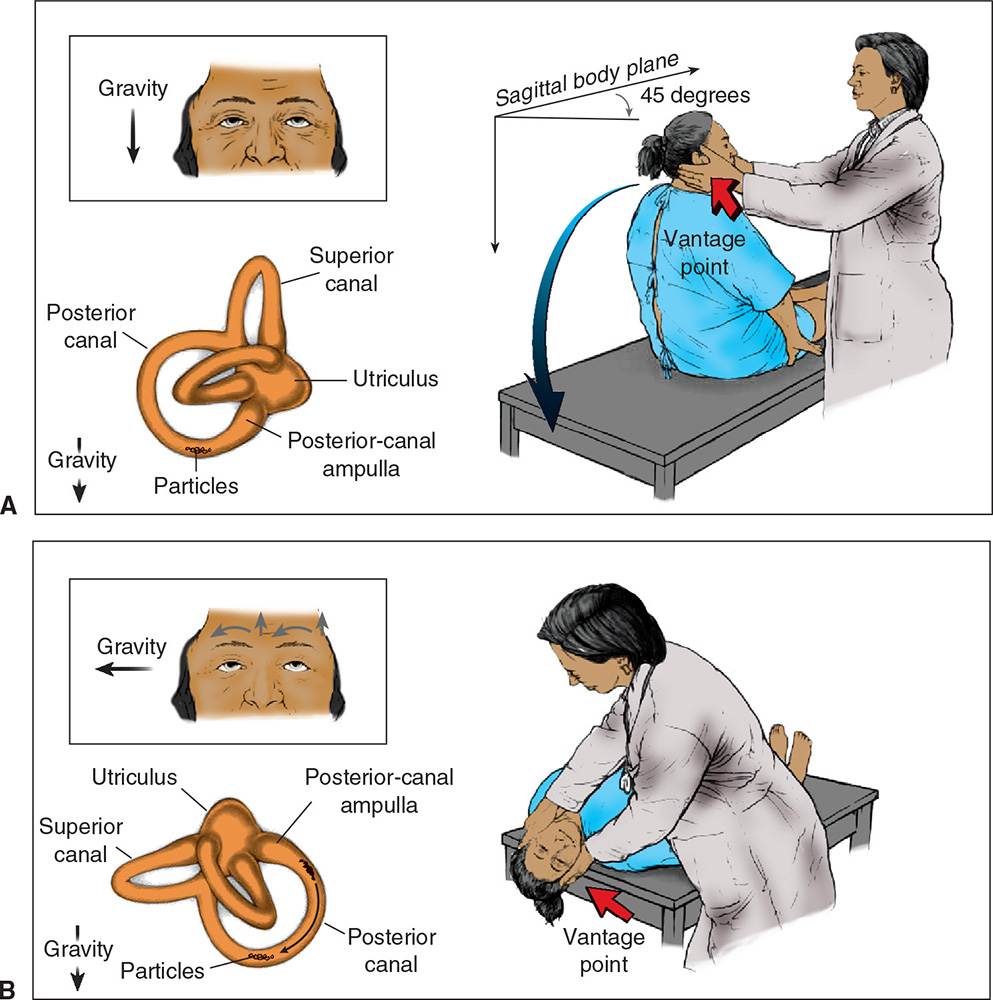
This is used to diagnosis BPPV and is performed by having the patient starting sitting upright. The head is then turned to one side and the patient is rapidly lowered to the supine position with their extended over the examination table. The provider then watches for nystagmus or vertigo symptoms. If this side is negative, then the maneuver is repeated on the other side.
Dix-Hallpike
Epley Maneuver (treatment)
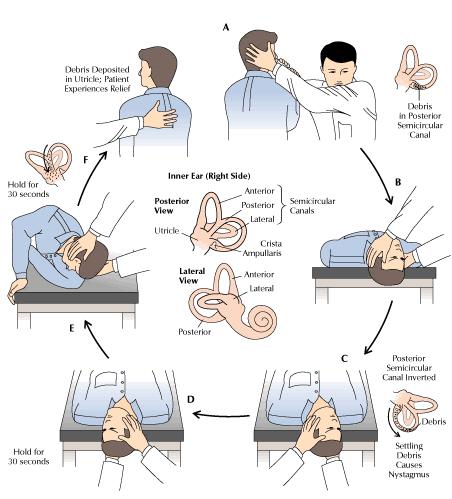
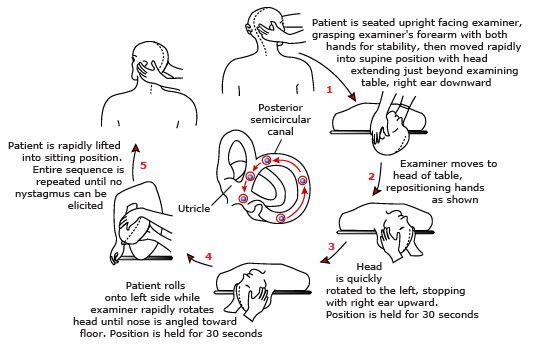
This is used to treat active vertigo in BPPV by attempting to relocate the canalith back into the utricle by using a series of repositioning techniques.
Epley
References
Shim DB, Ko KM, Kim JH, Lee WS, Song MH. Can the affected semicircular canal be predicted by the initial provoking position in benign paroxysmal positional vertigo? The Laryngoscope. 2013; 123(9):2259-63. [pubmed]
Furman JM, Cass SP. Benign paroxysmal positional vertigo. The New England journal of medicine. 1999; 341(21):1590-6. [pubmed]
Woodworth BA, Gillespie MB, Lambert PR. The canalith repositioning procedure for benign positional vertigo: a meta-analysis. The Laryngoscope. 2004; 114(7):1143-6. [pubmed]
White J, Savvides P, Cherian N, Oas J. Canalith repositioning for benign paroxysmal positional vertigo. Otology & neurotology : official publication of the American Otological Society, American Neurotology Society [and] European Academy of Otology and Neurotology. 2005; 26(4):704-10. [pubmed]
Other known aliases – canalithrepositioning manuever
Definition – series of positions and manual manipulations used to reposition free-floating otoconia in the semicircular canals of the inner ear
Clinical Significance – The Epley maneuver is used to treat benign paroxysmal positional vertigo (BPPV) by relocating the otoconia back to the utricle where they can no longer stimulate the cupula of the semicircular canal and cause vertigo.
History – Named after John Epley, an American otolaryngologist from Portland, OR, who received his medical degree from the Oregon Health Sciences University and fellowship from Stanford Medical Center. He pioneered the “canalith theory” of vestibular disease and published his eponymous maneuver in 1980 in the article entitled “New Dimensions of Benign Paroxysmal Positional Vertigo”. Dr. Epley is still in practice today.
References
Firkin BG and Whitwirth JA. Dictionary of Medical Eponyms. 2nd ed. New York, NY; Parthenon Publishing Group. 1996.
Bartolucci S, Forbis P. Stedman’s Medical Eponyms. 2nd ed. Baltimore, MD; LWW. 2005.
Yee AJ, Pfiffner P. (2012). Medical Eponyms (Version 1.4.2) [Mobile Application Software]. Retrieved http://itunes.apple.com.
Benign paroxysmal positional vertigo (BPPV) can be quite a debilitating condition for patient it effects. What are the two maneuvers that are used at the bedside for this condition and how do they differ?
You have a patient in the ED with an aortic dissection and are managing them while awaiting the cardiovascular surgeon to arrive.
What are the two most important things to control?
How do you go about doing that?
Answer
The main aims of acute medical management of aortic dissections are to decrease the rate of left ventricular contraction and decrease the velocity of the contraction, which will overall decrease the shear stress at the site of the tear and slow progression.
Start with intravenous beta-blockade and titrate to a heart rate of 60 betas/minute
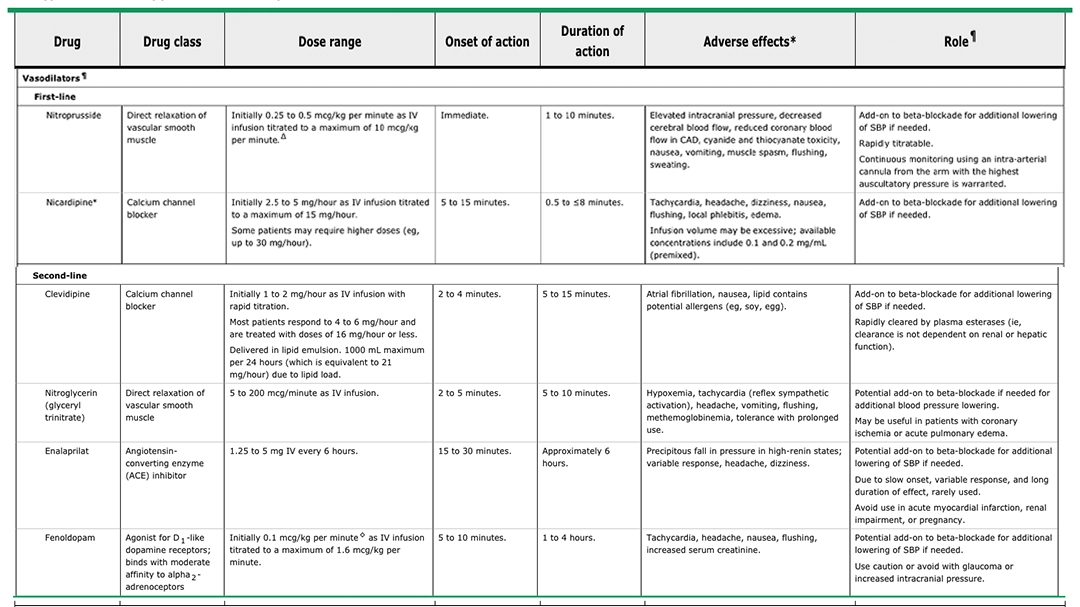
If systolic blood pressure is > 120 mmHg after successful beta-blockade, then add a vasodilator or afterload reducer.
Hiratzka LF, Bakris GL, Beckman JA, et al. 2010 ACCF/AHA/AATS/ACR/ASA/SCA/SCAI/SIR/STS/SVM guidelines for the diagnosis and management of patients with Thoracic Aortic Disease: a report of the American College of Cardiology Foundation/American Heart Association Task Force on Practice Guidelines, American Association for Thoracic Surgery, American College of Radiology, American Stroke Association, Society of Cardiovascular Anesthesiologists, Society for Cardiovascular Angiography and Interventions, Society of Interventional Radiology, Society of Thoracic Surgeons, and Society for Vascular Medicine. Circulation. 2010; 121(13):e266-369. [pubmed]
Tsai TT, Nienaber CA, Eagle KA. Acute aortic syndromes. Circulation. 2005; 112(24):3802-13. [pubmed]
Other known aliases – hepatopancreatic sphincter, Glisson’s sphincter
Definition – muscular ring surrounding the major duodenal papilla at the 2nd portion of the duodenum.
Clinical Significance – the sphincter of Oddi allows for drainage of the biliary and pancreatic systems and dysfunction (mainly spasming) can can cause pancreatitis. It is in a constant state of contraction unless relaxed by cholesytokinin released by vasoactive intestinal peptide. Opioids, specifically morphine, has been shown to increase the risk of sphincter of Oddi dysfunction.
History – Named after Ruggero Ferdinando Antonio Guiseppe Vincenzo Oddi (1864-1913), who was an Italian physiologist and anatomist from Perugia. He spent is formative years studying medicine at Perugia, Bologna, and Florence and was appointed head of the Physiology Institute at the University of Genoa in 1894. In 1887, at only 23 years old, he described his eponymous structure in his paper “D’une disposition a sphincter speciale de l’ouverture du canal choledoque”. His career, unfortunately, was derailed and cut short due to opioid addiction many believe was as a result of using morphine derivatives to study dysfunction of the sphincter.
References
Firkin BG and Whitwirth JA. Dictionary of Medical Eponyms. 2nd ed. New York, NY; Parthenon Publishing Group. 1996.
Bartolucci S, Forbis P. Stedman’s Medical Eponyms. 2nd ed. Baltimore, MD; LWW. 2005.
Yee AJ, Pfiffner P. (2012). Medical Eponyms (Version 1.4.2) [Mobile Application Software]. Retrieved http://itunes.apple.com.
Helm JF, Venu RP, Geenen JE, et al. Effects of morphine on the human sphincter of Oddi. Gut. 1988; 29(10):1402-7. [pubmed]
Behar J. Physiology and Pathophysiology of the Biliary Tract: the Gallbladder and Sphincter of Oddi – A Review. ISRN Physiology, vol. 2013, Article ID 837630, 15 pages, 2013. https://doi.org/10.1155/2013/837630
Oddi R. D’une disposition a sphincter speciale de l’ouverture du canal choledoque. Arch Ital Biol. 1887;8:317–322
Loukas M, Spentzouris G, Tubbs RS, Kapos T, Curry B. Ruggero Ferdinando Antonio Guiseppe Vincenzo Oddi. World journal of surgery. 2007; 31(11):2260-5. [pubmed]
Initial screening test for suspected celiac disease is a serum immunoglobulin A (IgA) anti-tissue transglutaminase (TTG). If positive, it is then followed up with an endoscopic duodenal biopsy.
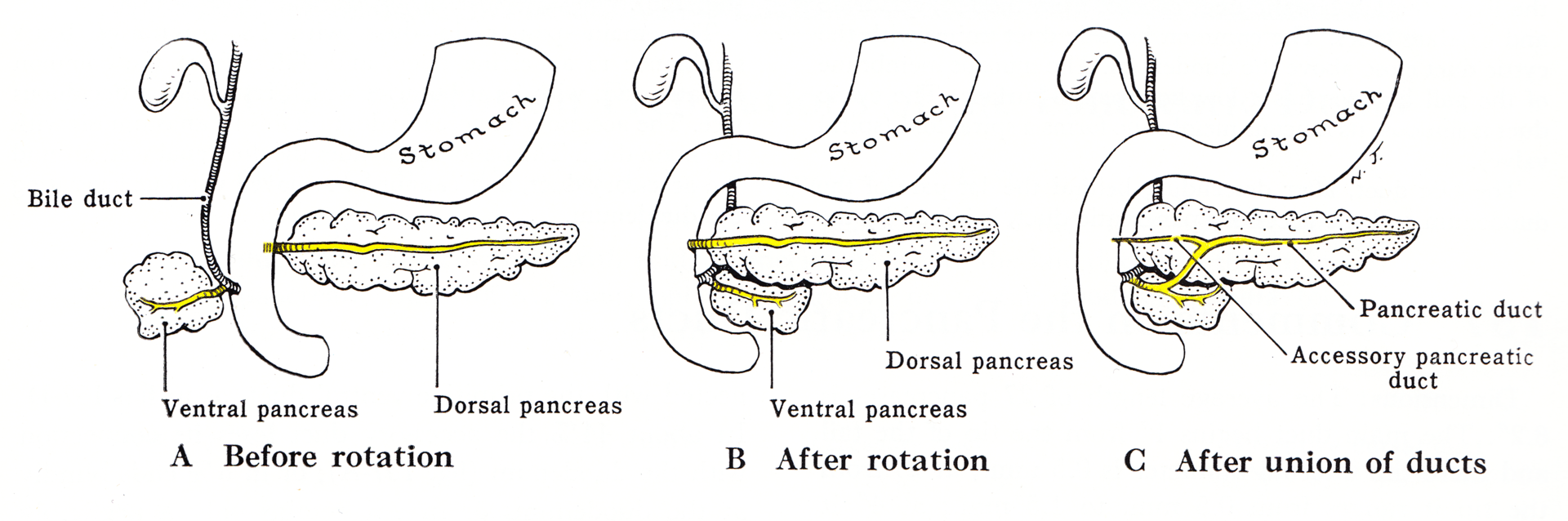
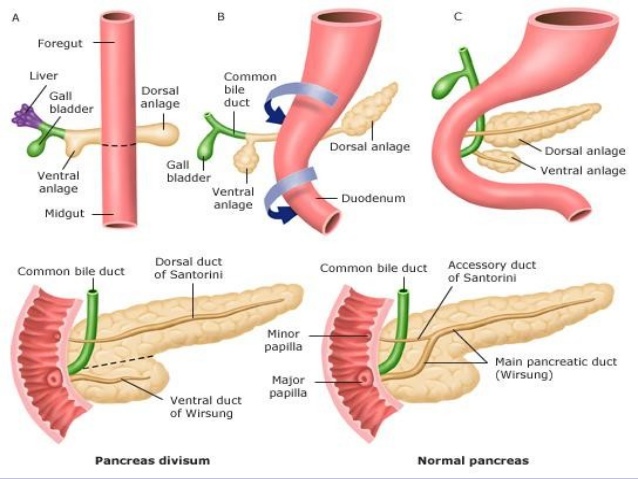
Definition – portion of the dorsal duct distal to the dorsal-ventral fusion point during embryonic development
Clinical Significance – 85% of the population have a single, main pancreatic duct and 15% can have an accessory duct that either drains into the duodenum by a separate ampulla (2/3), or drains into the main duct (1/3). These anatomical variants need to be explored prior to instrumentation for pancreatic pathology as it can occur with pancreas divisum, which makes the accessory duct the principle drainage duct for the pancreas.
History – Named after Giovanni Domenico Santorini (1681-1737), who was an Italian anatomist and son of an apothecary. He spent his formative years studying medicine throughout Bologna, Padua, and Pisa, where he received his medical doctorate in 1701. He performed anatomical dissection demonstration in Venice for 23 years, during which he published his most famous work entitled Observationes Anatomicae. This work was considered one of the most detailed and important anatomical texts of the time and gave way to descriptions of twelve different anatomic eponyms accredited to Santorini.
References
Firkin BG and Whitwirth JA. Dictionary of Medical Eponyms. 2nd ed. New York, NY; Parthenon Publishing Group. 1996.
Bartolucci S, Forbis P. Stedman’s Medical Eponyms. 2nd ed. Baltimore, MD; LWW. 2005.
Yee AJ, Pfiffner P. (2012). Medical Eponyms (Version 1.4.2) [Mobile Application Software]. Retrieved http://itunes.apple.com.
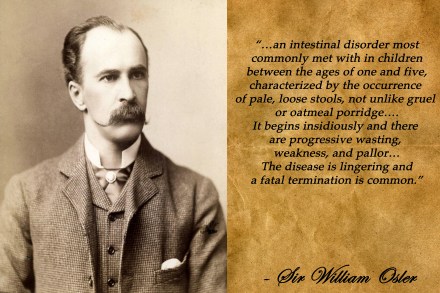
The term “celiac” has Latin and Greek roots as Aretaeus of Cappadocia named this disease in the 1st century AD “koiliakos” meaning abdomen/abdominal in patients with chronic diarrhea. The first modern medical description of the disease was in 1888 by Samuel Gee in an paper entitled “On the Coeliac Affection”. The specific medical term for Celiac Disease is “gluten-sensitive enteropathy”. It was still relatively unexplained until Willem Dicke, a Dutch pediatrician, noted improvement in his patient’s abdominal symptoms during bread and grain shortages of World War II.
Epidemiology
Primarily in northern European white
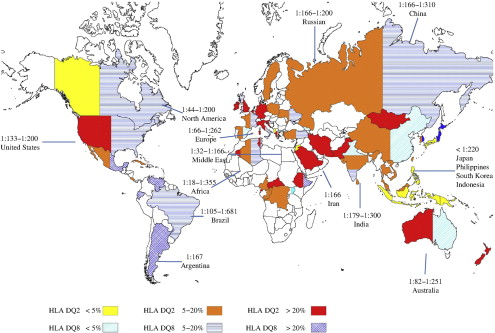
Prevalence is widely variable due to differing rates and types of population screening throughout the world
Pathophysiology
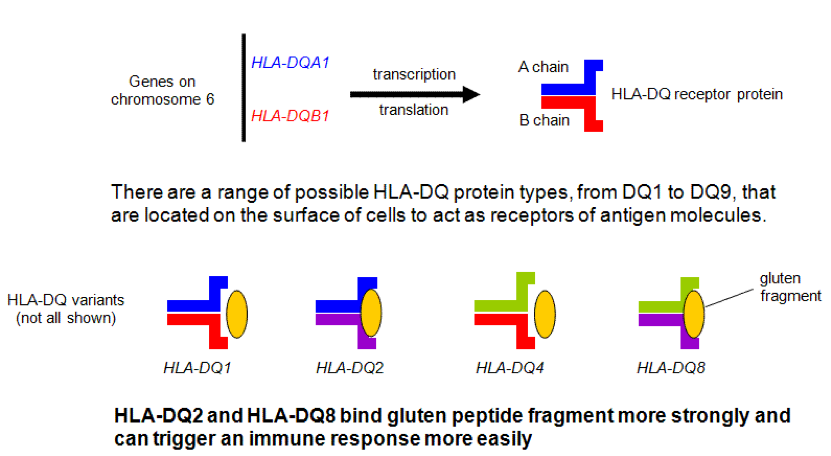
High association with genetic predisposition to gluten sensitivity, specifically HLA-DQ2 and/or DQ8, and because of these genetic changes, serum autoantibodies are produced that attack the endomysium of the enterocytes of the small bowel.
Signs and Symptoms
Originally thought to be a disease of infancy, it is being
diagnosed later and later in life, with adults first being diagnosed as late as
the fifth decade. Often, this is in the
setting of failure to thrive in an infant.
Common
Diarrhea
Steatorrhea
Malabsorption
Anemia (iron), weight loss,
metabolic bone disease (vitamin D and calcium), vitamin deficiencies (B-complex
vitamins)
Peripheral neuropathy, ataxia
Associated Clinical Findings
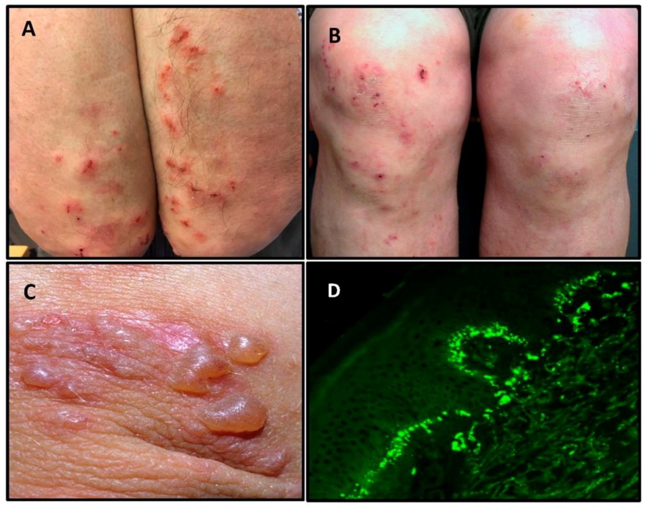
Dermatitis herpetifomis
Pruritic papules and grouped
vesicles on the elbows, forearms, knees, scalp, back, and buttock.
1:369 patients diagnosed with celiac
disease
Diagnosed with biopsy histologic
evidence of IgA deposition in basement membrane
Down Syndrome
As high as 16% association, which isa 20-fold increase compared with general public
Also associated with liver disease, diabetes, thyroid disease, inflammatory bowel disease
Screening and Diagnosis
Who should be screened?
Patients with chronic diarrhea,
malabsorption, weight loss, or abdominal distension and bloating
Patients without other explanations
for extraintestinal diseases such as anemia, elevated transaminases, peripheral
neuropathy, ataxia, etc.
Patients with type 1 DM and signs or
symptoms of celiac disease
Asymptomatic first-degree relatives
of patients with confirmed celiac disease
Immunoglobulin A (IgA) anti-tissue
transglutaminase (TTG) is the initial screening test of choice
If positive, then proceed with
duodenal biopsy via endoscopy
If negative, HLA-DQ2/DQ8 testing is
performed to evaluate for nonceliac gluten sensitivity
If negative, then celiac is
ruled-out
If positive, then slow introduction
of gluten-containing foods is started
If unable to tolerate, then proceed
with biopsy
If serology changes to positive,
then celiac disease is confirmed
Endoscopic biopsy is the confirmatory
test of choice in patients with positive serologic screening and high
probability of celiac disease.
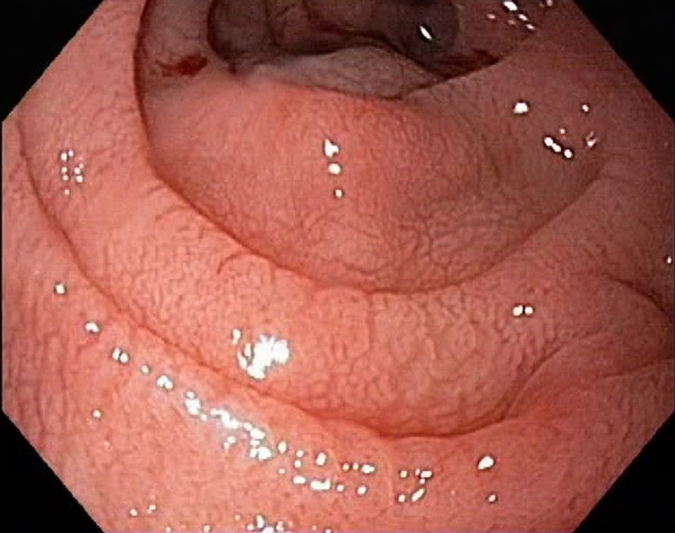
Duodenal mucosa may appear atrophic
with loss of folds, visible fissures, nodular folds, and/or scalloped
appearance
Histologic features of small bowel
biopsy include increased intraepithelial lymphocytes, flat mucosa with complete
loss of villi and atrophy, and/or crypt hyperplasia
Classification
Celiac disease can present as a spectrum of signs and
symptoms and thus, have different classifications.
Classic Disease
3 key features
Villous atrophy
Symptoms of malabsorption
Steatorrhea, weight loss, nutrient
deficiencies
Improvement in symptoms with
withdrawal of gluten-containing foods
Atypical Disease
Minor gastrointestinal complaints
Anemia, osteoporosis, tooth enamel
issues,
Severe mucosal damage is present on
endoscopy
Asymptomatic (Silent) Disease
Incidental finding on screening
without symptoms
Management
Six key elements of successful management of celiac disease
and it has a nice acronym:
Consultation with a skilled dietician
Education about the disease
Lifelong adherence to a gluten-free diet
Identification and treatment of nutritional deficiencies
Access to an advocacy group
Continuous long-term follow-up by a multidisciplinary team
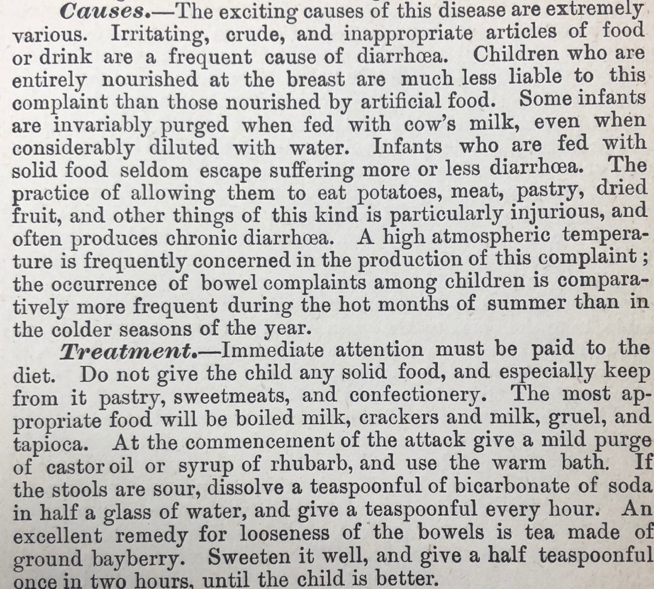
Cottage Physician
This is an excerpt from the pediatric disease section on diarrhea:
References
Impact – A Publication of the University of Chicago Celiac Disease Center. 2007;7(3):1-3. [article]
Yan D, Holt PR. Willem Dicke. Brilliant clinical observer and translational investigator. Discoverer of the toxic cause ofceliac disease. Clinical and translational science. 2009; 2(6):446-8. [pubmed]
Schuppan D. Current concepts of celiac disease pathogenesis. Gastroenterology. 2000; 119(1):234-42. [pubmed]
Kagnoff MF. Celiac disease. A gastrointestinal disease with environmental, genetic, and immunologic components.Gastroenterology clinics of North America. 1992; 21(2):405-25. [pubmed]
Dieterich W, Laag E, Schöpper H, et al.Autoantibodies to tissue transglutaminase as predictors of celiac disease.Gastroenterology. 1998; 115(6):1317-21. [pubmed]
Bibbins-DomingoK, Grossman DC, et al. Screening for Celiac Disease: US Preventive Services Task Force Recommendation Statement. JAMA. 2017; 317(12):1252-1257. [pubmed]
CarlssonA, Axelsson I, Borulf S, et al. Prevalence of IgA-antigliadin antibodies and IgA-antiendomysium antibodies related to celiac disease in children with Down syndrome. Pediatrics. 1998; 101(2):272-5. [pubmed]
Rubio-TapiaA, Hill ID, Kelly CP, Calderwood AH, Murray JA, . ACG clinical guidelines:diagnosis and management of celiac disease. The American journal of gastroenterology. 2013; 108(5):656-76; quiz 677. [pubmed]
ShahVH, Rotterdam H, Kotler DP, Fasano A, Green PH. All that scallops is not celiac disease. Gastrointestinal endoscopy. 2000; 51(6):717-20. [pubmed]
OberhuberG, Granditsch G, Vogelsang H. The histopathology of coeliac disease: time for astandardized report scheme for pathologists. European journal of gastroenterology & hepatology. 1999; 11(10):1185-94. [pubmed]
National Institutes of Health Consensus Development Conference Statement on Celiac Disease, June 28-30, 2004.Gastroenterology. 2005; 128(4 Suppl 1):S1-9. [pubmed]















 PAINE Podcast and Medical Blog