Ep-PAINE-nym


Maisonneuve Fracture


Other Known Aliasesnone


Definitionspiral fracture of the proximal third of the fibula caused by pronation with external rotation


Image result for maisonneuve

Clinical SignificanceThis injury is a sequelae of significant ankle trauma with disruption of the distal tibiofibular syndesmosis and can be unstable.  It is also one of the criteria of the Ottawa Rules of the Ankle so you don’t miss these


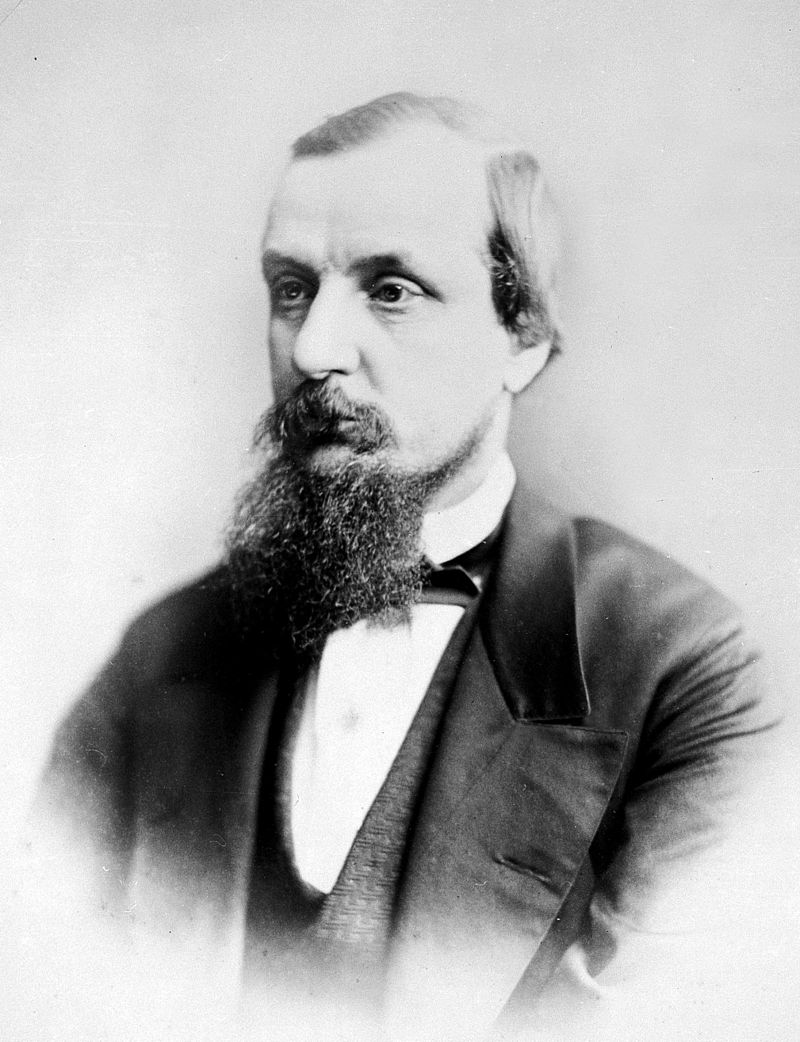
History – Named after Jules Germain François Maisonneuve (1809-1897), a French surgeon who studied under Guillaume Dupuytren in the mid-1800s.  He first reported this injury pattern in 1840 in the article entitled Recherches sur la fracture du Péroné.  He was also the first surgeon to advocate the use of external fixation in the management of ankle fractures


References

  1. Firkin BG and Whitwirth JA.  Dictionary of Medical Eponyms. 2nd ed.  New York, NY; Parthenon Publishing Group. 1996.
  2. Bartolucci S, Forbis P.  Stedman’s Medical Eponyms.  2nd ed.  Baltimore, MD; LWW.  2005.
  3. Yee AJ, Pfiffner P. (2012).  Medical Eponyms (Version 1.4.2) [Mobile Application Software].  Retrieved http://itunes.apple.com.
  4. Whonamedit – dictionary of medical eponyms. http://www.whonamedit.com
  5. Up To Date. www.uptodate.com
  6. Maisonneuve, J. G. (1840). Recherches sur la fracture du péroné. Paris. France: Loquin & Cie.

Ep-PAINE-nym


Hutchinson Fracture


Other Known AliasesChauffeur fracture, backfire fracture


Definition – intra-articular fracture of the radial styloid


Chauffeur fracture


Clinical SignificanceThis injury most commonly occurs from either direct trauma to the dorsum of the hand or from FOOSH with forced dorsiflexion and abduction


History – Named after Jonathan Hutchinson (1828-1913), who was an English physician and surgeon and received his medical doctorate from St. Bartholomew’s Hospital in London in 1850.  He enjoyed a prolific career practicing in ophthalmology and pathology, while also serving as president for numerous medical societies.  Dr. Hutchinson also produced more than 1200 medical articles and study extensively on infectious diseases.  In 1908, he was knighted by Edward VII for his contributions to medicine.  The colloquial term of chauffeur fracture comes from the fact that when the chauffeur would hand crank the car and the car backfired, the handle would shoot back and impact the palm of the hand.


Jonathan Hutchinson 2.jpg


References

  1. Firkin BG and Whitwirth JA.  Dictionary of Medical Eponyms. 2nd ed.  New York, NY; Parthenon Publishing Group. 1996.
  2. Bartolucci S, Forbis P.  Stedman’s Medical Eponyms.  2nd ed.  Baltimore, MD; LWW.  2005.
  3. Yee AJ, Pfiffner P. (2012).  Medical Eponyms (Version 1.4.2) [Mobile Application Software].  Retrieved http://itunes.apple.com.
  4. Whonamedit – dictionary of medical eponyms. http://www.whonamedit.com
  5. Up To Date. www.uptodate.com
  6. Radiopaedia.  Chauffeur Fracture. https://radiopaedia.org/articles/chauffeur-fracture
  7. WALES AE. Sir Jonathan HUTCHINSON, 1828-1913. The British journal of venereal diseases. 1963; 39:67-86. [pubmed]

Ep-PAINE-nym


Bouchard’s Nodes


Other Known Aliasesnone


Definitionnodular growths on the proximal interphalangeal joints of the fingers and toes


Clinical SignificanceMost commonly seen in osteoarthritis and similar to Heberden’s nodes of the distal interphalangeal joints, though they are less common.


History – Named after Charles Jacques Bouchard (1837-1915), a French pathologist who received his medical doctorate in 1866 while studying under the famous Dr. Jean Martin Charcot. He practiced at the Bicêtre Hospital where he was appointed chair of general pathology in 1879.  His seminal work was the Traité de Pathologie Générale, which was a compendium of medical pathology and where the description of his eponymous findings were first recorded.


Image result for Traité de Pathologie Générale bouchard


References

  1. Firkin BG and Whitwirth JA.  Dictionary of Medical Eponyms. 2nd ed.  New York, NY; Parthenon Publishing Group. 1996.
  2. Bartolucci S, Forbis P.  Stedman’s Medical Eponyms.  2nd ed.  Baltimore, MD; LWW.  2005.
  3. Yee AJ, Pfiffner P. (2012).  Medical Eponyms (Version 1.4.2) [Mobile Application Software].  Retrieved http://itunes.apple.com.
  4. Whonamedit – dictionary of medical eponyms. http://www.whonamedit.com
  5. Up To Date. www.uptodate.com
  6. Contrepois A. The clinician, germs and infectious diseases: the example of Charles Bouchard in Paris. Medical history. 2002; 46(2):197-220. [pubmed]
  7. https://www.nature.com/articles/140457c0

Ep-PAINE-nym


Jones Fracture


Other Known Aliasesnone


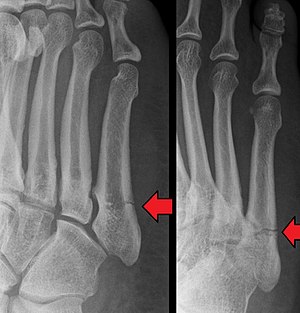
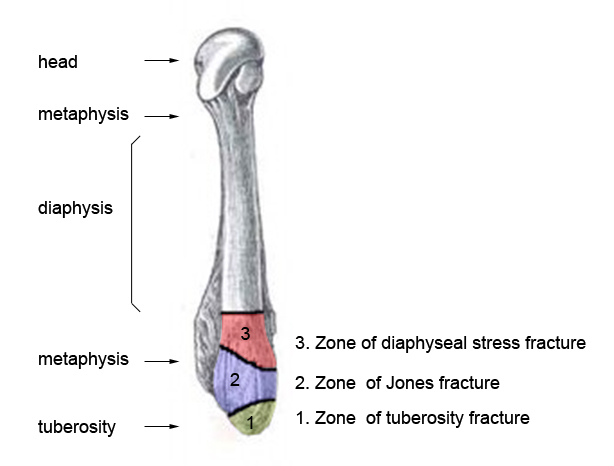
Definition – fracture of the base of the 5th metatarsal at the metaphyseal-diaphyseal junction

Image result for jones fracture

Clinical SignificanceFairly easy radiographical diagnosis to make, but careful examination must distinguish between acute injuries in Zone 1 and 2 and chronic injuries in Zone 3.

Image result for jones fractureImage result for jones fracture zones

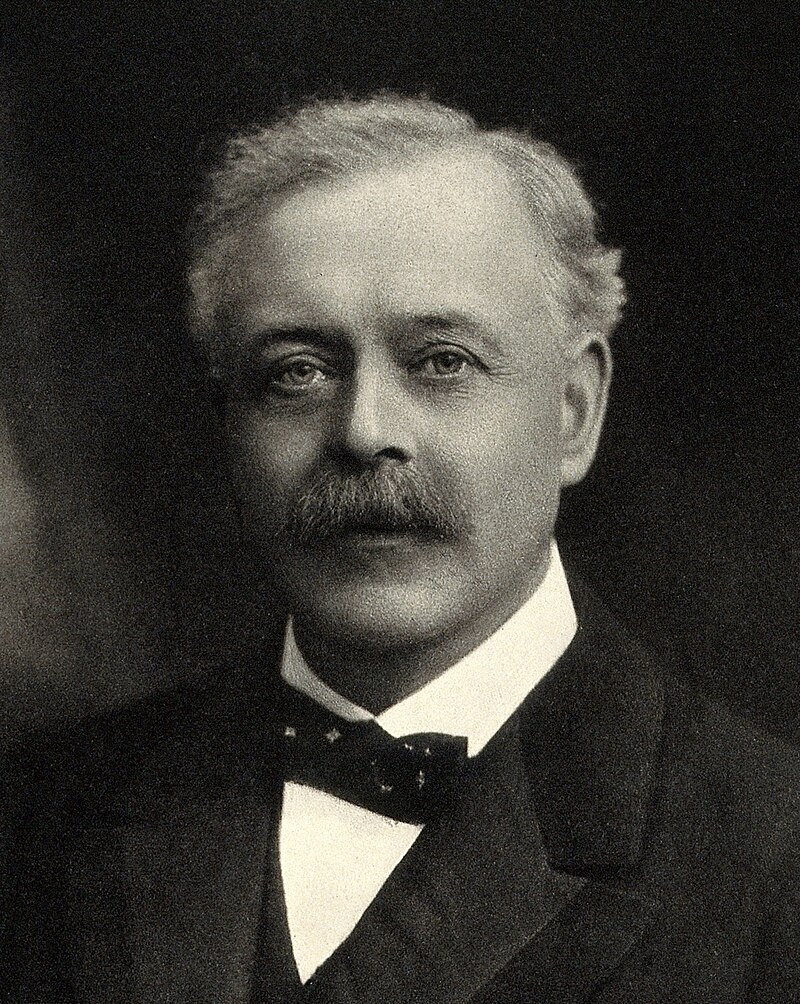
History – Named after Sir Robert Jones (1857-1933), a Welsh orthopaedic surgeon and received his medical doctorate from the Liverpool School of Medicine in 1887 and achieved fellowship in 1889.  Along with his uncle, he was a pioneer in the diagnosis and management of fractures.  He first described the injury that bears his name in 1902 in the Annals of Surgery entitled “Fracture of the Base of the Fifth Metatarsal by Indirect Violence”.  This paper was a six patient case report on the injury pattern and Dr. Jones was patient number one having injured his foot several months prior dancing.  After Wilhem Rontgen published his discovery of x-rays in 1895, Dr. Jones adopted this new modality fully in the practice of orthopaedics and published the first clinical radiograph in 1896 about a 12yo with a bullet lodged in his wrist that could not be found clinically and required a 2hr long exposure.

Robert Jones (surgeon).jpg

scanned image of page 697


References

  1. Firkin BG and Whitwirth JA.  Dictionary of Medical Eponyms. 2nd ed.  New York, NY; Parthenon Publishing Group. 1996.
  2. Bartolucci S, Forbis P.  Stedman’s Medical Eponyms.  2nd ed.  Baltimore, MD; LWW.  2005.
  3. Yee AJ, Pfiffner P. (2012).  Medical Eponyms (Version 1.4.2) [Mobile Application Software].  Retrieved http://itunes.apple.com.
  4. Whonamedit – dictionary of medical eponyms. http://www.whonamedit.com
  5. Up To Date. www.uptodate.com
  6. Jones Fracture.  Wheeless’ Textbook of Orthopaedics. http://www.wheelessonline.com/ortho/jones_fracture
  7. OrthoBullets. https://www.orthobullets.com/foot-and-ankle/7031/5th-metatarsal-base-fracture
  8. Jones R. I. Fracture of the Base of the Fifth Metatarsal Bone by Indirect Violence. Annals of surgery. 1902; 35(6):697-700.2. [pubmed]
  9. Jones R, Lodge O.  The Discovery of a Bullet Lost in the Wrist by Means of the Roentgen Rays.  Lancer. 1896;147(3782):476-477 [article]

Ep-PAINE-nym


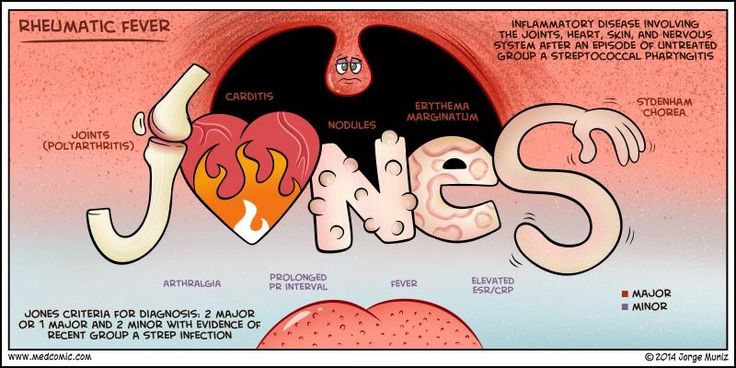
Jones Criteria


Other Known Aliasesdiagnostic criteria for acute rheumatic fever


Definitionclinical criteria to help diagnose acute rheumatic fever.  There are divided into major and minor criteria as follows:

  • Major
    • Polyarthritis
    • Carditis
    • Subcutaneous nodules
    • Erythema marginatum
    • Sydenham’s chorea
  • Minor
    • Fever
    • Arthralgia
    • Elevated ESR or CRP
    • Leukocytosis
    • 1st degree heart block

Clinical Significancea diagnosis of acute rheumatic fever is either two major or one major and two minor criteria


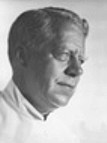
History – Named after T. Duckett Jones (1899-1954), an American cardiologist who received his medical doctorate from the University of Virginia in 1923.  With a keen interest in rheumatic fever and heart disease, he practiced at Massachusetts General Hospital and House of Good Samaritan in Boston for over 20 years.  He became the medical director of the Helen Way Whitney Foundation to pursue his passion for public health, which led to one of the first tweleve appointments to the National Advisory Heart Council in 1948.  He published his seminal paper entitled “The Diagnosis of Rheumatic Fever” in JAMA in 1944 which described these findings.  Dr. Jones unfortunately died as a result of malignant hypertension in 1954 at the age of 55.

First page PDF preview


References

  1. Firkin BG and Whitwirth JA.  Dictionary of Medical Eponyms. 2nd ed.  New York, NY; Parthenon Publishing Group. 1996.
  2. Bartolucci S, Forbis P.  Stedman’s Medical Eponyms.  2nd ed.  Baltimore, MD; LWW.  2005.
  3. Yee AJ, Pfiffner P. (2012).  Medical Eponyms (Version 1.4.2) [Mobile Application Software].  Retrieved http://itunes.apple.com.
  4. Whonamedit – dictionary of medical eponyms. http://www.whonamedit.com
  5. Up To Date. www.uptodate.com
  6. White PD.  T. Duckett Jones, 1899-1954.  Circulation.  1955.
  7. Shulman ST. T. Duckett Jones and his criteria for the diagnosis of acute rheumatic fever. Pediatric annals. 1999; 28(1):9-12. [pubmed]
  8. Jones TD.  The Diagnosis of Rheumatic Fever.  JAMA. 1944;126(8):481-484 [article]

Ep-PAINE-nym


Westermark’s Sign


Other Known Aliasesnone


Definitionfocal peripheral hyperlucency resulting from collapsed vessels distal to a pulmonary thromboembolism.


Clinical SignificanceOccurs as a result of oligemia of perfusion to the lung parenchyma and can be seen in up to 10% of patients with acute PTE.  Similar to Hampton’s Hump, it has a low sensitivity, but a high specificity


History – Named after Nils Johan Hugo Westermark (1892-1980), a Swedish radiologist who first described this finding in his 1938 paper entitled ” On the roentgen diagnosis of lung embolism”.  He was also an accomplished sailor and won a silver medal in the 1912 Olympics.


References

  1. Firkin BG and Whitwirth JA.  Dictionary of Medical Eponyms. 2nd ed.  New York, NY; Parthenon Publishing Group. 1996.
  2. Bartolucci S, Forbis P.  Stedman’s Medical Eponyms.  2nd ed.  Baltimore, MD; LWW.  2005.
  3. Yee AJ, Pfiffner P. (2012).  Medical Eponyms (Version 1.4.2) [Mobile Application Software].  Retrieved http://itunes.apple.com.
  4. Whonamedit – dictionary of medical eponyms. http://www.whonamedit.com
  5. Up To Date. www.uptodate.com
  6. Krishnan AS, Barrett T. Images in clinical medicine. Westermark sign in pulmonary embolism. NEJM. 2012; 366(11):e16. [pubmed]
  7. Radiopaedia.  Westermark Sign. https://radiopaedia.org/articles/westermark-sign-1
  8. Westermark N. On the roentgen diagnosis of lung embolism. Acta Radiol 1938;19:357‑72.

Ep-PAINE-nym


Hampton’s Hump


Other Known Aliasesnone


Definitionwedge-shaped opacity in the periphery of the lung on chest radiography usually with its base along the pleural margins.


Clinical SignificanceOccurs as a result of infarction and subsequent hemorrhage from the bronchial arteries classically due to a pulmonary embolism, but can also be from anything that causes infarction of lung parenchyma.  The sensitivity and specificity of this finding is not robust and is, by definition, a late finding that is really no longer seen in modern medicine.


History – Named after Aubrey Otis Hampton (1900-1955), an American radiologist who received his medical degree from Baylor University in 1925.  He rose through the ranks quickly in the field of radiology ultimately taking a position as chief of radiology at Massachussetts General in 1941.  He first described his eponymous finding in 1940 in his manuscript entitled “Correlation of postmortem chest teleroentgenograms with autopsy findings”.

Image result for Aubrey Otis Hampton


References

  1. Firkin BG and Whitwirth JA.  Dictionary of Medical Eponyms. 2nd ed.  New York, NY; Parthenon Publishing Group. 1996.
  2. Bartolucci S, Forbis P.  Stedman’s Medical Eponyms.  2nd ed.  Baltimore, MD; LWW.  2005.
  3. Yee AJ, Pfiffner P. (2012).  Medical Eponyms (Version 1.4.2) [Mobile Application Software].  Retrieved http://itunes.apple.com.
  4. Whonamedit – dictionary of medical eponyms. http://www.whonamedit.com
  5. Up To Date. www.uptodate.com
  6. Radiopaedia. Hamptons’ Hump. https://radiopaedia.org/articles/hampton-hump-2
  7. Schatzki R, Lingley JR. Aubrey O. Hampton, 1900-1955. The American journal of roentgenology, radium therapy, and nuclear medicine. 1956; 75(2):396-7. [pubmed]
  8. Ladeiras-Lopes R, Neto A, Costa C, et al. Hampton’s hump and Palla’s sign in pulmonary embolism. Circulation. 2013; 127(18):1914-5. [pubmed]
  9. Hampton AO, Castleman B.  Correlation of postmortem chest teleroentogenograms with autopsy findings.  Am J Roentgenol Radium Ther. 1940;34:305-326.

Ep-PAINE-nym


Debakey Forceps


Other Known Aliases – atraumatic vascular forceps

Definitionlarge, coursely ribbed tissue forceps


Clinical Significanceused for delicate vascular surgery as these forceps do not crush or damage tissue


History – Named after Michael Ellis DeBakey (1908-2008), an American cardiac surgeon who received his medical degree from Tulane University School of Medicine in 1932.  He spent the majority of his career with Baylor in Texas and was prolific medical trailblazer and pioneered, among many others,:

  • The roller pump for the heart-lung machine and made open-heart surgery possible
  • Postulating the link between smoking and lung cancer
  • One of the first surgeons to perform coronary artery bypass
  • Performed the first successful carotid endarterectomy
  • Using synthetic grafts for blood vessel repair
  • Video live surgery for medical purposes

In 2005, at the age of 95, he suffered an aortic dissection (for which there is the DeBakey classfication for) and became the oldest person to survive the operation.  He died 2 months before his 100th birthday.  Dr. DeBakey received so many awards and recognition that they are too numerous to count and is arguable one of the main reasons modern cardiac surgery has advanced to where it is today.


References

  1. Firkin BG and Whitwirth JA.  Dictionary of Medical Eponyms. 2nd ed.  New York, NY; Parthenon Publishing Group. 1996.
  2. Bartolucci S, Forbis P.  Stedman’s Medical Eponyms.  2nd ed.  Baltimore, MD; LWW.  2005.
  3. Yee AJ, Pfiffner P. (2012).  Medical Eponyms (Version 1.4.2) [Mobile Application Software].  Retrieved http://itunes.apple.com.
  4. Whonamedit – dictionary of medical eponyms. http://www.whonamedit.com
  5. Up To Date. www.uptodate.com
  6. U.S. National Library of Medicine https://www.nlm.nih.gov/news/debakey_dies.html
  7. The Michael E. BeBakey papers https://profiles.nlm.nih.gov/ps/retrieve/Narrative/FJ/p-nid/322
  8. NY Times https://www.nytimes.com/2008/07/13/health/12cnd-debakey.html
  9. Academy of Achievement http://www.achievement.org/achiever/michael-e-debakey-m-d/

Ep-PAINE-nym


Kocher Incision


Other Known Aliasesright subcostal incision


Definitionoblique incision in the right subcostal area starting 2-5cm below the xiphoid process, running parallel to the ribs, and extending to 2.5cm below the inferior costal margins
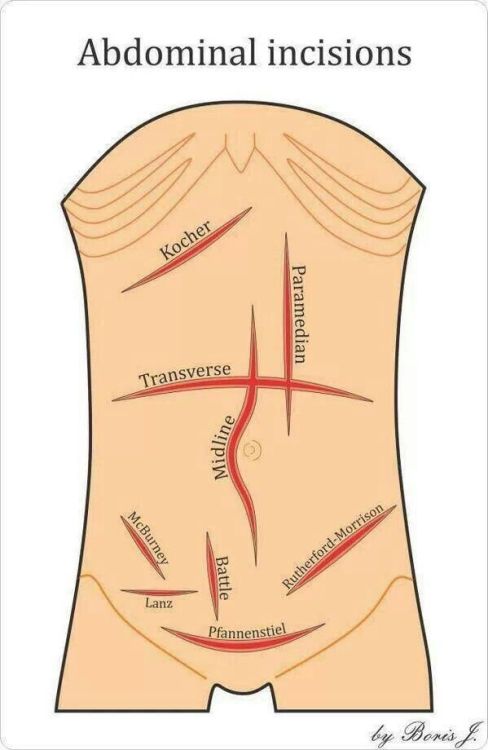
 

Image result for kocher incision


Clinical Significanceclassic incision used for open cholecystectomy


Kocher Maneuver


Other Known Aliasesretroperitoneal exposure


Definition – maneuver to expose the retroperitoneal structure (pancreas, duodenum, vena cava)


Clinical Significancethis maneuver is used for resection of pancreatic head tumors or in trauma with retroperitoneal hemorrhage.  The peritoneum is incised at the right edge of the duodenum and continued in a “C” shaped from superior to inferior.  The duodenum and head of the pancreas is then reflected medially to the left to expose the retroperitoneal structures.

Image result for kocher maneuver exposure

History – Named after Emil Theodor Kocher (1841-1917), a Swiss surgeon who obtained his medical doctorate from the University of Bern in 1865.  He was arguably the most accomplished surgeon of his time and true pioneer in the field of surgery by promoting and advocating the use of aseptic technique, meticulous dissection with attention to minimal blood loss, and implementation of the scientific method in surgery. His “Text-Book of Operative Surgery” was the definitive guide to surgery in the early 1900s.  He received the Nobel Prize in Physiology and Medicine in 1909…the first Swiss citizen and first surgeon to do so.  The practice of modern surgery would certainly not be where it is today without the work of Dr. Kocher and his other notable eponyms are:


  • Kocher forceps – hemostatic tooth and groove forceps
  • Kocher’s point – entry point for intrventricular catheter to drain CSF from the cerebral ventricles
  • Kocher-Debre-Semelaigne Syndrome – hypothyroidism in infancy
  • Kocher collar incision – used in thyroid surgery
  • Kocher’s sign – eyelid phenomenon in hyperthyroidism


Emil Theodor Kocher.jpg


References

  1. Firkin BG and Whitwirth JA.  Dictionary of Medical Eponyms. 2nd ed.  New York, NY; Parthenon Publishing Group. 1996.
  2. Bartolucci S, Forbis P.  Stedman’s Medical Eponyms.  2nd ed.  Baltimore, MD; LWW.  2005.
  3. Yee AJ, Pfiffner P. (2012).  Medical Eponyms (Version 1.4.2) [Mobile Application Software].  Retrieved http://itunes.apple.com.
  4. Whonamedit – dictionary of medical eponyms. http://www.whonamedit.com
  5. Up To Date. www.uptodate.com
  6. Kocher T.  Text-Book of Operative Surgery. 1911. https://archive.org/details/textbookofoperat01kochuoft
  7. Gautschi OP, Hildebrandt G. Emil Theodor Kocher (25/8/1841-27/7/1917)–A Swiss (neuro-)surgeon and Nobel Prize winner. British journal of neurosurgery. 2009; 23(3):234-6. [pubmed]
  8. Biography of Theodor Kocher by Nobel Prize Society. https://www.nobelprize.org/nobel_prizes/medicine/laureates/1909/kocher-bio.html

Ep-PAINE-nym


Weitlaner (VIGHT-lahn-er) Retractor


Other Known Aliases – Wheatlander, Wheaty


DefinitionSelf-retaining retractor

Image result for weitlaner retractor

Clinical SignificanceOne of the more common self-retaining retractors used in surgery.  They have a ratchet locking system and may also be available with jointed hinges.  Primarily used for small to medium incision exposures.

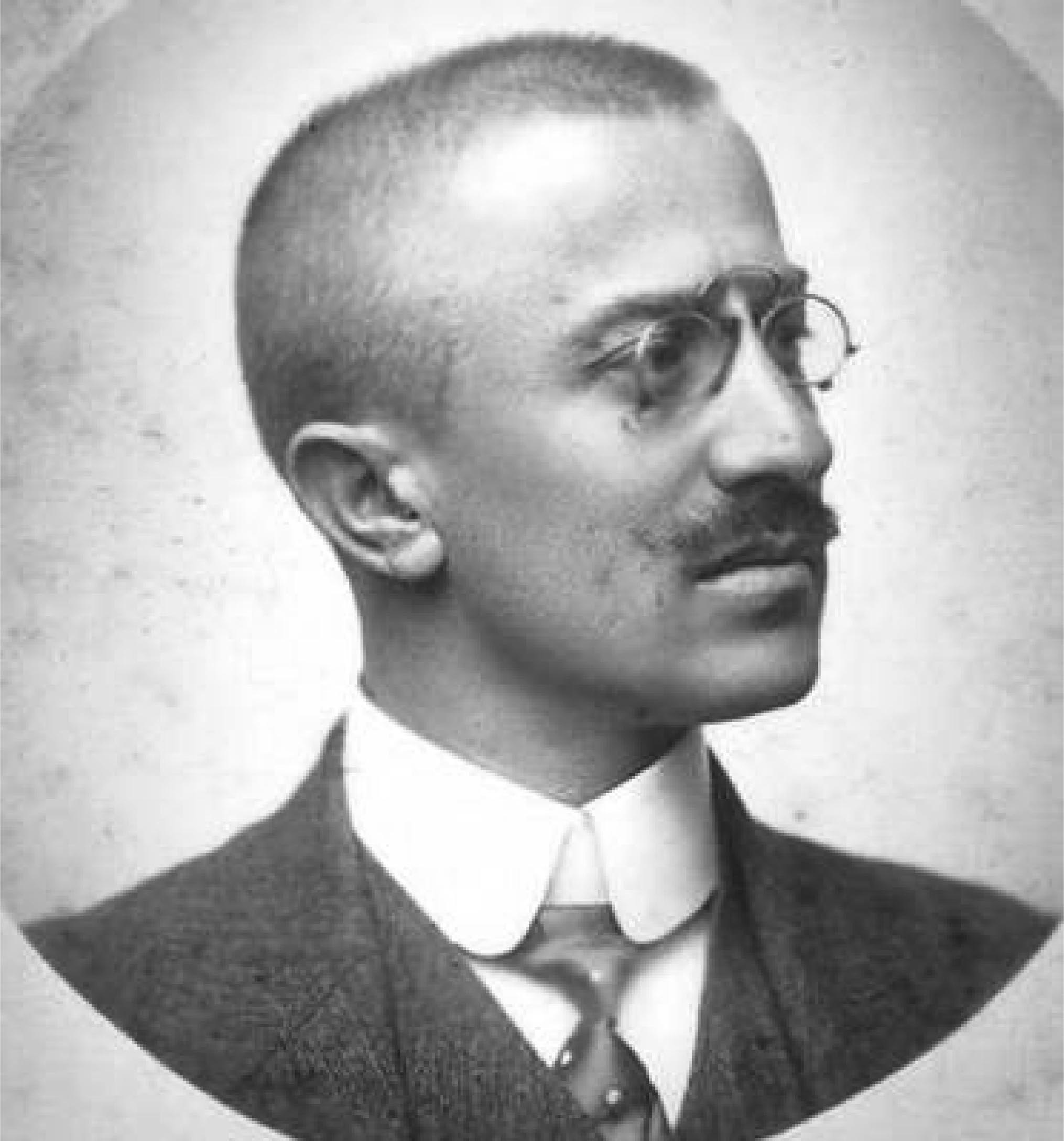
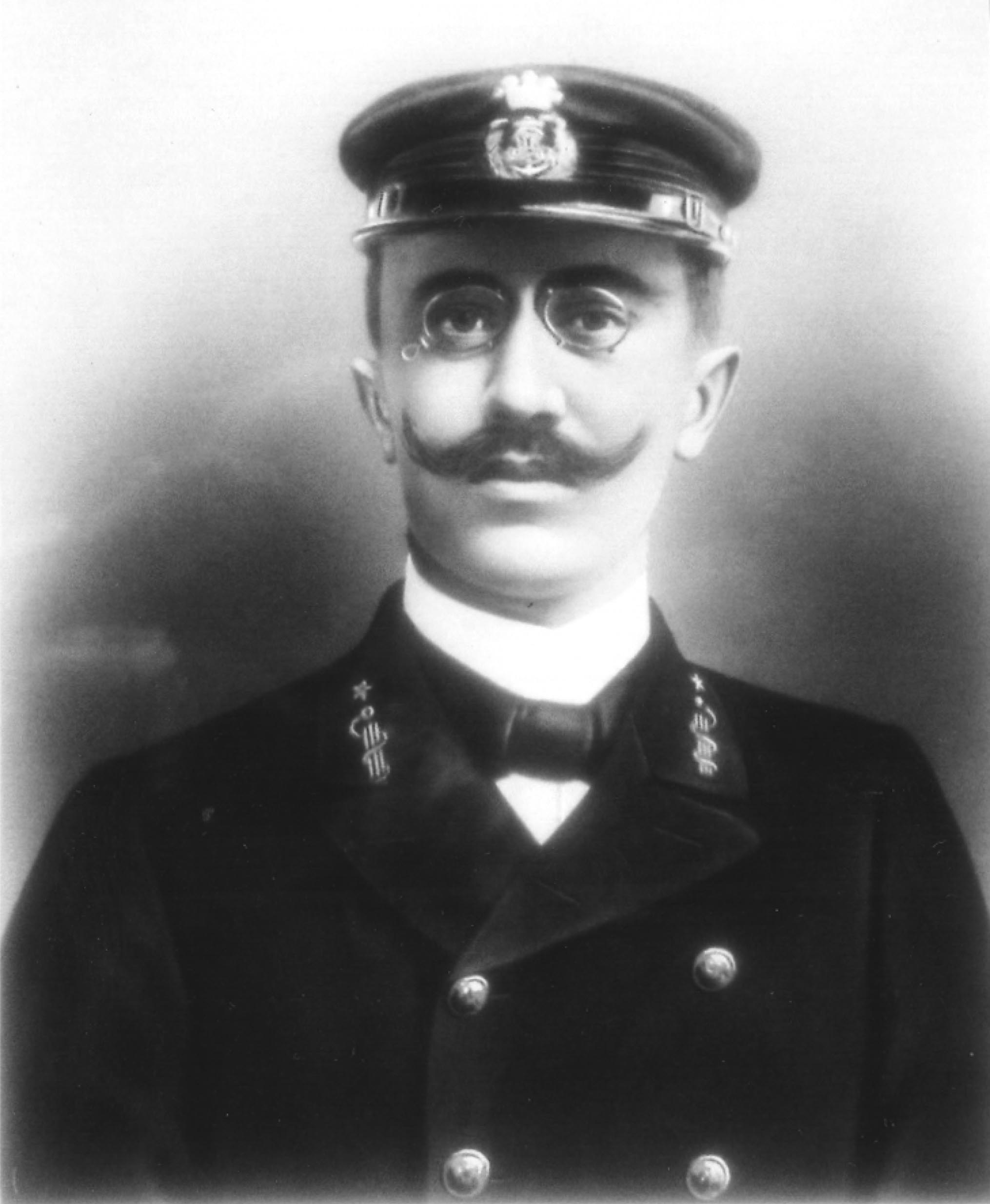
History – Named after Franz Weitlaner (1872-1944), an Austrian physician who received his medical doctorate from Innsbruck Medical University in Austria at the age of 26 in 1898.  He enjoyed a prolific career as as ship surgeon and house physician practicing in St. Poelten and Ottenthal in his homeland.  In 1905, he published an article in the Vienna Clinical Review entitled “Ein Automatischer Wundspreizer” (An Automatic Wound-spreader), which would be the first description of his famous retractor.  They were originally manufactured by Windler Instrument Makers in Berlin in 1912, but Weitlaner never patented his design or received any monetary gains from his invention, only the right to have the instrument named after him.


References

  1. Firkin BG and Whitwirth JA.  Dictionary of Medical Eponyms. 2nd ed.  New York, NY; Parthenon Publishing Group. 1996.
  2. Bartolucci S, Forbis P.  Stedman’s Medical Eponyms.  2nd ed.  Baltimore, MD; LWW.  2005.
  3. Yee AJ, Pfiffner P. (2012).  Medical Eponyms (Version 1.4.2) [Mobile Application Software].  Retrieved http://itunes.apple.com.
  4. Whonamedit – dictionary of medical eponyms. http://www.whonamedit.com
  5. Up To Date. www.uptodate.com
  6. Sharma A, Swan KG. Franz Weitlaner: the great spreader of surgery. The Journal of Trauma. 2009; 67(6):1431-4. [pubmed]
  7. Weitlaner F. Ein automatischer Wundspreizer. Wien klin Rundschau. 1905;xix:114.