I have a multi-step question for you all today and they involve the below images:


- What are these two conditions called?
- Which is associated with other genetic conditions?
- Which has better associated outcomes?

I have a multi-step question for you all today and they involve the below images:

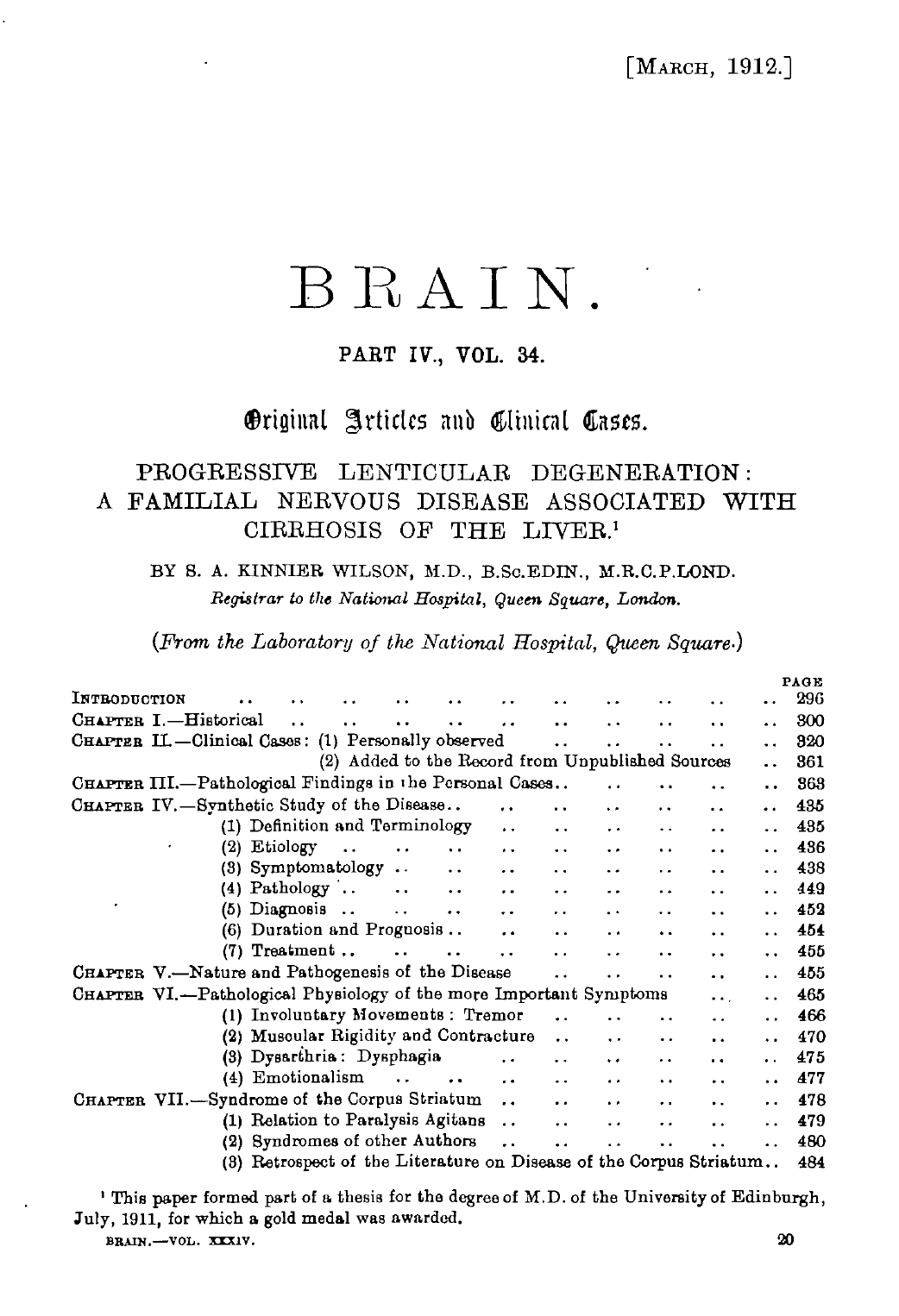
Other Known Aliases – progressive hepatolenticular degeneration
Definition – Autosomal recessive condition that causes impaired copper metabolism leading to intoxication due to a mutation in the chromosome 13q14 resulting in faulty ATP7B protein production.

Clinical Significance – A rare, but devastating, disease if not identified early in its course. It can effect multiple systems including:

History – Named after Samuel Alexander Kinnier Wilson (1878-1937), who was an American-born, British neurologist. He received his medical degree from the University of Edinburgh Medical School in 1902 and studied neurology with Joseph Babinsky at the Salpétriére Hospital in Paris before relocating back to London for the duration of his medical career. He is also credited with introducing the neuropsychiatric term “extrapyramidal” into the medical lexicon. He described his eponymous disease in his 1912 medical dissertation where it gained its notoriety, but was first recorded in 1854 by Friedrich Theodor von Freichs.

References

27yo male, with stage II Hodgkin’s lymphoma, presents to his oncologists’s office for 6-week follow-up s/p 4 cycles of ABVD chemotherapy. He reports malaise and fatigue, but is otherwise in good spirits. Vitals show:
Labs in the office are below:
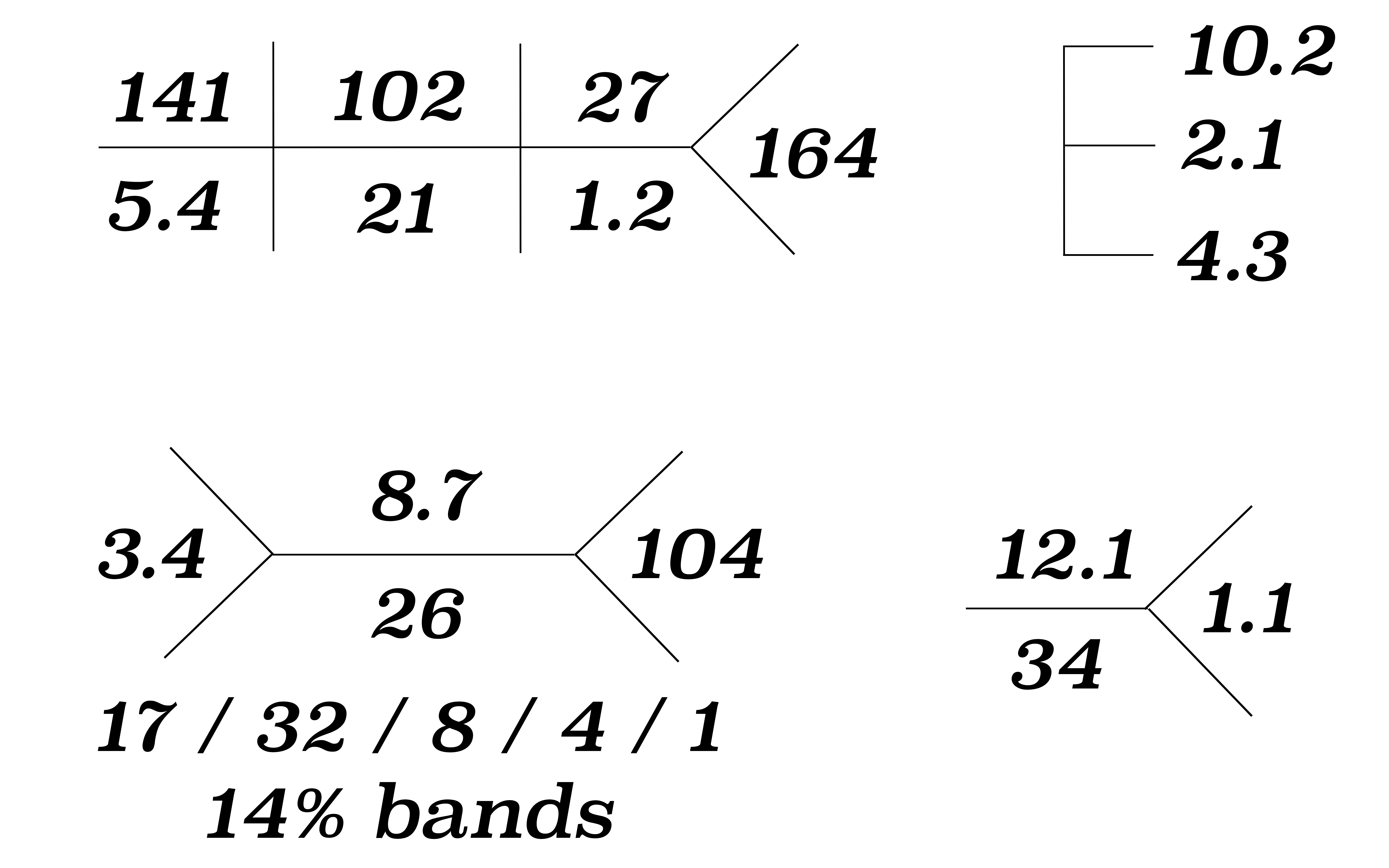
This patient has a neutropenic fever. This is an oncologic emergency because their immune systems has been completely destroyed by the chemotherapy and they are unable to mount an appropriate response to the infectious insult. In order to determine if a patient is neutropenic, you must calculate an Absolute Neutrophil Count (ANC).

Other Known Aliases – none
Definition – Type of lymphoma predominantly from lymphocytes that arise from germinal center or post-germinal center of B cells
Clinical Significance – Accounts for 10% of all lymphomas and 0.6% of all cancers. It is also associated with a bimodal age distribution of young adults (20s) and older adults (60s), with a slight male predominance. Epstein-Barr virus is the most common causative agent and it carries a favorable prognosis.
History – Named after Thomas Hodgkin (1798-1866), who was British physician and considered one of the most prominent pathologists of his time. He was also a perpetual student constantly learning new techniques including being an early adopter of the stethoscope anda fervent advocate for preventative medicine. He first described his findings on his eponymous disease in 1832, but it wasn’t until 33 years later when another British physician, Samuel Wilks, “re-discovered” the disease and Hodgkin’s work did it gain any traction and recognition.


References
27yo male, with stage II Hodgkin’s lymphoma, presents to his oncologists’s office for 6-week follow-up s/p 4 cycles of ABVD chemotherapy. He reports malaise and fatigue, but is otherwise in good spirits. Vitals show:
Labs in the office are below:

Other Known Aliases – none
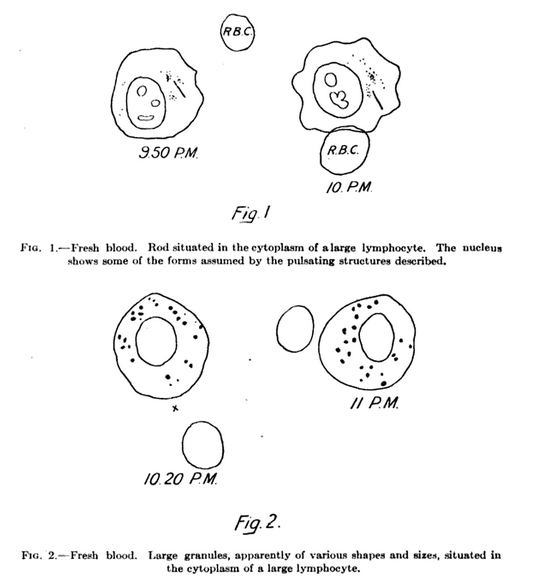
Definition – Auer rods are azurophilic granules found in the cytoplasm of leukemic blast cells and are composed of fused lyosomes.

Clinical Significance – These are found in high grade myelodysplastic and myeloproliferative syndromes and are pathognomonic for acute myelogenous leukemia (AML).
History – Named after John Auer (1875-1948), an American physiologist and pharmacologist, who held appointments at Johns Hopkins Hospital, Rockefeller Institute for Medical Research, and the St. Louis School of Medicine. He first described these structures in a 21yo male who was suffering from a sore throat and nosebleed and admitted to Sir William Osler’s service for work-up. He published this finding in 1906, but were first described by a colleague of his at Johns Hopkins Hospital, Thomas McCrae. Interestingly, they both erroneously thought that the cells containing these structures were lymphoblasts, not myeloblasts.



References
What is the term for clumps of azurophilic granular material (usually composed of lysosomes or neutrophilic granules) that form elongated structures in the cytoplasm of blast cells?
Auer rods

What is the term for clumps of azurophilic granular material (usually composed of lysosomes or neutrophilic granules) that form elongated structures in the cytoplasm of blast cells?

Other Known Aliases – round ligament of the uterus, ligamentum teres uteri
Definition – These are the lateral attachments of the uterus that originate at the uterine horns and extend out immediately below and in front of the fallopian tubes. They also cross the external lliac vessels before entering the inguinal canal.


Clinical Significance – This ligament maintains uterine anteversion during pregnancy and can cause pain as they stretch
History – Named after William Hunter (1718-1783), who was a Scottish anatomist and obstetrician, and was the younger brother of John Hunter (an even more famous anatomist). He studied extensively on anatomy, with particular interests in obstetrical anatomy, and was also appointed as the chief physician to Queen Charlotte in 1764. His namesake ligaments come from his posthumously published textbook An Anatomical Description of the Human Gravid Uterus in 1794.


References
32yo, G2P2002, who presents to your practice for her annual well-woman examination. She has recently moved and is establishing care. She can’t recall the last time she had a pap smear performed, but is “pretty sure” it was more than 3 years ago. She does not smoke, has no significant FH for GYN malignancies (cervical/ovarian/breast), and is otherwise healthy. Pap smear performed in the office was cytology negative, but HPV positive.
For women ≥ 30 years of age with a cytology (-), but HPV (+) pap, you really have two options depending on your access to testing:

References

 PAINE Podcast and Medical Blog