Definition – space in the peritoneal cavity between the rectum and the posterior wall of the uterus
Clinical Significance – As this is the most posterior and inferior recess in the peritoneal cavity, it is a potential space for fluid and blood to accumulate. This area should always be investigated in trauma as part of the FAST examination.
History – Named after James Douglas (1675-1742), who was a Scottish physician, anatomist, and physician extraordinaire to Queen Caroline. He received his medical doctorate from University of Reims and went on to have a prolific career as an obstetrician and anatomist. He also befriended an early career William Hunter and made him an assistant prior to his own fame as an anatomist. Due to his anatomic research in female pelvic anatomy, there are many eponymonic structures that bear his name including the Douglas fold, Douglas line, and Douglas septum.
References
Firkin BG and Whitwirth JA. Dictionary of Medical Eponyms. 2nd ed. New York, NY; Parthenon Publishing Group. 1996.
Bartolucci S, Forbis P. Stedman’s Medical Eponyms. 2nd ed. Baltimore, MD; LWW. 2005.
Yee AJ, Pfiffner P. (2012). Medical Eponyms (Version 1.4.2) [Mobile Application Software]. Retrieved http://itunes.apple.com.
Other Known Aliases – factitious disorder imposed on self
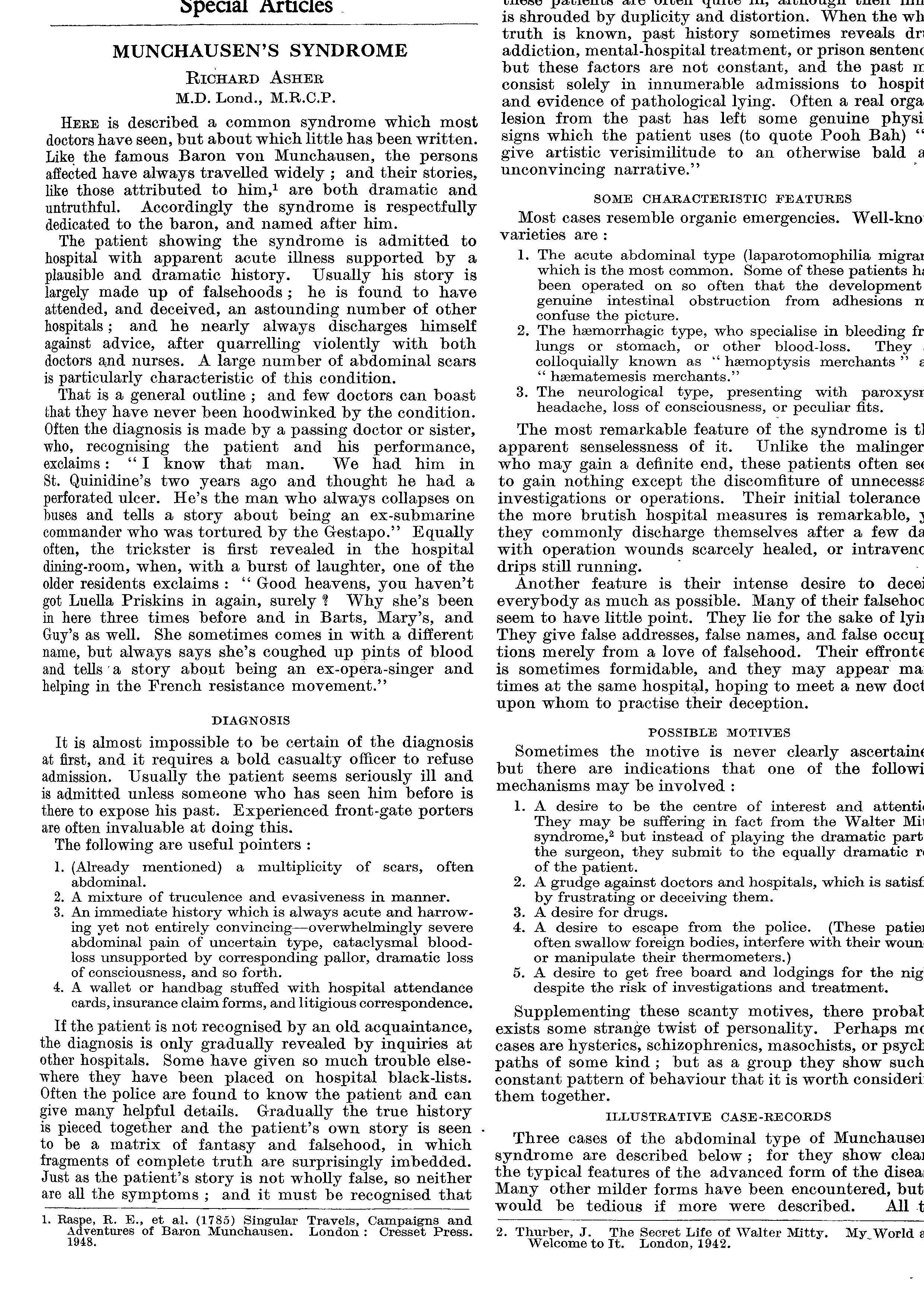
Definition – intentional falsification of physical and/or mental signs and symptoms in oneself, or in another individual, for no obvious external gain or reward
Clinical Significance – Falling under the factitious disorders section of the DSM-V 300.19 (ICD-10 – F68.10), patients deceptively misrepresent, simulate, or cause symptoms of an illness or injury in themselves, even in the absence of obvious external rewards such as financial gain, housing, or medications.
History – Named after Hieronymus Karl Friedrich von Münchhausen (1720-1797), who was a German aristocrat and military veteran. He was best known for telling elaborate stories at aristocratic dinner parties where he would embellish his tales of being a soldier and huntsman. It was during these dinner parties that he met Rudolf Erich Raspe, who was a German writer, scientist, and con artist. He found these stories so alluring and entertaining that he used them (almost verbatim) in a series of publications describing these adventures of the titular character Baron von Munchausen. Münchhausen took offense to his noble name being used to entertain commoners and attempted litigious retribution against Raspe for many years to no avail. This story did not reach eponymous notoriety until 1951 when Dr. Richard Asher published an article in The Lancet entitled “Munchausen’s Syndrome” did the eponym stick.
References
Firkin BG and Whitwirth JA. Dictionary of Medical Eponyms. 2nd ed. New York, NY; Parthenon Publishing Group. 1996.
Bartolucci S, Forbis P. Stedman’s Medical Eponyms. 2nd ed. Baltimore, MD; LWW. 2005.
Yee AJ, Pfiffner P. (2012). Medical Eponyms (Version 1.4.2) [Mobile Application Software]. Retrieved http://itunes.apple.com.
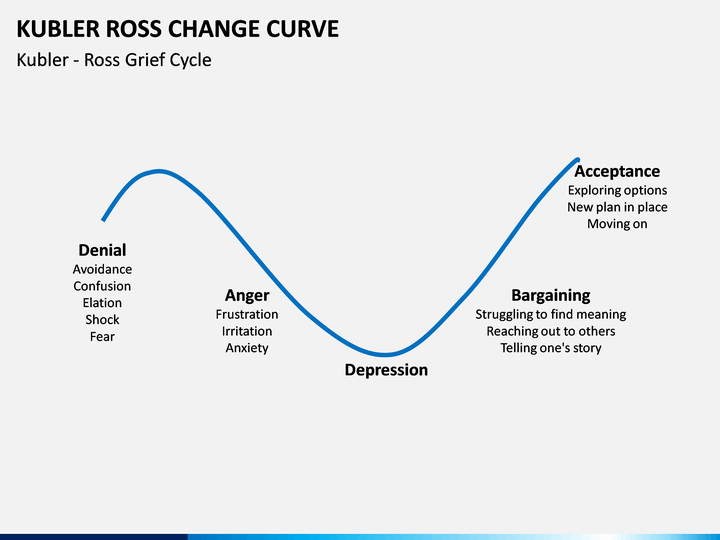
Definition – chronological progression of emotional states after experiencing profound personal loss
Clinical Significance – The five distinct phases of this model include denial, anger, bargaining, depression, and acceptance. Although widely used, it is not based on any empirical research or evidence and can be affected by cultural norms. In fact, many mental health professionals put this in the “myth” file and say that grief/loss is not a staged event, but rather a spectrum that a person can go backwards and forwards through at any point after the event.
History – Named after Elisabeth Kübler-Ross (1926-2004), who was a Swiss-American psychiatrist and recieved her medical doctorate from the University of Colorado in 1963. It was during this training that she was appalled by the treatment and management of terminally ill patients and began what would be her life’s work and passion. In 1965, she accepted an instructor position at the University of Chicago Pritzker School of Medicine and began given seminars using medical students to conduct interviews with terminally ill patients. These seminars drew both appraise and criticism, as she called into question many traditionally accepted practices of psychiatry at the time. This all culminated in 1969 where she proposed her 5 stages of grief model in her book entitled On Death and Dying. In her later career, she embraced holistic medicine and spiritulism and founded a spiritual healing center called “Shanti Nilaya” in California. Dr. Kübler-Ross suffered a series of strokes in 1995, which left her paralyzed on left side, and died in a nursing home in Scottsdale, AZ in 2004.
References
Firkin BG and Whitwirth JA. Dictionary of Medical Eponyms. 2nd ed. New York, NY; Parthenon Publishing Group. 1996.
Bartolucci S, Forbis P. Stedman’s Medical Eponyms. 2nd ed. Baltimore, MD; LWW. 2005.
Yee AJ, Pfiffner P. (2012). Medical Eponyms (Version 1.4.2) [Mobile Application Software]. Retrieved http://itunes.apple.com.
Definition – pupil with parasympathetic denervation that constricts poorly to light, but reacts better to accommodation.
Clinical Significance – The tonic pupil is the result of damage to the parasympathetic ciliary ganglion and the exact pathological cause is still unknown, but infectious inflammation to the ciliary ganglion is the most commonly accepted etiology. Adie’s pupils are hypersensitive to very low dose acetylcholine agonists, such as pilocarpine, and is used to diagnose this condition.
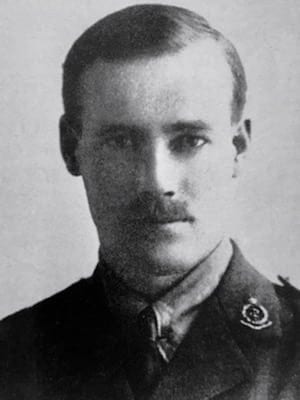
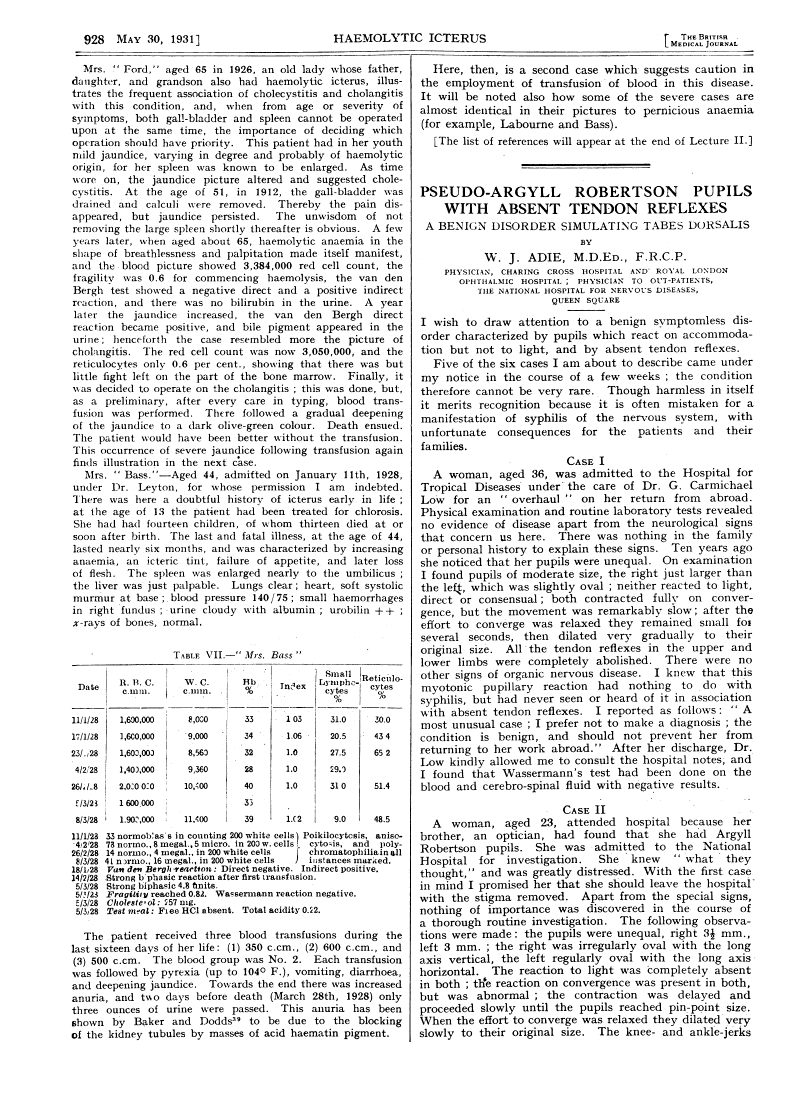
History – Named after William John Adie (1886-1935), who was a British physician and neurologist and received his medical doctorate from the University of Edinburgh in 1911. Upon graduating, he served in the British military during World War I as a medical officer. Following the war, he worked in various hospitals practicing neurology and making a name for himself, culminating in Fellowship in the Royal College of Physicians in 1926. He was also one of the founders of the Association of British Neurologists in 1932. The history of the eponym is interesting because there were numerous publications prior to Adie’s work describing this clinical syndrome and Adie referenced them in his 1931 article. The eponymonic term was given to him by French neurologist Jean-Alexandre Barré in 1934. Also, Gordon Morgan Holmes contemporaneously published the same findings in the same year. This led to the common eponym Holmes-Adie pupils.
References
Firkin BG and Whitwirth JA. Dictionary of Medical Eponyms. 2nd ed. New York, NY; Parthenon Publishing Group. 1996.
Bartolucci S, Forbis P. Stedman’s Medical Eponyms. 2nd ed. Baltimore, MD; LWW. 2005.
Yee AJ, Pfiffner P. (2012). Medical Eponyms (Version 1.4.2) [Mobile Application Software]. Retrieved http://itunes.apple.com.
Adie WJ. Pseudo-Argyll Robertson pupils with absent tendon reflexes. A benign disorder simulating tabes dorsalis. British Medical Journal, London, 1931, I: 928-930. [article]
Holmes GM. Partial iridoplegia associated with symptoms of other disease of the nervous system. Transactions of the Ophthalmological Societies of the United Kingdom, 1931, 51: 209-228.
Definition – abnormal fluid and ion homeostasis of the inner that leads to distortion and distention of the membranous, endolymph-containing portions of the labyrnthine system. It is currently unclear why this occurs and several etiologies have been proposed.
Clinical Significance – Ménière’s disease classically has the triad of tinnitus, sensorineural hearing loss, and episodic vertigo lasting from 20 minutes to 24 hours. The course and severity are variable and the frequency may actually decline over time. Treatment is geared towards diet and lifestyle modifications, vestibular suppressants, diuretics, and interventional procedures in severe or refractory cases.
History – Named after Prosper Ménière (1799-1862), who was a French physician and recieved his medical doctorate from the Hôtel-Dieu de Paris in 1828. He studied and assisted Guillaume Dupuytren at this famed hospital in France. During a particularly bad outbreak of cholera, he was sent by the king to Aude and Haute-Garonne to oversee this medical campaign and was so successful that he was made a knight of the Legion of Honour. Later, he became chief of medicine at the Imperial Institution for Deaf Mutes in Paris and published his findings on his eponymous disease in 1861.
References
Firkin BG and Whitwirth JA. Dictionary of Medical Eponyms. 2nd ed. New York, NY; Parthenon Publishing Group. 1996.
Bartolucci S, Forbis P. Stedman’s Medical Eponyms. 2nd ed. Baltimore, MD; LWW. 2005.
Yee AJ, Pfiffner P. (2012). Medical Eponyms (Version 1.4.2) [Mobile Application Software]. Retrieved http://itunes.apple.com.
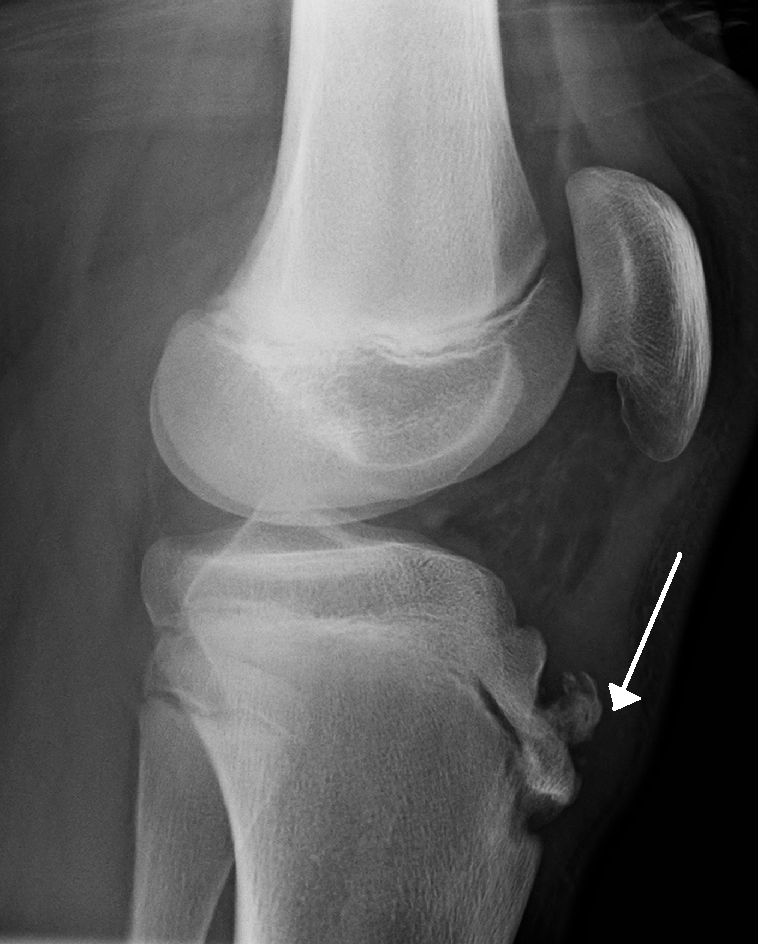
Definition – traction apophysitis of the proximal tibial tubercle at the insertion of the patellar tendon.
Clinical Significance – Most commonly occurs in adolescents as a result of overuse stress in athletics requiring explosive running, jumping, or cutting. This places an extreme amount of stress on the tibial tubercle and may lead to a chronic avulsion. As the new healing callous is laid down, a pronounced deformity may develop.
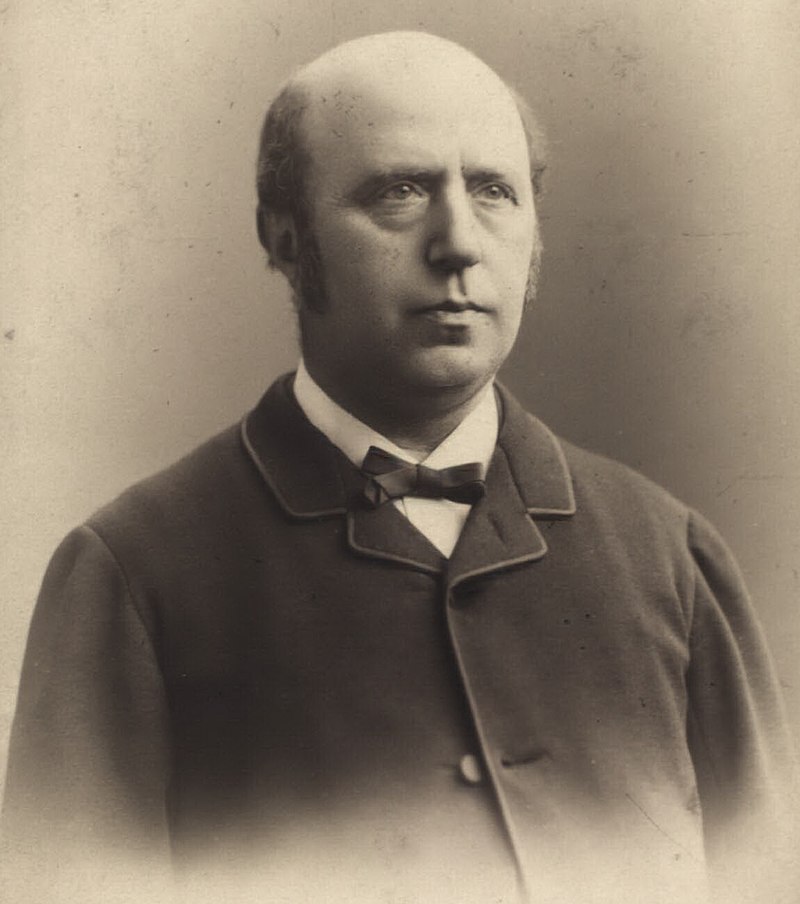
History – Named after two physician who contemporaneously published on this condition in the same year. Robert Bayley Osgood (1873-1956), was an American orthopaedic surgeon, and received his medical doctorate from Harvard University in 1899. Dr. Osgood spent his entire career practicing in Boston at Massachusetts General Hospital and teaching at the Harvard Medical School. Carl Schlatter (1863-1934), was a Swiss physician and surgeon, and received his medical doctorate from the University of Zurich in 1889. Dr. Schlatter was a skilled surgeon and had a primary interest in trauma and causality medicine during World War I. Both physicians were well respected educators and professors of their time and both published their findings of this condition in 1903.
Osgood
Schlatter
References
Firkin BG and Whitwirth JA. Dictionary of Medical Eponyms. 2nd ed. New York, NY; Parthenon Publishing Group. 1996.
Bartolucci S, Forbis P. Stedman’s Medical Eponyms. 2nd ed. Baltimore, MD; LWW. 2005.
Yee AJ, Pfiffner P. (2012). Medical Eponyms (Version 1.4.2) [Mobile Application Software]. Retrieved http://itunes.apple.com.
Other Known Aliases – congenital aganglionic megacolon, congenital intestinal aganglionosis
Definition – motor disorder of the intestines due to failure of the neural crest cells, which are precursors of ganglion cells) to fully migrate during embryonic development of the colon.
Clinical Significance – As a result of this aganglionosis of the colon, the distal intestines are unable to relax and cause a functional obstruction. Children affected by this condition fail to pass their meconium stool in the first 48 hours of life and may have abdominal distention, bilous emesis, and/or enterocolitis. Diagnosis is made with contrast enema and suction rectal biopsy.
History – Named after Harald Hirschprung (1830-1916), who was a Danish physician and received his medical doctorate from the University of Copenhagen in 1855. In 1870, he became the first Danish pediatrician and was appointed chief physician of Queen Louisa Hospital for Children in 1879. He presented his eponymous findings at the Berlin Congress for Children’s Diseases in 1886 where he described two infants who had died from “constipation associated with dilation and hypertrophy of the colon”. He published his findings a year later in an article entitled “Stuhlträgheit Neugeborener in Folge von Dilatation und Hypertrophie des Colons”. Other notable contributions of Dr. Hirschprung include being one of the first physicians to successfully reduce intussuception by pneumatic means and being an advocate for free health care for all children.
References
Firkin BG and Whitwirth JA. Dictionary of Medical Eponyms. 2nd ed. New York, NY; Parthenon Publishing Group. 1996.
Bartolucci S, Forbis P. Stedman’s Medical Eponyms. 2nd ed. Baltimore, MD; LWW. 2005.
Yee AJ, Pfiffner P. (2012). Medical Eponyms (Version 1.4.2) [Mobile Application Software]. Retrieved http://itunes.apple.com.
Hirschsprung H. Stuhlträgheit Neugeborener in Folge von Dilatation und Hypertrophie des Colons. [Constipation of newborns as a result of dilatation and hypertrophy of the colon] Jahrbuch für Kinderheilkunde und physische Erziehung 1888;27:1–7
Hirschsprung H. Fälle von Angeborenen Pylorusstenose, Beobachtet bei Säuglingen. Jahrbuch für Kinderheilkunde und physische Erziehung 1888;27:61-8
Lister J. Hirschsprung: the man and the disease. Journal of the Royal College of Surgeons of Edinburgh. 1977; 22(6):378-84. [pubmed]
Skaba R. Historic milestones of Hirschsprung’s disease (commemorating the 90th anniversary of Professor Harald Hirschsprung’s death). Journal of pediatric surgery. 2007; 42(1):249-51. [pubmed]
Roed-Petersen K, Erichsen G. The Danish pediatrician Harald Hirschsprung. Surgery, gynecology & obstetrics. 1988; 166(2):181-5. [pubmed]
Definition – This syndrome is part of the Autism Spectrum Disorder (ASD) classification in DSM-V, but still is a distinct entity in the WHO International Classification of Disease. It is characterized by persistent impairment in reciprocal social communication and social interaction with restricted, repetitive patterns of behavior, interests, or activities.
DSM-IV Diagnostic Criteria
Clinical Significance – Children diagnosed with Asperger syndrome, or high-functioning ASD, have varying degree of social and/or behavioral impairments. It is on the lower end of the ASD spectrum and these children often have normal to higher level of measured intelligence at school, but struggle with social interactions, following specific directions, and meeting deadlines, which then negatively impact their progression through school. Early identification by school and medical staff can mitigate these deficiencies and help these children flourish in their formative years.
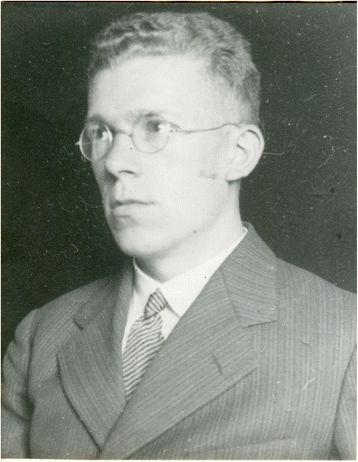
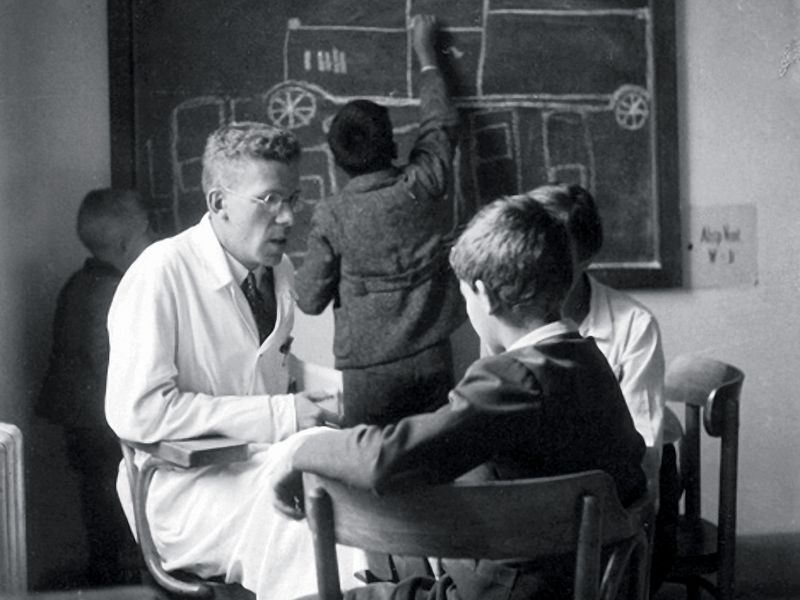
History – Named after Johann Friedrich Karl Asperger (1906-1980), who was an Austrian pediatrician and received his medical doctorate from the University of Vienna in 1931. He published extensively on behavioral disorders in children and termed the phrase “autistic psychopathy” in 1944 based on earlier work by Russian neurologist Grunya Sukhareva. His work garnered little contemporary acclaim and it wasn’t until Lorna Wing, an English researched, proposed the condition as Asperger’s syndrome in 1981. This caused a resurgence in translating Asperger’s work in the early 1990’s and inclusion in the DSM-IV in 1994. As a result of this increased fervor into his work, it was also discovered that Asperger was a eugenicist during the Nazi campaign, believed that “in the majority of the cases the positive aspects of autism do not outweigh the negative ones”, and even sent children from his center to the Spiegelgrund clinic, which participated in euthanasia program of the Nazi regime.
Personal Side Note – I have been struggling recently on whether to include eponyms that were named after individuals that achieved historical and medical notoriety through abhorrent means. I had originally planned NOT to give any of these individuals further recognition on the podcast, but I feel I would be doing a disservice to the patients that were affected by these individuals. As a result, I will publish this disclaimer on these episodes and a statement that this eponym will no longer be used on the blog or podcast after the ep-pain-nym segment and ask that you do the same.
References
Firkin BG and Whitwirth JA. Dictionary of Medical Eponyms. 2nd ed. New York, NY; Parthenon Publishing Group. 1996.
Bartolucci S, Forbis P. Stedman’s Medical Eponyms. 2nd ed. Baltimore, MD; LWW. 2005.
Yee AJ, Pfiffner P. (2012). Medical Eponyms (Version 1.4.2) [Mobile Application Software]. Retrieved http://itunes.apple.com.
Other Known Aliases – Fallot’s tetrad, Fallot’s syndrome, Steno-Fallot tetralogy
Definition – Congenital cyanotic heart disease due to ventriculo-septal defect, pulmonary stenosis, right ventricular hypertrophy, and overiding aorta.
History – Named after Etienne-Louis Arthur Fallot (1850-1911), who was a French physician and received his medical doctorate from the University of Marseille in 1867. He described this tetrad in 1888 in an article entitled “Contribution à l’anatomie pathologique de la maladie bleue (cyanose cardiaque)” using previous observations from the work of Dutch anatomist Neils Stenson (1638-1686). Unfortunately, Fallot’s work garnered little contemporary acclaim and it wasn’t until Dr. Paul Dudley White (of WPW fame) translated and republished Fallot’s work in his landmark textbook “Heart Disease” in 1931.
References
Firkin BG and Whitwirth JA. Dictionary of Medical Eponyms. 2nd ed. New York, NY; Parthenon Publishing Group. 1996.
Bartolucci S, Forbis P. Stedman’s Medical Eponyms. 2nd ed. Baltimore, MD; LWW. 2005.
Yee AJ, Pfiffner P. (2012). Medical Eponyms (Version 1.4.2) [Mobile Application Software]. Retrieved http://itunes.apple.com.
Definition – mutated form of factor V that is unable to bind to protein C and leads to a hypercoaguable state
Clinical Significance – This is the most common hereditary hypercoaguability disorder in patients with European lineage. It increases the lifetime risk of DV, PTE, and stroke and patient are managed with lifelong anticoagulation.
History – Named after the Dutch city of Leiden where it was first discovered by Professor Rogier Bertina and Professor Pieter Reitsma in 1994 and subsequently published in Nature in their article entitled “Mutation in blood coagulation factor V associated with resistance to activated protein C”. Leiden has been one of Europe’s most prominent scientific centres for more than 400 years. It contains the oldest university in the Netherlands and has produced 13 Nobel Prize winners.
References
Firkin BG and Whitwirth JA. Dictionary of Medical Eponyms. 2nd ed. New York, NY; Parthenon Publishing Group. 1996.
Bartolucci S, Forbis P. Stedman’s Medical Eponyms. 2nd ed. Baltimore, MD; LWW. 2005.
Yee AJ, Pfiffner P. (2012). Medical Eponyms (Version 1.4.2) [Mobile Application Software]. Retrieved http://itunes.apple.com.
Bertina RM, Koeleman BP, Koster T, et al. Mutation in blood coagulation factor V associated with resistance to activated protein C. Nature. 1994; 369(6475):64-7. [pubmed]
















 PAINE Podcast and Medical Blog