Ep-PAINE-nym


Cotard’s Syndrome


Other Known Aliases – Cotard delusion, Walking Corpse Syndrome


DefinitionRare mental illness in which a person feels they are dead, do not exist, parts of them are decaying or rotting, or they have lost internal organs, blood, or extremities.

Image result for cotard's syndrome

Clinical SignificanceThe pathophysiology is not well understood and the two thoughts are that it is due to lesions or atrophy in the parietal and/or frontal lobes, or due to neural misfiring in the fusiform gyrus that is responsible for facial recognition.

The core concept of Cotard’s syndrome is a delusion of negation and classically progresses through three stages:

  • Germination Stage – symptoms of psychotic depression and hypochondria
  • Blooming Stage – full development of the syndrome and the appearance of the delusions of negation
  • Chronic Stage – severe delusions with chronic depressive symptoms

It is most common in patients with underlying schizophrenia and psychosis and patients often withdraw from society and the outside world.  Partly because of the delusions and partly due to personal neglect of appearance and hygiene.  There is no DSM-V diagnosis for Cotard’s syndrome, so it falls under the category of somatic delusions.

Image result for cotard's syndrome

History – Named after Jules Cotard (1840-1889), a Parisian neurologist, psychiatrist, and surgeon who received his medical doctorate in 1868 from the University of Paris and worked at the Hospice de la Salpétriére  under Jean Martin Charcot.  In June 1880, he read a report on “Du délire hypochondriaque dans une forme grave de la mélancolie anxieuse” where he described a case of a 43yo woman who believed she had no brain, nerves, or entrails and that she did not need food, for she was eternal and would live forever.  Emil Régis was the first to coin the eponym in 1893.  In 1889, his daughter contracted diptheria and for 15 days he refused to leave her bedside until she recovered.  Unfortunately, he contracted the same illness and succumbed to disease later that year.


Jules Cotard.jpg


References

  1. Firkin BG and Whitwirth JA.  Dictionary of Medical Eponyms. 2nd ed.  New York, NY; Parthenon Publishing Group. 1996.
  2. Bartolucci S, Forbis P.  Stedman’s Medical Eponyms.  2nd ed.  Baltimore, MD; LWW.  2005.
  3. Yee AJ, Pfiffner P. (2012).  Medical Eponyms (Version 1.4.2) [Mobile Application Software].  Retrieved http://itunes.apple.com.
  4. Whonamedit – dictionary of medical eponyms. http://www.whonamedit.com
  5. Up To Date. www.uptodate.com
  6. Berrios GE, Luque R. Cotard’s delusion or syndrome?: a conceptual history. Comprehensive psychiatry. ; 36(3):218-23. [pubmed]
  7. Pearn J, Gardner-Thorpe C. Jules Cotard (1840-1889): his life and the unique syndrome which bears his name. Neurology. 2002; 58(9):1400-3. [pubmed]
  8. Cotard J. Du délire hypocondriaque dans une forme grave de la mélancolie anxieuse. Ann Med Psychol (Paris). 1880;4:168-174.
  9. Régis E. Note historique et clinique sur le délire des négations. Gaz Med Paris. 1893;2:61-64.

Ep-PAINE-nym


Bell’s Palsy


Other Known Aliases – facial nerve palsy, cranial nerve VII palsy


Definitionparalysis of cranial nerve VII that can can effect both motor and sensory function

Bellspalsy.JPG

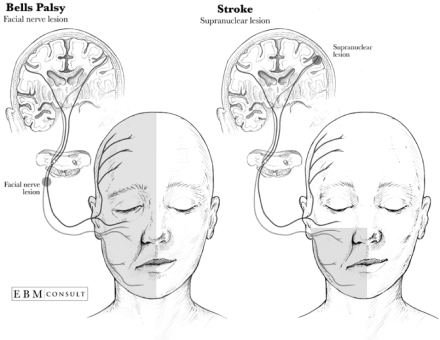
Clinical SignificanceThis condition affects up to 20 patients per 100,000 population with no gender, race, or geographic predilection.  It is the most common cause of unilateral acute peripheral nerve palsies.  Although benign in clinical course, providers must pay close attention to differentiate between Bell’s palsy and a supranuclear lesion (stroke).  The most significant clinical difference between these two condition is the ability to raise the eyebrow and wrinkle the forehead.

https://painepodcast.com/wp-content/uploads/2018/05/picture15.png

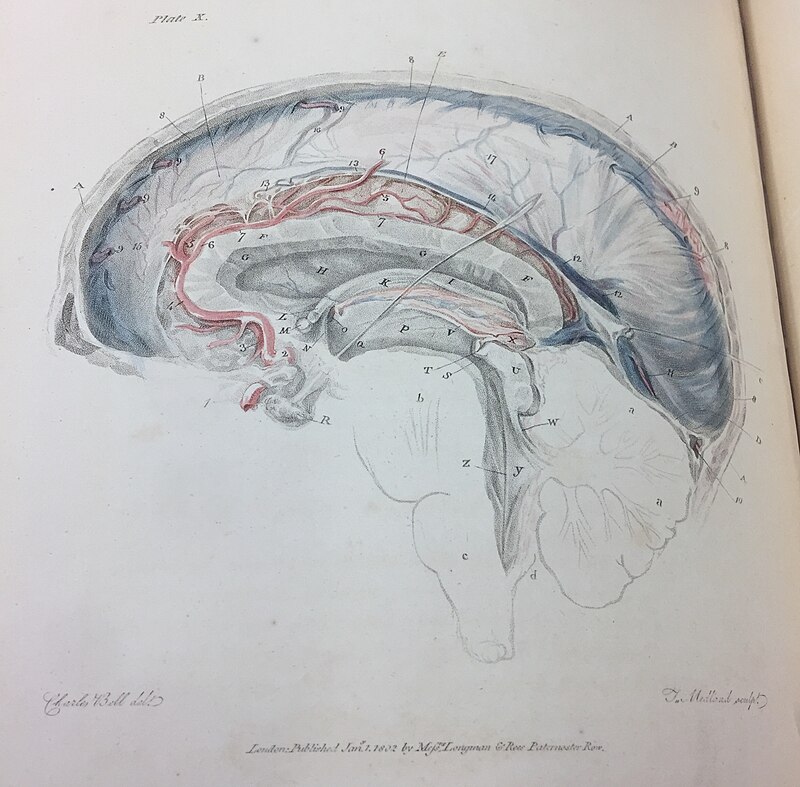
History – Named after Sir Charles Bell (1774-1842), a Scottish surgeon, anatomist, physiologist, neurologist, and noted philosophical theologian who received his medical doctorate at the University of Edinburgh in 1799.  While still a student, he illustrated and published an extraordinary textbook entitled “A System of Dissection Explaining the Anatomy of the Human Body”  After graduation, he was admitted and enrolled at The Royal College of Surgeons where he proved himself to be as skilled in surgery as in anatomy. He further published two subsequent volumes of “Anatomy of the Human Body”, with his brother John (also a skilled anatomist and surgeon).  He was such a prolific teacher and professor that the faculty at the University of Edinburgh blocked his advancement and he was forced to move to London where he first opened a private school of anatomy and then took over the Great Windmill Street School of Anatomy (founded by William and John Hunter).  In 1811, he published “An Idea of a New Anatomy of the Brain” considered to be the quintessential textbook of neurology.  In 1821, he published a paper entitled ” On The Nerves: Giving an Account of some Experiments on Their Structure and Functions, which lead to a new arrangement of the systems” where he described the trajectory of the facial nerve and the unilateral facial paralysis that could result.  This paper is still considered one of the classics of neurology and led to the disease bearing his name.  In 1824, he became the first professor of anatomy and surgery of the College of Surgeons in London and was knighted by King William IV due to his contributions of the advancement of medicine. 


Photograph of Sir Charles Bell


References

  1. Firkin BG and Whitwirth JA.  Dictionary of Medical Eponyms. 2nd ed.  New York, NY; Parthenon Publishing Group. 1996.
  2. Bartolucci S, Forbis P.  Stedman’s Medical Eponyms.  2nd ed.  Baltimore, MD; LWW.  2005.
  3. Yee AJ, Pfiffner P. (2012).  Medical Eponyms (Version 1.4.2) [Mobile Application Software].  Retrieved http://itunes.apple.com.
  4. Whonamedit – dictionary of medical eponyms. http://www.whonamedit.com
  5. Up To Date. www.uptodate.com
  6. Bell C, Shaw A. Reprint of the “Idea of a New Anatomy of the Brain,” with Letters, &c. Journal of anatomy and physiology. 1868; 3(Pt 1):147-82. [pubmed]
  7. http://rstl.royalsocietypublishing.org/content/111/398.full.pdf+html

Ep-PAINE-nym


Huntington’s Disease


Other Known AliasesHuntington’s chorea


DefinitionAutosomal dominant condition caused by expansion of the cytosine-adenine-guanine (CAG) trinucleotide repeats in the HD gene located on short arm of chromosome 4p16.3 that encodes the protein huntingtin.

Image result for huntington's disease

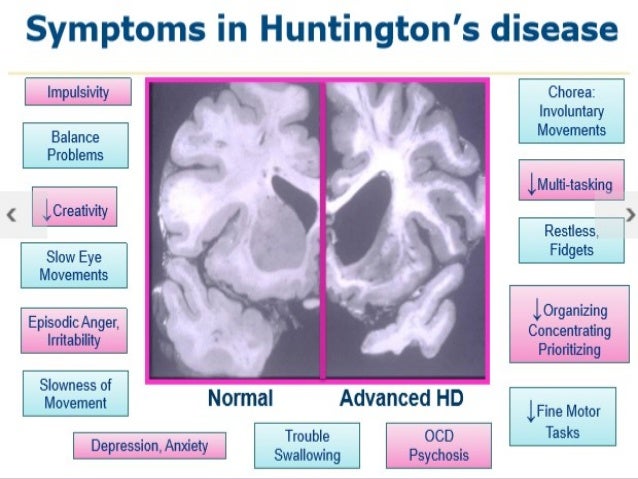
Clinical SignificanceThis condition affects 4-15 in 100,000 peoples of European descent and is extremely rare in non-European lineage.  The classic manifestations of the disease include chorea, psychiatric illness, and dementia.  These symptoms begin very slow and are often missed for a period of time, but always progress to severe deterioration of neuromuscular function.  It is uncurable and treatment is directed towards support and planning of care.  Average length of survival after symptoms onset is 10-20 years

Image result for huntington's disease

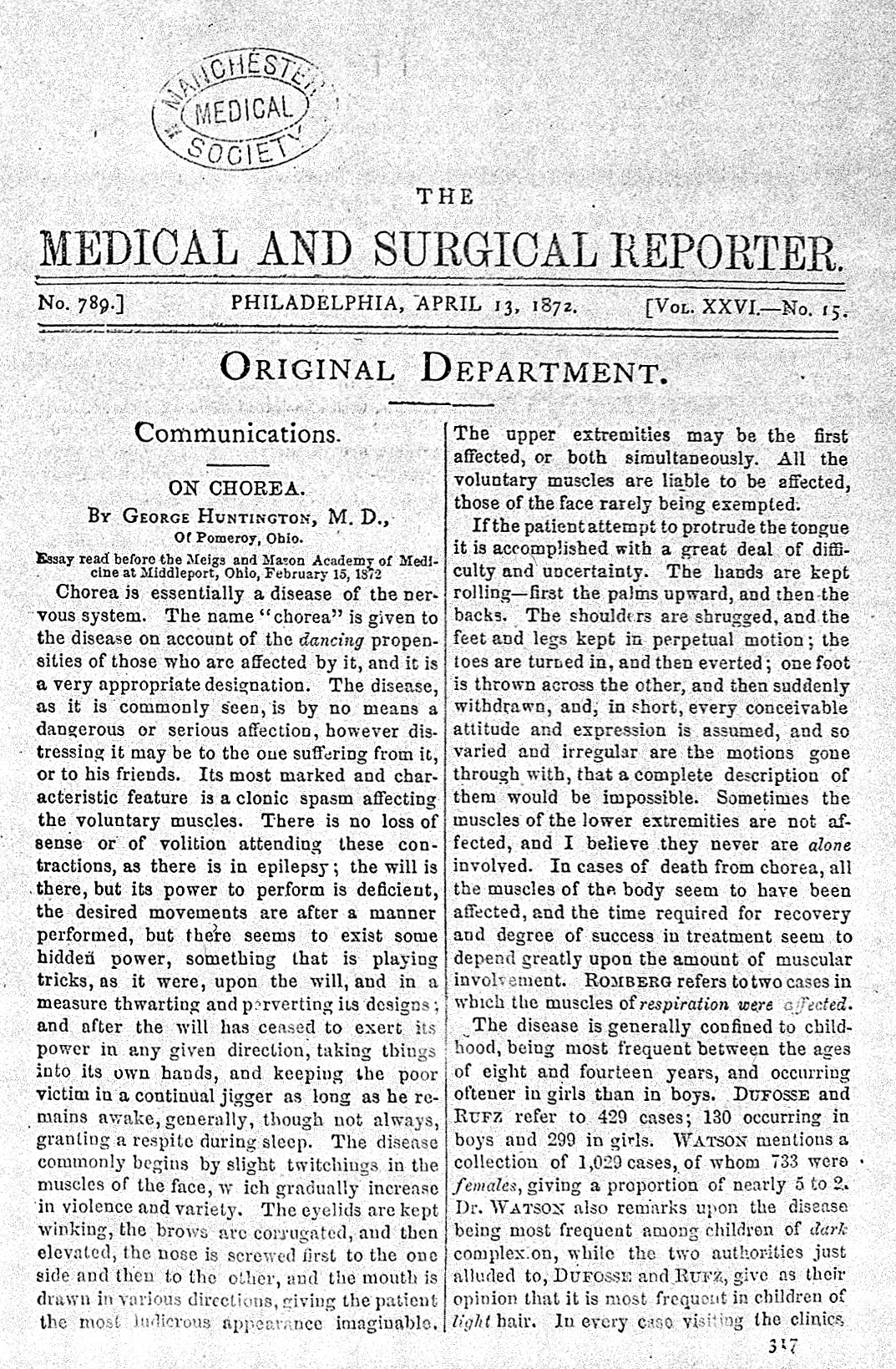
History – Named after George Huntington (1850-1916), an American physician who received his medical doctorate from Columbia University in 1871 at the age of 21.  He came from a long line of physicians dating back to 1797, when his grandfather opened the family practice in East Hampton.  He took meticulous notes on the disease that bears his name from going on house calls with his father early in his childhood, as well as reading and transcribing notes from his father and grandfather.  He only published two papers in his career, the first of which was on this disease.  He read this manuscript before the Meigs and Mason Academy of Medicine in Middleport, Ohio in 1872 (just 1 year after graduating medical school) and received such acclaim that it was published in the Medical and Surgical Reporter of Philadelphia just 2 months later.  This paper was published in the German literature later that year and his name was forever attached to this disease.  Even William Osler read and commented on this paper in 1908 saying ” In the history of medicine there are few instances in which a disease has been more accurately, more graphically, or more briefly described.”


https://upload.wikimedia.org/wikipedia/commons/c/c7/First_page_of_the_article_%22On_Chorea%22_by_G._Huntington_Wellcome_L0005209.jpg


References

  1. Firkin BG and Whitwirth JA.  Dictionary of Medical Eponyms. 2nd ed.  New York, NY; Parthenon Publishing Group. 1996.
  2. Bartolucci S, Forbis P.  Stedman’s Medical Eponyms.  2nd ed.  Baltimore, MD; LWW.  2005.
  3. Yee AJ, Pfiffner P. (2012).  Medical Eponyms (Version 1.4.2) [Mobile Application Software].  Retrieved http://itunes.apple.com.
  4. Whonamedit – dictionary of medical eponyms. http://www.whonamedit.com
  5. Up To Date. www.uptodate.com
  6. Huntington’s Disease.  https://ghr.nlm.nih.gov/condition/huntington-disease
  7. Huntington G.  On Chorea.  Medical and Surgical Reporter of Philadelphia.  1972;26(15):317-321 [article]

Ep-PAINE-nym


Klinefelter Syndrome


Other Known Aliases47XXY, Klinefelter-Reifenstein-Albright Syndrome


DefinitionGenetic condition resulting from two (or more) X chromosomes in a male patient.  It is the most common sex chromosome abnormality causing hypogonadism.

Human chromosomesXXY01.png

Clinical SignificanceThis condition affects 1 in 500-1000 newborn males in the United States.  Symptoms can range from subtle (sometimes not even noticed) to severe learning, developmental, and cognitive deficiencies.  The most prominent features are sterility, small testes, taller stature, less androgenic body hair, and gynecomastia.  Due to these developmental abnormalities, it is often not diagnosed until after puberty

Image result for klinefelter syndrome

History – Named after Harry Fitch Klinefelter, Jr. (1912-1990), an American rheumatologist and endocrinologist, who earned is medical doctorate from Johns Hopkins University.  He worked in the prestigious clinic of Dr. Fuller Albright at Massachusetts General Hospital where he studied a group of nine boys who all had similar features of gynecomastia, aspermatogenesis, and increased follicle-stimulating hormone.  He credits Dr. Albright with this discovery, as it was his clinic and he first noticed the pattern, but Albright wanted Klinefelter to do the research work on it as a new fellow attending.  The group (with Dr. Edward Reifenstein) published this cases series in 1942 and Dr. Albright insisted that Klinefelter take lead authorship.


Image result


References

  1. Firkin BG and Whitwirth JA.  Dictionary of Medical Eponyms. 2nd ed.  New York, NY; Parthenon Publishing Group. 1996.
  2. Bartolucci S, Forbis P.  Stedman’s Medical Eponyms.  2nd ed.  Baltimore, MD; LWW.  2005.
  3. Yee AJ, Pfiffner P. (2012).  Medical Eponyms (Version 1.4.2) [Mobile Application Software].  Retrieved http://itunes.apple.com.
  4. Whonamedit – dictionary of medical eponyms. http://www.whonamedit.com
  5. Up To Date. www.uptodate.com
  6. Klinefelter Syndrome.  https://ghr.nlm.nih.gov/condition/klinefelter-syndrome
  7. Klinefelter HF, Reifenstein EC, Albright F. Syndrome Characterized by Gynecomastia, Aspermatogenesis without A-Leydigism, and Increased Excretion of Follicle-Stimulating Hormone.  JCEM.  1942;2(11):615-627 [article]
  8. Loriau DL.  Chapter 89: Harry F. Klinefelter (1912-1990).  A Biographical History of Endocrinology. 2016.  [article]

Ep-PAINE-nym


Wilms Tumor


Other Known Aliasesnephroblastoma


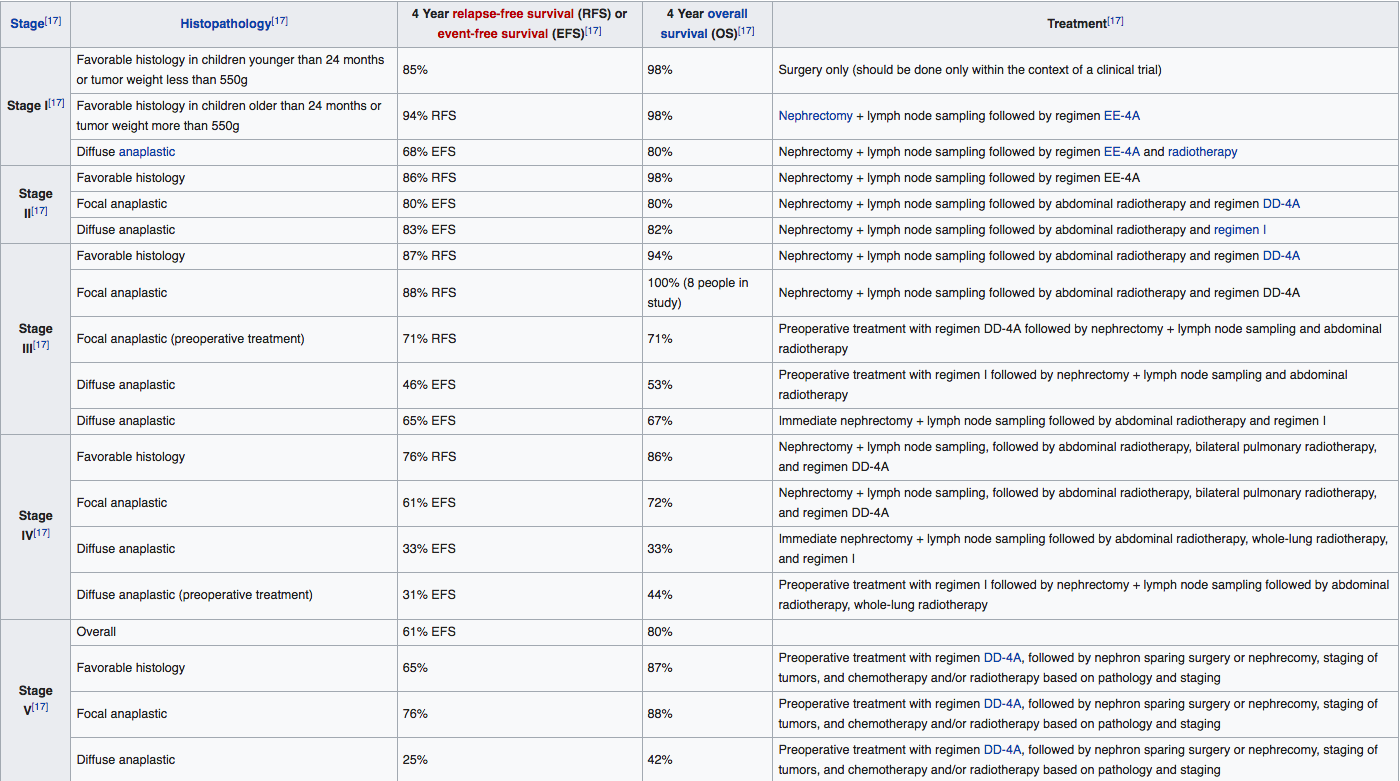
DefinitionThe most common childhood primary renal tumor and can occur due to a mutation in the WT-1 cancer suppressor gene on 11p13.  There are five clinical stages depending on anatomical findings and tumor cell pathology.


Image result for wilms tumor


Clinical SignificanceCurrent estimates are around 500 new cases in the US per year and can be associated with several other genetic conditions including, WAGR syndrome, Denys-Drash syndrome, and Beckwith-Wideman syndrome.   Most children, who are later diagnosed with a Wilm’s tumor, present with an asymptomatic abdominal mass easily palpable by the provider.   Ultrasound is the initial screening test of choice, though MRI can be help in staging.  A renal biopsy will confirm the diagnose and definitively stage the disease in order to select the best treatment modalities.


History – Named after Carl Max Wilhem Wilms (1867-1918), a German pathologist and surgeon,  who earned his medical doctorate from the University of Bonn in 1890.  He was a prolific surgeon and medical educator rising to the ranks of chair of surgery at the University of Heidelberg in 1910.  He published his findings of the renal tumor that bears his name in 1899 in the article entitled “Die Mischgeschwülste der Niere”.  There is some controversy on who identified this tumor first as Thomas Rance may have written on it in 1814, but it was not very specific and could be attributed to other renal malignancies.   Felix Birch-Hirschfeld and colleagues also identified and wrote on what they believed to the first description of this tumor, but Wilms’ manuscript seemed to be more broadly noted in the literature and eventually came to bear his name.  


Image result for Die Mischgeschwülste der Niere


References

  1. Firkin BG and Whitwirth JA.  Dictionary of Medical Eponyms. 2nd ed.  New York, NY; Parthenon Publishing Group. 1996.
  2. Bartolucci S, Forbis P.  Stedman’s Medical Eponyms.  2nd ed.  Baltimore, MD; LWW.  2005.
  3. Yee AJ, Pfiffner P. (2012).  Medical Eponyms (Version 1.4.2) [Mobile Application Software].  Retrieved http://itunes.apple.com.
  4. Whonamedit – dictionary of medical eponyms. http://www.whonamedit.com
  5. Wilm’s Tumor.  National Cancer Institute. https://www.cancer.gov/types/kidney/hp/wilms-treatment-pdq#link/_1
  6. Up To Date. Accessed April 21, 2018.  www.uptodate.com
  7. Coppes-Zantingal AR.  Max Wilms and “Die mischgeschwülste der Niere”.  CMAJ.  199;160(8):1196. [pubmed]
  8. Coppes AR.  Dr. Carl Max Wilhelm Wilms.  HemOnc Today.  2008.  https://www.healio.com/hematology-oncology/pediatric-oncology/news/print/hemonc-today/%7B05646a17-7a0c-4a39-a0db-62fd83e0d628%7D/dr-carl-max-wilhelm-wilms-1867-1918

Ep-PAINE-nym


Crigler-Najjar Syndrome


Other Known Aliasesfamilial/hereditary nonhemolytic unconjugated hyperbilirubinemia


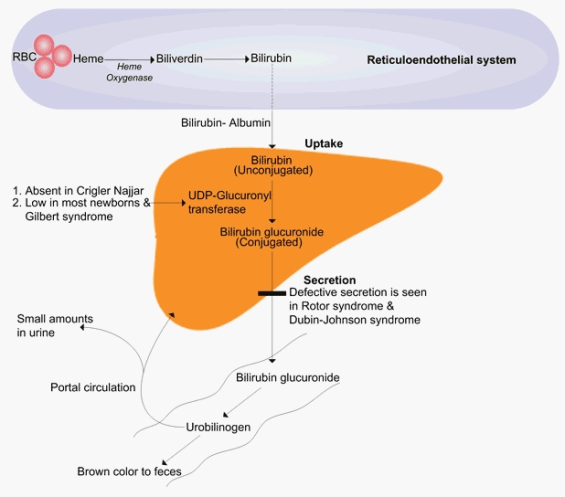
DefinitionRare, familial condition resulting in congenital hyperbilirubinemia secondary to a deficiency of glucuronyl transferase.  There two types, with type I being very rare and severe (absolute absence) and type II being more common and less severe (relative deficiency)

Image result for bilirubin metabolism


Clinical Significance – Congenital hyperbilirubinemia can have catastrophic effects on the infant including jaundice, lethargy, failure to thrive, hypotonia, kernicterus, and acute bilirubin encephalopathy once it saturates and binds to the brain tissue.


History – Named after:

1) John Fielding Crigler (1919-), who is an American pediatrician who earned his medical doctorate at Duke University in 1943 and practiced at the Children’s Hospital of Boston.

2) Victor Assad Najjar (1914-), who is a Lebonese-born, American pediatrician who earned his medical doctorate at the American University in Beirut and practiced at Johns Hopkins, Vanderbilt, and Tufts University.


They published their findings of a new disease causing congenital familial nonhemolytic jaundice with kernicterus in 1952.


References

  1. Firkin BG and Whitwirth JA.  Dictionary of Medical Eponyms. 2nd ed.  New York, NY; Parthenon Publishing Group. 1996.
  2. Bartolucci S, Forbis P.  Stedman’s Medical Eponyms.  2nd ed.  Baltimore, MD; LWW.  2005.
  3. Yee AJ, Pfiffner P. (2012).  Medical Eponyms (Version 1.4.2) [Mobile Application Software].  Retrieved http://itunes.apple.com.
  4. Whonamedit – dictionary of medical eponyms. http://www.whonamedit.com
  5. Crigler-Najjar Syndrome.  Genetics Home Reference. https://ghr.nlm.nih.gov/condition/crigler-najjar-syndrome#synonyms
  6. CRIGLER JF, NAJJAR VA. Congenital familial nonhemolytic jaundice with kernicterus; a new clinical entity. A.M.A. American journal of diseases of children. 1952; 83(2):259-60. [pubmed]

Ep-PAINE-nym


Kayser-Fleischer Rings


Other Known Aliasesnone


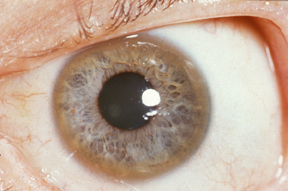
Definition1-3mm, grey/green/brown pigmented ring in the Descemet membrane of the cornea.  It first appears at the 12 o’clock position in early disease, then a second crescent forms at 6 o’clock, and then finally completely encircling the cornea.


Kayser-Fleischer ring.jpg


Clinical Significance – This is pathognomonic for Wilson’s disease, but does not cause any symptoms with the patient.  They are often identified on good ophthalmic examinations.


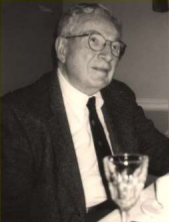
History – Named after Bernhard Kayser (1869-1954) and Bruno Fleischer (1874-1965), who were both German ophthalmologists and contemporaries of each other.  Dr. Kayser received his medical doctorate at the University of Berlin in 1893 and practiced as a specialized ophthalmologist in Stuttgart, Germany for the majority of his career.  Dr. Fleischer received his medical doctorate at the University of Tübingen in 1898 and practiced there earning a reputation as an extraordinary professor.  Each published their findings in Klinische Monatsblätter für Augenheilkunde within a year of each other (1902 and 1903), but erroneously posited that it was due to silver accumulation.  The first published report of copper being the causative agent was in 1934 by Dr. Werner Gerlach and Willhelm Rohrschneider.


References

  1. Firkin BG and Whitwirth JA.  Dictionary of Medical Eponyms. 2nd ed.  New York, NY; Parthenon Publishing Group. 1996.
  2. Bartolucci S, Forbis P.  Stedman’s Medical Eponyms.  2nd ed.  Baltimore, MD; LWW.  2005.
  3. Yee AJ, Pfiffner P. (2012).  Medical Eponyms (Version 1.4.2) [Mobile Application Software].  Retrieved http://itunes.apple.com.
  4. Whonamedit – dictionary of medical eponyms. http://www.whonamedit.com
  5. Schrag A, Schott JM. Images in clinical medicine. Kayser-Fleischer rings in Wilson’s disease. NEJM. 2012; 366(12):e18. [pubmed]
  6. Dusek P, Litwin T, Czlonkowska A. Wilson disease and other neurodegenerations with metal accumulations. Neurologic clinics. 2015; 33(1):175-204. [pubmed]
  7. Kayser B. “Über einen Fall von angeborener grünlicher Verfärbung des Cornea”. Klin Monatsbl Augenheilk. 1902;40(2):22–25.
  8. Fleischer B. “Zwei weitere Fälle von grünlicher Verfärbung der Kornea”. Klin Monatsbl Augenheilk. 1903;41(1):489–491
  9. Gerlach W, Rohrschneider W. “Besteht das Pigment des Kayser-Fleischerschen Hornhautringes aus Silber?”. Klin Wochenschr. 1934;13: 48–49

Ep-PAINE-nym


Wilson’s Disease


Other Known Aliases – progressive hepatolenticular degeneration


DefinitionAutosomal recessive condition that causes impaired copper metabolism leading to intoxication due to a mutation in the chromosome 13q14 resulting in faulty ATP7B protein production.

An external file that holds a picture, illustration, etc. Object name is nihms648222f1.jpg

Clinical SignificanceA rare, but devastating, disease if not identified early in its course.  It can effect multiple systems including:

  • Hepatic – elevated transaminases to fulminant liver failure
  • Hematologic – hemolytic anemia, jaundice
  • Neurologic – athetosis, tremors, dystonia
  • Psychiatric – behavior changes, learning difficulties
  • Ocular – Kayser-Fleischer rings (more on this next week)

Image result for wilson's disease

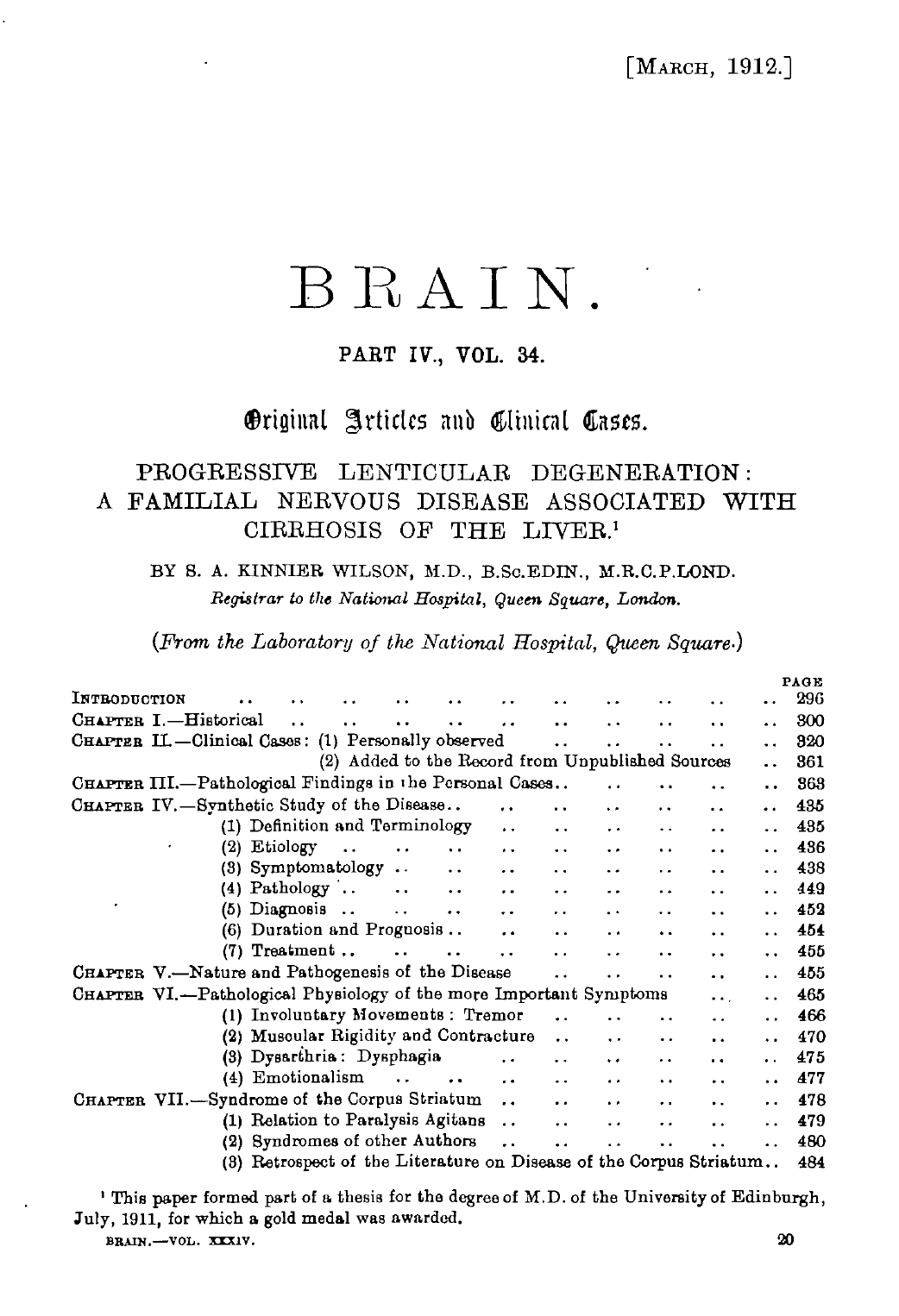
History – Named after Samuel Alexander Kinnier Wilson (1878-1937), who was an American-born, British neurologist.  He received his medical degree from the University of Edinburgh Medical School in 1902 and studied neurology with Joseph Babinsky at the Salpétriére Hospital in Paris before relocating back to London for the duration of his medical career.   He is also credited with introducing the neuropsychiatric term “extrapyramidal” into the medical lexicon.  He described his eponymous disease in his 1912 medical dissertation where it gained its notoriety, but was first recorded in 1854 by Friedrich Theodor von Freichs.

Samuel Alexander Kinnier Wilson.jpg


References

  1. Firkin BG and Whitwirth JA.  Dictionary of Medical Eponyms. 2nd ed.  New York, NY; Parthenon Publishing Group. 1996.
  2. Bartolucci S, Forbis P.  Stedman’s Medical Eponyms.  2nd ed.  Baltimore, MD; LWW.  2005.
  3. Yee AJ, Pfiffner P. (2012).  Medical Eponyms (Version 1.4.2) [Mobile Application Software].  Retrieved http://itunes.apple.com.
  4. Whonamedit – dictionary of medical eponyms. http://www.whonamedit.com
  5. Rodriguez-Castro KI, Hevia-Urrutia FJ, Sturniolo GC. Wilson’s disease: A review of what we have learned. World journal of hepatology. 2015; 7(29):2859-70. [pubmed]
  6. Patil M, Sheth KA, Krishnamurthy AC, Devarbhavi H. A review and current perspective on Wilson disease. Journal of clinical and experimental hepatology. 2013; 3(4):321-36. [pubmed]
  7. Bandmann O, Weiss KH, Kaler SG. Wilson’s disease and other neurological copper disorders. The Lancet. Neurology. 2015; 14(1):103-13. [pubmed]
  8. Kinnier Wilson SA.  Progressive Lenticular Degeneration: A Familial Nervous Disease Associated with CIrrhosis of the Liver.  Brain. 1912;34(4):295-507

Ep-PAINE-nym


Hodgkin’s Lymphoma


Other Known Aliasesnone


Definition – Type of lymphoma predominantly from lymphocytes that arise from germinal center or post-germinal center of B cells


Clinical SignificanceAccounts for 10% of all lymphomas and 0.6% of all cancers.  It is also associated with a bimodal age distribution of young adults (20s) and older adults (60s), with a slight male predominance.  Epstein-Barr virus is the most common causative agent and it carries a favorable prognosis.


History – Named after Thomas Hodgkin (1798-1866), who was British physician and considered one of the most prominent pathologists of his time.  He was also a perpetual student constantly learning new techniques including being an early adopter of the stethoscope anda fervent advocate for preventative medicine.  He first described his findings on his eponymous disease in 1832, but it wasn’t until 33 years later when another British physician, Samuel Wilks, “re-discovered” the disease and Hodgkin’s work did it gain any traction and recognition.


Thomas Hodgkin photo.jpg


References

  1. Firkin BG and Whitwirth JA.  Dictionary of Medical Eponyms. 2nd ed.  New York, NY; Parthenon Publishing Group. 1996.
  2. Bartolucci S, Forbis P.  Stedman’s Medical Eponyms.  2nd ed.  Baltimore, MD; LWW.  2005.
  3. Yee AJ, Pfiffner P. (2012).  Medical Eponyms (Version 1.4.2) [Mobile Application Software].  Retrieved http://itunes.apple.com.
  4. Whonamedit – dictionary of medical eponyms. http://www.whonamedit.com
  5. Hodgkin Lymphome.  British Medical Journal – Best Practice. http://bestpractice.bmj.com/topics/en-us/311
  6. Hodgkin T.  On Some Morbid Appearances of The Absorbent Glands and Spleen.  Med Chir Trans.  1832;17:68-114.

Ep-PAINE-nym


Auer Rods


Other Known Aliasesnone


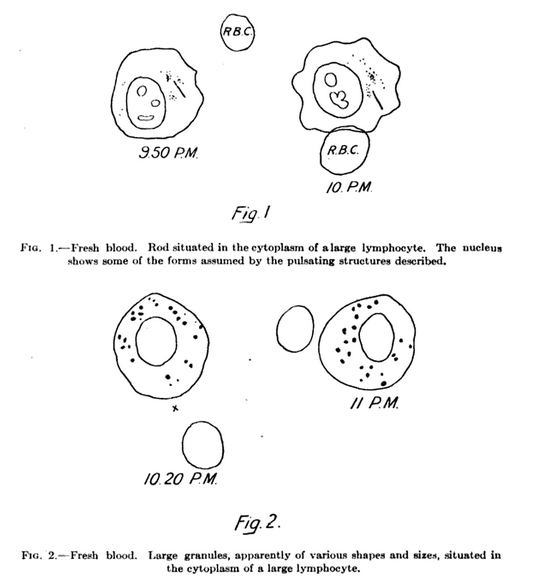
Definition – Auer rods are azurophilic granules found in the cytoplasm of leukemic blast cells and are composed of fused lyosomes.


Image result for auer rods


Clinical SignificanceThese are found in high grade myelodysplastic and myeloproliferative syndromes and are pathognomonic for acute myelogenous leukemia (AML).


Image result for auer rods


History – Named after John Auer (1875-1948), an American physiologist and pharmacologist, who held appointments at Johns Hopkins Hospital, Rockefeller Institute for Medical Research, and the St. Louis School of Medicine. He first described these structures in a 21yo male who was suffering from a sore throat and nosebleed and admitted to Sir William Osler’s service for work-up.  He published this finding in 1906, but were first described by a colleague of his at Johns Hopkins Hospital, Thomas McCrae.  Interestingly, they both erroneously thought that the cells containing these structures were lymphoblasts, not myeloblasts.


Image result for john auer rods

scanned image of page 404


References

  1. Firkin BG and Whitwirth JA.  Dictionary of Medical Eponyms. 2nd ed.  New York, NY; Parthenon Publishing Group. 1996.
  2. Bartolucci S, Forbis P.  Stedman’s Medical Eponyms.  2nd ed.  Baltimore, MD; LWW.  2005.
  3. Yee AJ, Pfiffner P. (2012).  Medical Eponyms (Version 1.4.2) [Mobile Application Software].  Retrieved http://itunes.apple.com.
  4. Whonamedit – dictionary of medical eponyms. http://www.whonamedit.com
  5. Gordon SW, Krystal GW. Auer Rods. NEJM. 2017; 376(21):2065. [pubmed]
  6. Auer J. Some hitherto Undescribed Structures Found in the Large Lymphocytes of a Case of Acute Leukemia. AJMS. 1906;131(6):1002-1014 [article]
  7. McCrae T. Acute Lymphatic Leukemia, with Report of Five Cases. BMJ. 1905; 1(2304):404-8. [pubmed]
  8. John Auer. http://www.iqb.es/historiamedicina/personas/auer.htm